

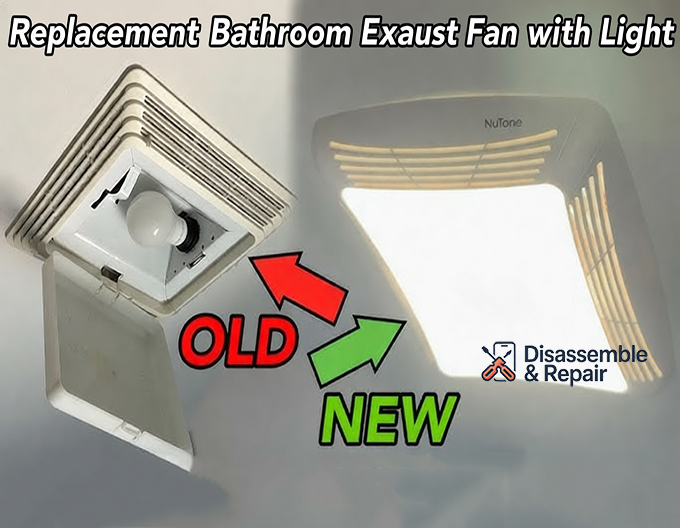
Upgrading to a Replacement Bathroom Exhaust Fan with Light is one of the most effective ways to improve indoor air quality and prevent long-term moisture damage in your home. Whether you are dealing with a noisy, rattling unit or a fan that simply cannot keep up with steam, selecting the right replacement involves more than just swapping out a box; it requires understanding ventilation capacity, electrical compatibility, and modern features that enhance comfort.
Why Prioritize a High-Quality Replacement Bathroom Exhaust Fan with Light?
A bathroom fan is the unsung hero of home maintenance. Its primary job is moisture removal, pulling humidity out of the room before it can seep into drywall, peel paint, or encourage mold growth. When you combine this utility with LED lighting, you gain a dual-purpose fixture that brightens the space while protecting it.
Modern replacements offer significant upgrades over builder-grade models. They are quieter, more energy-efficient, and often come with smart features like humidity sensors. By choosing an ENERGY STAR certified model, you ensure the fan uses less electricity to do more work, often saving money on utility bills while running quieter than older, inefficient units.
Key Technical Specifications for Selection
Before purchasing a new unit, you must evaluate several technical factors to ensure the fan will perform effectively in your specific bathroom.
1. Ventilation Capacity (CFM Rating)
The power of a bathroom fan is measured by its CFM rating (Cubic Feet per Minute). This number indicates the volume of air the fan can move.
- Standard Sizing: A general rule of thumb is 1 CFM per square foot of floor area. For a 50-square-foot bathroom, you need at least 50 CFM.
- Fixture Additions: If your bathroom is larger than 100 square feet, calculate based on fixtures: add 50 CFM for each toilet, shower, and bathtub, and 100 CFM for a jetted tub.
- Duct Run Impact: If you have a long or complex duct run with multiple elbows, opt for a slightly higher CFM to compensate for air resistance.
2. Sone Level (Noise Rating)
The sound output of a fan is measured in Sones.
- Ultra-Quiet: 0.3 to 1.0 Sones. These units are nearly silent and ideal for master baths where peace is a priority.
- Moderate: 1.5 to 2.5 Sones. You will hear the fan, but it won’t be intrusive.
- Loud: 4.0 Sones and above. These are typical of older, builder-grade fans and can sound like a small airplane taking off.
For a “Replacement Bathroom Exhaust Fan with Light” that adds value to your home, aim for a Sone level of 1.5 or lower.
3. Duct Diameter
Most older fans use a 3-inch or 4-inch duct, but high-performance modern fans often require a 6-inch duct diameter to move air quietly and efficiently.
- Check your existing duct size before buying.
- Using a reducer (e.g., connecting a 6-inch fan to a 4-inch duct) will increase noise and reduce the motor’s life.
- If possible, upgrade the ductwork to match the new fan’s requirements for optimal airflow.
Measuring for the Perfect Fit: Rough-In Dimensions
One of the biggest challenges in retrofitting is matching the physical size of the new unit to the existing hole in your ceiling. This measurement is known as the rough-in dimensions.
Do not measure the grille cover. You must pull the cover down and measure the actual metal housing box inside the ceiling.
- Smaller Replacement: If the new fan housing is smaller than the old one, you will need to patch the drywall or buy a specialized retrofit kit with a larger grille to hide the gap.
- Larger Replacement: If the new housing is larger, you will need to cut the drywall to fit. Most fans come with a template to help you mark the cut accurately.
Installation Considerations: Ceiling Mount and Wiring
Most residential fans use a ceiling mount installation system. When replacing a fan with a light, wiring can become slightly more complex than a fan-only installation.
Wiring Scenarios
- Single Switch: If you only have one switch on the wall, the fan and light will turn on simultaneously.
- Dual Switches: Ideally, you want separate control so you can run the fan without the light (or vice versa). This requires a 3-wire electrical run (plus ground) from the switch box to the fan.
- Integrated Night Light: Many premium models feature an integrated night light. This often requires a third switch leg or a specialized multi-function wall switch to operate the night light independently from the main light and fan.
UL Listing and Safety
Safety is paramount in wet environments. Check the UL listing (Underwriters Laboratories) on the packaging:
- Damp Rated: Suitable for general bathroom use but not directly over a water source.
- Wet Rated: Required if the fan will be installed directly inside a shower enclosure or over a bathtub. Note: Wet-rated fans usually must be connected to a GFCI-protected circuit.
Advanced Features to Look For
To truly modernize your bathroom, look for these value-added features in your Replacement Bathroom Exhaust Fan with Light:
Humidity Sensor
A humidity sensor eliminates the guesswork of ventilation. The fan automatically detects a rise in moisture levels (like when you start a shower) and turns on. It continues running until the humidity drops to a preset level, ensuring complete moisture removal even if you forget to flip the switch. This is excellent for preventing mold in guest bathrooms or kids’ bathrooms.
LED Lighting Technology
Modern fans use LED lighting modules instead of incandescent bulbs.
- Efficiency: LEDs use a fraction of the energy.
- Longevity: You won’t need to climb a ladder to change bulbs for years.
- Color Temperature: Many models allow you to select the “warmth” of the light (e.g., Warm White 2700K vs. Daylight 5000K) to match your vanity lighting.
Step-by-Step Retrofit Overview

- Safety First: Turn off the breaker at the electrical panel. Verify the power is off with a voltage tester.
- Remove Old Unit: disconnect the vent pipe and electrical wires. Remove screws securing the housing to the joist.
- Prepare the Opening: Measure your new rough-in dimensions. Enlarge the drywall hole if necessary using the provided template.
- Connect Venting: Attach the duct connector. Use foil tape (not duct tape) to seal the connection for airtight performance.
- Electrical Connections: Connect black to black (live), white to white (neutral), and green to bare (ground). If your fan has a separate light wire (often blue or red), connect it to the corresponding switch leg.
- Secure Housing: Insert the fan housing into the ceiling and secure it to the joist with screws.
- Final Assembly: Plug in the motor and light modules inside the housing. Snap the grille into place.
- Test: Turn the power back on. Check for quiet operation and proper airflow (a piece of toilet paper should be held up against the grille by the suction).
Troubleshooting Common Replacement Issues
The Fan is Noisier Than Rated:
This is often caused by a restricted duct. If the duct is crushed, has too many bends, or is too small (e.g., 3 inches), the backpressure creates noise. Ensure the damper on the exterior vent cap opens freely.
Moisture Still Accumulates:
Check the CFM rating again. If the fan is sized correctly but moisture persists, the issue might be insufficient “makeup air.” A bathroom needs a gap under the door (about 3/4 inch) to allow fresh air to enter while the fan exhausts humid air. Without this gap, the fan creates a vacuum and cannot move air effectively.
Cold Drafts in Winter:
Ensure the fan housing has a built-in backdraft damper. This small flap prevents cold outside air from coming down the duct when the fan is off.
Conclusion
Investing in the right Replacement Bathroom Exhaust Fan with Light is a smart home improvement that protects your property value and enhances daily comfort. By focusing on the correct CFM, a low Sone rating, and proper installation standards like UL listings and correct duct sizing, you ensure a quiet, dry, and well-lit bathroom environment for years to come. Whether you choose a model with a humidity sensor for automation or an integrated night light for convenience, the upgrade is well worth the effort.
Frequently Asked Questions
How do I determine the correct CFM rating for my bathroom?
The general industry standard is to provide 1 CFM (Cubic Feet per Minute) for every square foot of floor space. For example, a 70-square-foot bathroom requires a fan with at least a 70 CFM rating. If your bathroom is larger than 100 square feet, you should instead calculate the rating by adding 50 CFM for each toilet, shower, and bathtub, or 100 CFM for a jetted tub.
What Sone level should I look for if I want a quiet fan?
If you prioritize a peaceful environment, look for a fan with a Sone rating between 0.3 and 1.0, which is considered ultra-quiet. Ratings between 1.5 and 2.5 are moderate and audible but not intrusive. Avoid fans with a rating of 4.0 or higher, as these are significantly louder and can be disruptive.
Can I install a replacement fan with a light directly over my shower?
You can only install a fan directly inside a shower enclosure or over a bathtub if it is “Wet Rated” and carries the appropriate UL listing. Additionally, these installations typically require the fan to be connected to a GFCI-protected (Ground Fault Circuit Interrupter) circuit to ensure safety in a wet environment.
What is the difference between “rough-in dimensions” and the grille size?
The rough-in dimensions refer to the size of the metal housing box that sits hidden inside your ceiling. When shopping for a replacement, you must measure this internal box rather than the decorative plastic grille cover. If your new fan’s housing is larger than the old one, you will need to enlarge the hole in your drywall; if it is smaller, you may need to patch the ceiling.
Why is it important to match the duct diameter to the new fan?
Modern high-performance fans often require a 4-inch or 6-inch duct to move air efficiently. If you connect a powerful new fan to an older, smaller 3-inch duct using a reducer, it creates backpressure. This results in significantly higher noise levels, reduced moisture removal, and a shorter lifespan for the fan motor.