

If your Samsung front load washer smells bad, it can be incredibly frustrating to pull out freshly washed clothes that carry a musty, unpleasant odor. Instead of the scent of clean linen, you are often greeted by a smell reminiscent of rotten eggs or damp basements, which is a common issue with high-efficiency machines.
This comprehensive guide will explain why this happens and provide a professional, step-by-step maintenance routine to eliminate the stench and keep your appliance running efficiently.
Why Your Samsung Front Load Washer Smells Bad
The primary reason a Samsung front load washer smells bad is the design of the machine itself combined with user habits. Unlike top-loading machines, front loaders use an airtight door seal to prevent water from leaking. While this makes them water-efficient, it also traps moisture inside the drum between cycles.
When you combine this moist environment with HE detergent buildup and fabric softener residue, you create the perfect breeding ground for mold and mildew. Over time, these residues harden into a slime known as bacterial biofilm. This biofilm coats the hidden crevices of the outer tub and the drain pump filter, releasing foul odors that transfer to your fabrics, resulting in persistent laundry odor.
Furthermore, if the machine is not drained or ventilated properly, stagnant water can sit in the bottom of the system, further contributing to the sewage-like smell. Addressing these issues requires a targeted cleaning approach involving specific components of your washer.
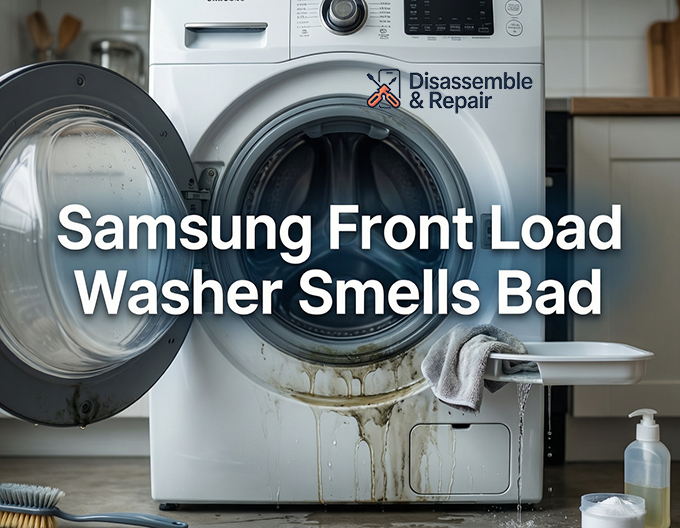
Step 1: Deep Clean the Rubber Gasket and Door Boot Seal
The rubber gasket, technically known as the door boot seal, is the most common culprit for bad smells. This grey rubber ring creates the watertight seal for the door, but its deep folds are notorious for trapping lint, hair, water, and undissolved detergent.
If you pull back the folds of the seal, you might see black spots or a slimy residue. This is active mold growth.
Read more How to clean Samsung washer drain pump
How to Clean It:
- Inspect the folds: Open the door wide and gently pull back the layers of the rubber seal. Look for any trapped debris like coins or hair and remove them.
- Wipe with solution: Mix a solution of hot water and white vinegar. Dip a microfiber cloth into the mixture and vigorously scrub the inside of the gasket. The acidity of the vinegar helps break down mineral deposits and kills mild fungal spores.
- Tackle stubborn mold: For severe cases where mold has stained the rubber, you may need a stronger approach. Create a paste using baking soda and a small amount of water (or liquid bleach, if you are careful not to mix it with other chemicals). Apply this paste to the moldy areas of the seal and let it sit for 15 to 30 minutes before scrubbing it away with an old toothbrush.
- Dry thoroughly: After scrubbing, wipe the area with a clean, damp cloth to remove any cleaning residue, then dry it completely with a towel.
Step 2: Clear the Drain Pump Filter
Many users are unaware that their Samsung washer has a debris filter that requires regular maintenance. The drain pump filter is usually located behind a small access panel at the bottom front of the machine. Its job is to catch lint and small objects, but it also traps water. If this water sits for weeks, it becomes stagnant and creates a rotten smell.
How to Clean It:
- Prepare the area: Place a shallow tray and some old towels on the floor in front of the access panel. This process will release water.
- Drain the emergency hose: Open the panel and locate the small black emergency drain hose. Pull it out, remove the cap, and let the stagnant water drain completely into your tray. This water is often the source of the “sewage” smell.
- Remove the filter: Once the hose stops dripping, replace the cap and secure it. Now, turn the main round filter knob counter-clockwise to unscrew it. Pull it out.
- Scrub and rinse: You will likely find a coating of slime or debris on the filter. Rinse it under hot running water and scrub it with a soft brush. Shine a flashlight into the filter housing to check for any obstructions inside the pump area and wipe it clean.
- Reassemble: Insert the clean filter back into the housing and twist it clockwise until it is tight. Close the access panel.
Step 3: Sanitize the Detergent Drawer
The detergent drawer is another often-overlooked area. Because it is constantly wet and coated with soap and softener, it easily develops black mold, particularly on the plastic roof of the dispenser housing.
How to Clean It:
- Remove the drawer: Pull the drawer out until it stops. Press the release tab (usually a blue or plastic lever in the center) and pull the drawer completely out of the machine.
- Disassemble and soak: Remove the liquid detergent and softener inserts. Soak all parts in a sink filled with hot soapy water.
- Scrub the housing: Before replacing the drawer, look inside the empty slot in the washing machine. You will likely see mold and mildew growing on the top and sides of the cavity. Use a bottle brush or an old toothbrush dipped in a bleach solution to scrub this area thoroughly.
- Rinse and dry: Rinse the drawer components, dry them, and slide the drawer back into place.
Step 4: Run the Self Clean Cycle
Samsung washers are equipped with a specialized Self Clean cycle (or Pure Cycle on older models) designed to eliminate residue from the drum and outer tub. This cycle uses extremely hot water and high-speed agitation to break down the bacterial biofilm that manual scrubbing cannot reach.
How to Use It:
- Empty the drum: Ensure the washing machine is completely empty. Never run this cycle with clothes inside.
- Add a cleaning agent: While the Self Clean cycle is designed to work without chemicals, if your machine smells particularly bad, you can enhance the process. You may use drum cleaning tablets (such as Affresh) placed directly in the drum, or pour liquid chlorine bleach into the detergent compartment (check your specific manual to confirm if bleach is recommended for your model’s Self Clean cycle).
- Start the cycle: Select “Self Clean” or “Self Clean+” on the dial and press start. The machine will fill with hot water and soak the tub to dissolve HE detergent buildup.
- Wipe down: Once the cycle is complete, open the door and wipe away any dislodged residue that may remain in the drum or on the glass.
Prevention: How to Stop the Smell from Returning
Once you have neutralized the odor, you must alter your laundry habits to prevent it from returning. The “Samsung front load washer smells bad” issue is almost always a result of usage habits rather than a mechanical defect.
Leave the Door Ajar
After every single wash, leave the door slightly open. This allows air to circulate and dries out the drum and rubber gasket. If you close the door immediately while the interior is damp, mold will begin to grow within 24 hours.
Use the Correct Amount of HE Detergent
Modern front loaders use very little water. If you use too much detergent, the machine cannot rinse it all away. This excess soap sticks to the walls of the tub and becomes food for mold. Ensure you are using high-quality High-Efficiency (HE) detergent and never exceed the “Max” line. In fact, you often need much less than the manufacturer recommends—usually just two tablespoons per load is sufficient.
Read more How to clean drain pump on Samsung Washer
Switch to Powder Detergent Occasionally
Liquid detergents contain lipids (fats) that can contribute to the waxy sludge that creates biofilm. Powder detergents are generally more abrasive and can help scour the drum clean.
Regular Maintenance Schedule
- After every wash: Wipe the door glass and the inside of the door boot seal with a dry cloth.
- Monthly: Run the Self Clean cycle (with drum cleaning tablets if desired) and check the drain pump filter.
- Quarterly: Remove and clean the detergent drawer.
By following this strict cleaning regimen, you can ensure your Samsung front load washer remains fresh, sanitary, and free of odors, protecting your investment and your wardrobe for years to come.
Frequently Asked Questions
Why does my Samsung washer smell like rotten eggs or sewage?
This odor is typically caused by stagnant water trapped in the drain pump filter or the development of bacterial biofilm. When HE detergent residue and fabric softener mix with moisture in the airtight drum, they create a slimy buildup that grows mold and mildew, releasing foul gases that smell like sulfur or damp basements.
How often should I clean the drain pump filter?
You should clean the drain pump filter at least once a month. This component catches lint, hair, and debris that can trap water. If left uncleaned, the water sitting in the filter housing becomes stagnant and is a primary source of persistent laundry odors.
Why is it necessary to leave the washer door open after a cycle?
Front-loading washers are designed with an airtight rubber seal to prevent leaks. If the door is closed immediately after a wash, moisture is trapped inside the drum and the folds of the gasket. Leaving the door slightly ajar allows air to circulate and dries out the interior, preventing mold from growing.
How much detergent should I use to avoid buildup?
To prevent the “waxy” buildup that feeds mold, you should always use high-quality High-Efficiency (HE) detergent. You often need much less than the manufacturer recommends; usually, two tablespoons per load is sufficient. Never exceed the “Max” line in the detergent drawer, as excess soap cannot be rinsed away effectively in low-water cycles.
Can I use cleaning tablets with the Self Clean cycle?
Yes. While the Self Clean cycle is designed to work with hot water and high-speed agitation alone, you can enhance the results by adding a drum cleaning tablet (like Affresh) directly into the drum or adding liquid chlorine bleach to the dispenser if your specific model’s manual permits it. This helps break down stubborn bacterial biofilm more effectively.