
Is a puddle forming around your laundry appliance, leaving you to panic about a Samsung washer drain hose leaking water onto your floor? This frustrating issue is a common headache for homeowners, often signaling a disruption in the machine’s ability to expel wastewater effectively. While seeing water pool around your appliance can be alarming, the root cause is frequently a manageable mechanical issue or a simple blockage that can be resolved without a costly professional service call.
In this comprehensive guide, we will troubleshoot why your Samsung washer is leaking, explore the specific components responsible, and provide actionable steps to fix the problem.
Identifying the Source of a Samsung Washer Drain Hose Leaking
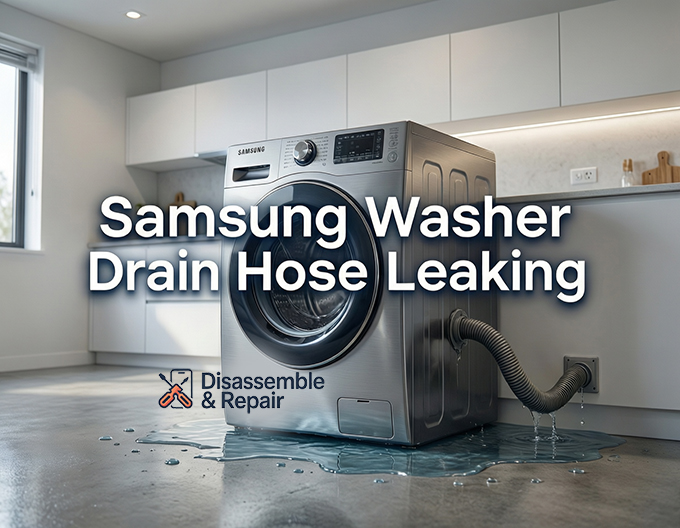
Diagnosing exactly where the water is coming from is the critical first step. A Samsung washer drain hose leaking can stem from the external hose you see behind the unit or the internal drain hose hidden inside the cabinet.
Start by pulling your washer away from the wall. Run a short cycle or a drain/spin cycle and observe the back of the machine. If you see water dripping from the gray corrugated tube connecting the washer to your wall pipe or sink, the issue is likely the discharge hose itself. However, if the water appears to be pooling from underneath the machine without a visible source at the back, the leak likely originates from internal components like the drain pump, debris filter, or internal connection points.
The Connection to Samsung Washer Error Code 5C
Often, a leak is accompanied by a digital warning. The Samsung washer error code 5C (or 5E on older models) specifically indicates a drainage failure. This error means the machine cannot expel water within a set time limit. While this code primarily points to a clogged drain pipe or filter, the pressure buildup from a blockage can sometimes cause weak points in the hose or hose clamp connections to burst or leak. If you see this code and a puddle, your drainage system is completely compromised.
Common Causes of Water Leakage
Understanding the mechanics of your front load washing machine helps in pinpointing the failure. Several key areas are prone to wear and tear.
Damaged External Discharge Hose
The most obvious culprit is the external discharge hose. Over time, the plastic can become brittle and crack, especially if the washer is pushed too close to the wall, causing a sharp kink. Additionally, if you are using a drain hose extension kit to reach a distant standpipe, the connection point between the two hoses is a prime location for water leakage. Improperly secured extensions often vibrate loose during the spin cycle.
Read more Samsung washing machine 4C1 error
Internal Drain Hose and Clamps
Inside the machine, a shorter, accordion-style rubber hose connects the tub to the drain pump. This internal drain hose is subject to intense vibration. If the spring-loaded hose clamp securing it loses tension, or if the hose rubs against the cabinet (a phenomenon called “chafing”), a hole can develop. This type of leak typically appears near the front-left or rear-bottom of the washer.
Drain Pump and Debris Filter Issues
The drain pump is the heart of the evacuation system. It pushes water out through the hoses.
- Debris Filter: Located behind a small door on the bottom front of most Samsung front loaders, this filter traps coins, lint, and buttons. If the filter is not screwed in tightly after cleaning, or if its rubber O-ring is damaged, water will pour out during the drain cycle.
- Pump Housing: The plastic housing of the pump itself can crack due to impact from foreign objects.
- Check Valve: A small but crucial component often found near the pump outlet is the check valve. This flap prevents dirty water from flowing back into the drum. If this valve fails or its seal deteriorates, it can cause backflow leaks or leak externally if the valve body is compromised.
Step-by-Step Repair and Troubleshooting
Before attempting any repairs, ensure you have the correct replacement parts. Check your specific model number (usually found inside the door or on the back panel) to order the matching hoses or pumps.
Safety First
Always disconnect the power cord and turn off the water supply valves before working on your washer. You will likely encounter standing water, so keep towels and a shallow pan nearby.
Inspecting and Cleaning the Debris Filter
If the leak comes from the front bottom corner, check the debris filter first.
- Open the small access door at the bottom front.
- Locate the small emergency drain tube. Pull it out, remove the cap, and drain the remaining water into a shallow dish to prevent a flood when you open the filter.
- Unscrew the debris filter counter-clockwise.
- Clean the filter thoroughly under warm running water.
- Inspect the housing for cracks.
- Reinsert the filter and tighten it firmly. If the threads are crossed or it is too loose, it will continue to leak.
Replacing the External Discharge Hose
If your inspection revealed cracks in the external hose:
Read more Samsung washing machine water drain problem
- Disconnect the old hose from the standpipe or sink.
- Compress the hose clamp on the back of the washer with pliers and slide the hose off the plastic coupler.
- If you are using a drain hose extension kit, check the connector. If the leak is at the joint, you may only need to tighten the clamps or replace the connector rather than the entire hose.
- Attach the new discharge hose ensuring the clamp is seated past the barb on the fitting to ensure a watertight seal.
- Route the hose correctly. It must rise at least 18 inches but no more than 96 inches to prevent siphoning issues.
Accessing the Internal Components
For leaks originating inside the cabinet, you will need to open the washer.
- Remove the screws on the back of the top panel and slide the panel off.
- Remove the detergent drawer and the screws located behind it.
- Unscrew the control panel and carefully set it aside (take photos of wire connections if you disconnect them).
- Open the door and remove the wire clamp holding the rubber door boot seal. Push the seal inward.
- Remove the screws securing the front panel and lift it off.
You now have clear visibility of the drain pump, the internal drain hose, and the check valve.
Checking the Internal Drain Hose and Pump
With the front panel off, look for white residue or rust stains, which indicate a slow leak.
- Internal Hose: Squeeze the black rubber hose leading from the tub to the pump. Check for soft spots, tears, or holes caused by friction. If damaged, loosen the clamps at both ends and replace it.
- Drain Pump: Inspect the pump body. If you see water dripping from the seam of the pump motor or the volute (the plastic cover), the pump seal has failed. In this case, the entire drain pump assembly requires replacement.
- Check Valve: Ensure the check valve assembly connected to the discharge port is not cracked. A leaking check valve can sometimes be mistaken for a pump leak.
Preventing Future Leaks
Once you have resolved the immediate Samsung washer drain hose leaking issue, preventive maintenance is key to avoiding a recurrence.
Read more Samsung washer not draining
Regular Filter Maintenance: Clean the debris filter once a month. This prevents pressure buildup in the system that can stress hoses and seals. When debris accumulates, the pump has to work harder, increasing the risk of cracks and the appearance of Samsung washer error code 5C.
Check Hose Positioning: Ensure your washer is not pushed back so far that it crushes the drain hose against the wall. A crushed hose restricts flow and eventually splits. Leave at least 4 inches of clearance behind the machine.
Inspect Connections: If you installed a drain hose extension kit, check the tightness of the clamps annually. The vibration from high-speed spins can slowly loosen these connections.
Use the Right Detergent: For a front load washing machine, always use High-Efficiency (HE) detergent. Regular detergent creates excessive suds which can increase internal pressure and lead to overflow leaks through the air vents or hose connections.
Conclusion
Dealing with a Samsung washer drain hose leaking can be stressful, but breaking the problem down into manageable checks makes it solvable. Whether the culprit is a simple loose hose clamp, a clogged debris filter, or a damaged internal drain hose, most issues can be fixed with basic tools and a little patience. By addressing the leak promptly and keeping an eye on your machine’s maintenance, you can extend the life of your appliance and keep your laundry room dry. If the repair seems beyond your comfort zone, or if replacement parts do not stop the leak, consulting a professional technician is always the safest route.
Frequently Asked Questions
What does it mean if my Samsung washer displays the 5C or 5E error code while leaking?
The 5C (or 5E on older models) error code indicates a drainage failure, meaning the machine cannot expel water within the required time. While this often points to a clog in the drain pipe or debris filter, the resulting pressure buildup can cause water to leak from weak hose connections or damaged seals.
How can I tell if the leak is coming from the internal or external drain hose?
To identify the source, pull the washer away from the wall and run a drain cycle. If you see water dripping from the gray corrugated tube at the back, the external discharge hose is the culprit. If water pools underneath the machine but the back remains dry, the leak is likely originating from the internal drain hose, drain pump, or debris filter.
How often should I clean the debris filter to prevent drainage issues?
It is recommended to clean the debris filter at least once a month. Regularly removing lint, coins, and debris prevents clogs that stress the drainage system and helps avoid the pressure buildup that leads to hose leaks and 5C error codes.
Why is my Samsung washer leaking after I installed a drain hose extension kit?
Leaks at extension points are common and usually occur because the connection between the original hose and the extension is not secure. Ensure the connector is the correct size and that the hose clamps are tightened firmly. The vibration from the spin cycle can loosen these joints over time, so they should be inspected annually.
Can using the wrong detergent cause my washer to leak?
Yes. Samsung front-load washers require High-Efficiency (HE) detergent. Using regular detergent creates excessive suds, which can increase internal pressure and lead to overflow leaks through air vents or hose connections. Always use the recommended amount of HE detergent to maintain proper system pressure.