
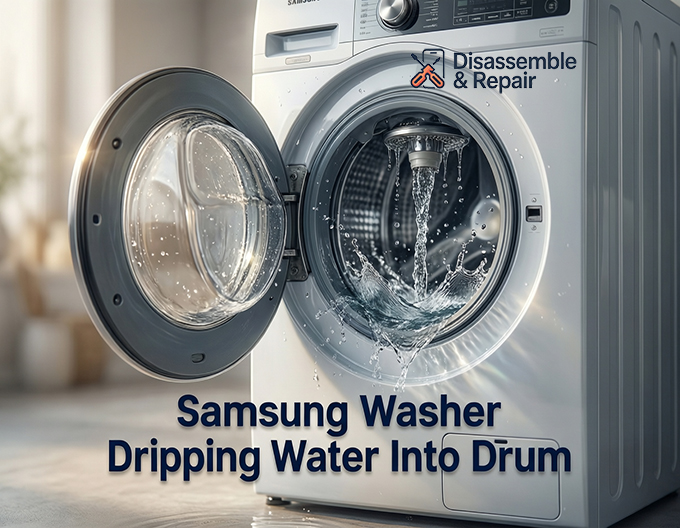
Finding a puddle inside your appliance can be alarming, especially when you discover your Samsung washer dripping water into drum when it is turned off. This issue not only wastes water but can also lead to mold growth and unpleasant odors if left unaddressed.
While a Samsung washing machine is a reliable appliance, components like the water inlet valve or supply lines can degrade over time, leading to internal leaks. Below is a professional guide to diagnosing why this happens and how to fix it, using industry-standard troubleshooting methods.
Samsung Washer Dripping Water into Drum: The Primary Causes
When water appears in the drum without a cycle running, the problem is almost always related to the water supply or drainage systems. Identifying the root cause requires checking specific components.
1. Failed Water Inlet Valve
The most common reason for a leak when the machine is off is a faulty water inlet valve. This component acts as the gatekeeper for your washer, opening to let water in and closing to stop the flow.
Read more Samsung washing machine HE2 error
- Solenoid Valve Failure: The inlet valve is operated by solenoid valve coils. If these electrical components fail or get stuck in the “open” position, they cannot shut off the water flow completely, resulting in a constant drip.
- Sediment Buildup: Over time, minerals and debris from your water supply line can accumulate inside the valve assembly. This sediment buildup can prevent the valve from sealing tightly, allowing water to seep through even when the washer is unplugged.
- Cold Water Valve vs. Hot Water Valve: You can often determine which valve is leaking by feeling the water temperature. If the water inside the drum is cold, the cold water valve is likely the culprit.
2. Siphoning from the Drain Hose
If the water accumulating in the drum is dirty or smells like gray water, the issue might be backflow caused by siphoning.
- This occurs if the drain hose is pushed too far down into the standpipe.
- If the hose forms an airtight seal at the drain connection, water can be siphoned back into the washer from the house drain system.
- Correction: Ensure the drain hose is not inserted more than 6-8 inches into the standpipe and that there is an air gap.
3. Low Water Pressure
Surprisingly, water pressure that is too low can cause leaks. Most water inlet valves require a minimum of 20 PSI to close properly. If the pressure in your home drops below this threshold, the internal spring mechanism in the valve may not have enough force to seal the water flow shut, causing a slow drip.
4. Detergent Dispenser Issues
In some cases, the leak originates from the dispenser drawer.
- If the dispenser housing is cracked or clogged with old detergent, water that enters the dispenser during a fill cycle might not drain properly into the tub.
- Instead, it can pool and slowly drip into the drum over hours.
Troubleshooting and Repair Steps
Before attempting any appliance repair, always unplug the washer and turn off the water supply valves to ensure safety.
Step 1: Test the Water Inlet Valve
To confirm if the inlet valve is the source of the Samsung washer dripping water into drum issue:
- Visual Inspection: Turn off the water supply behind the washer. If the dripping stops after a few hours, the inlet valve is likely mechanically failing to hold back the water pressure.
- Clean the Filter Screens: Disconnect the fill hose from the back of the washer. Inside the inlet valve ports, you will see small mesh screens. Remove these carefully with pliers and clean out any sediment buildup. Reassemble and test.
- Multimeter Test: If cleaning doesn’t work, you may need to test the solenoid coils for continuity using a multimeter. If the resistance is outside the manufacturer’s specified range (usually 500–1500 ohms), the valve must be replaced.
Step 2: Check for Internal Leaks
If the water seems to be coming from an internal leak rather than the inlet valve, inspecting the internal hoses is necessary.
- Remove the top panel of your front load washer.
- Inspect the hose connecting the dispenser to the drum and the hose from the inlet valve to the dispenser.
- Look for moisture around the clamps and rubber seals. A loose clamp can be tightened, but a cracked hose requires replacement.
Step 3: Inspect the Dispenser Drawer
Remove the dispenser drawer completely by pressing the release tab.
Read more Samsung washer not spinning fast
- Clean the compartment thoroughly with warm water to remove congealed soap.
- Check the plastic housing for cracks. A damaged housing can allow water to bypass the correct channels and drip directly into the drum.
Step 4: Verify Water Level Sensor Function
While less likely to cause a drip when the machine is off, a faulty water level sensor (pressure switch) can cause overfilling issues during a cycle.
- This sensor monitors the air pressure in a small tube connected to the drum.
- If the tube is clogged or the sensor is stuck, the machine may think the drum is empty and keep the water valve open longer than necessary. Ensure the small pressure tube is clear of debris.
When to Call a Professional
If you have cleaned the filters, checked the drain hose, and inspected the dispenser but the dripping persists, the water inlet valve likely needs full replacement. While this is a manageable DIY task for many, appliance repair can be dangerous if you are unfamiliar with electrical components.
Read more Samsung washing machine SUD error
If you suspect the issue involves the main control board sending incorrect signals to the valves, or if you cannot locate the source of the leak, it is best to contact a certified technician. They have the specialized tools to diagnose complex issues like a failing main board or a subtle internal seal failure.
By systematically checking the water inlet valve, water supply line, and drainage setup, you can typically resolve the issue of water dripping into your drum and restore your washer to peak performance.
Frequently Asked Questions
Why does my Samsung washer drip water into the drum even when it is turned off?
The most common cause is a faulty water inlet valve. If the internal solenoid fails or if there is sediment buildup from your water supply, the valve cannot close completely. This allows a slow, constant drip to enter the machine even when no cycle is running.
How can I determine if the cold or hot water valve is the source of the leak?
A simple way to diagnose which valve is failing is by checking the temperature of the water collecting in the drum. If the water is cold, the cold water inlet valve is likely the problem; if the water is warm or hot, the issue lies with the hot water valve.
Can the drain hose cause water to accumulate in the drum?
Yes, this occurs through a process called siphoning. If the drain hose is pushed more than 6-8 inches into the standpipe or if there is no air gap, dirty “gray water” can be pulled back into the washer from your home’s drainage system. You can usually identify this if the water in the drum appears dirty or smells unpleasant.
Why would low water pressure lead to a leaking washer?
Most Samsung water inlet valves require a minimum of 20 PSI to function correctly. If your home’s water pressure is too low, the internal spring mechanism may not have enough force to snap the valve shut, causing water to seep through and drip into the drum.
What should I do if cleaning the filter screens doesn’t stop the dripping?
If cleaning the sediment from the mesh screens does not resolve the issue, you should test the solenoid coils for continuity using a multimeter. If the resistance is outside the range of 500–1500 ohms, the water inlet valve is electrically faulty and must be replaced.