
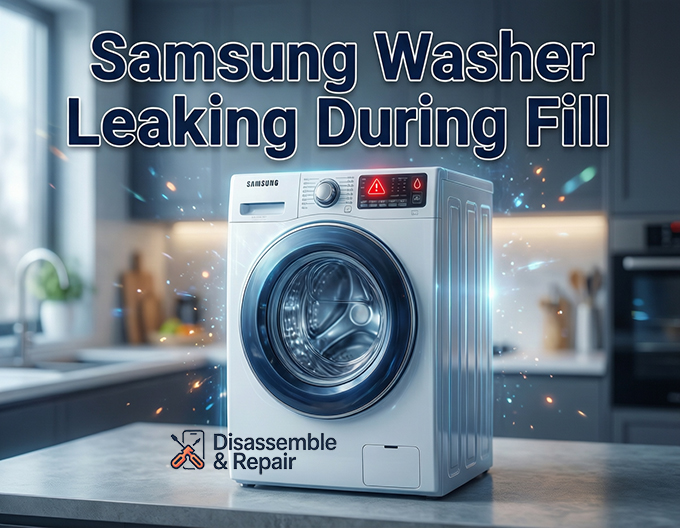
Discovering a puddle of water on your laundry room floor can be alarming, especially when you catch your Samsung washer leaking during fill cycles. This specific type of leak often points to issues with components that handle fresh water intake, rather than drainage, requiring a targeted approach to troubleshooting. If ignored, these leaks can lead to significant water damage, mold growth, and costly repairs to your home’s subflooring.
This guide provides a professional, step-by-step analysis of the potential causes, focusing on the specific components responsible for managing water flow. from the intake valves to the internal sensors.
Read more Samsung washing machine HE2 error
Why Is Your Samsung Washer Leaking During Fill?
A Samsung washer leaking during fill is typically caused by a failure in the high-pressure side of the machine’s plumbing. Unlike drain leaks, which occur at the end of a cycle, fill leaks happen immediately when the cycle starts or during rinse stages. The pressure from your home’s water supply is constant, meaning any weak link in the intake system—whether it is a cracked valve, a loose hose, or a misaligned seal—can result in immediate leakage.
To diagnose this effectively, you must methodically inspect the path the water takes from the wall spigot to the wash tub. The following sections detail the critical entities involved in this process and how to inspect them.
1. Water Supply Hoses and Connections
The most accessible and common culprit for a leak during the fill cycle is the external plumbing connection. Before dismantling the machine, begin your inspection at the back of the washer.
- Inspection: Check the water supply hoses where they connect to both the wall faucets and the back of the washing machine.
- Common Issues: Over time, the rubber washers inside the hose connectors can harden or disintegrate, breaking the watertight seal.
- Resolution: If you feel moisture at these connection points, try tightening them with pliers. If the leak persists, turn off the water, disconnect the hoses, and replace the rubber washers. It is also good practice to replace rubber hoses with braided stainless steel versions to prevent future bursting.
2. The Water Inlet Valve Assembly
If the external hoses are dry, the issue likely lies just inside the machine at the water inlet valve. This component acts as the gatekeeper for your washer, electrically opening to allow hot and cold water to enter.
Read more Samsung washing machine 3E error
- Function: The valve assembly consists of a plastic body and one or more solenoid valve coils. When the cycle begins, the machine sends an electrical signal to the solenoid, which opens the valve plunger.
- Failure Points:
- Cracks: In colder climates or due to age, the plastic body of the valve can develop hairline cracks. When the water pressure hits the valve during the fill cycle, water sprays out of these cracks inside the machine cabinet.
- Debris: Sediment can get trapped in the valve screens, preventing them from closing fully or causing high-pressure spray patterns that leak.
- Cold Water Valve: The cold water valve is particularly susceptible to condensation and freezing in unheated spaces, which can crack the plastic housing.
- Troubleshooting: Unplug the washer and remove the top or back panel (depending on your model). Visually inspect the valve assembly while running a short fill cycle (with extreme caution). If you see water dripping or spraying from the valve body or the solenoid coils, the entire valve assembly must be replaced.
3. Detergent Dispenser Drawer and Housing
A leak manifesting at the front left corner of a front load washer often originates from the detergent dispenser drawer. This area handles a high volume of water flow as the machine flushes detergent and fabric softener into the tub.
- Dispenser Housing: The drawer slides into a plastic dispenser housing inside the machine. If this housing is cracked or if the internal jets are clogged, water can spray upwards or backwards, leaking out of the machine frame or down the front panel.
- Obstructions: Build-up of congealed detergent or mold can block the flow of water from the housing to the tub. When water enters faster than it can drain into the drum, it overflows the drawer.
- Water Pressure: Excessively high home water pressure can cause the water to overshoot the dispenser cup, splashing out of the front.
- Fix: Remove the drawer and clean it thoroughly with hot water. Inspect the housing cavity for cracks. If the housing is damaged, it will need to be replaced. Reducing the flow from your supply taps slightly can also help if pressure is the issue.
4. Internal Fill Hoses
Once water passes through the inlet valve and the dispenser, it travels through internal fill hoses to reach the tub. These hoses are often accordion-style rubber or clear plastic tubing.
- The Problem: The constant vibration of the machine during spin cycles can cause the spring clamps securing these hoses to loosen. Additionally, the rubber can become brittle and crack over time.
- Inspection: With the top panel removed, trace the path of water from the dispenser housing to the top of the outer tub. Look for white calcium trails or rust spots, which indicate a slow, long-term leak.
- Repair: If a hose is loose, reposition the clamp. If the hose is cracked or stiff, replace it to ensure a flexible, watertight connection.
5. Front Load Washer Door Seal Bellows
For owners of a front load washer, the door seal bellows (the large grey rubber gasket around the door opening) is a critical seal. While often associated with leaks during the wash or spin cycle, it can also leak during the fill if the water stream is directed incorrectly or if the seal is compromised.
Read more Samsung washer not spinning
- Damage: Sharp objects like zippers or keys can tear the rubber. Even a small puncture can cause water to trickle down the front of the machine as it fills.
- Debris: Hair, lint, and sock fibers can accumulate on the sealing surface, preventing the glass door from making a tight seal against the bellows.
- Alignment: If the door hinges are sagging, the glass may not press evenly against the seal.
- Maintenance: Regularly wipe down the bellows and check for rips. If damaged, the door seal bellows must be replaced immediately to prevent floor damage.
6. Water Level Control System Failures
Sometimes, a leak is actually an overflow issue caused by the machine failing to stop filling. This indicates a problem with the sensory system that monitors water volume.
Pressure Switch and Water Level Sensor
The water level sensor (often called a pressure switch) tells the control board how much water is in the tub. It works by monitoring air pressure in a small tube connected to the bottom of the drum. As water rises, air pressure increases, triggering the switch to shut off the water inlet valve.
Read more Samsung washing machine HE error
- Symptoms: If this sensor fails or if the air tube is clogged or disconnected, the machine will not “know” it is full. The water inlet valves will remain open, and the washer will continue filling until water pours out of the overflow vents or the door seal.
- Diagnosis: If your machine fills endlessly, unplug it. If the water stops, it is likely an electrical or sensor issue. If the water continues flowing even when unplugged, the mechanical solenoid valve is stuck open.
Overflow Sensor
Some advanced Samsung models are equipped with a dedicated overflow sensor or a secondary safety switch. This component is designed to detect if water levels exceed a critical safety threshold.
- Function: When triggered, this sensor should forcibly activate the drain pump and cut power to the fill valves.
- Failure: If the overflow sensor is malfunctioning, the machine may not engage these safety protocols during an overfill event, leading to a massive leak.
- Troubleshooting: Inspecting these sensors requires a multimeter to test for continuity. If the pressure tube is clear of debris and connected properly, but the machine still overfills, the sensor itself usually requires replacement.
Troubleshooting Checklist
If you are attempting to diagnose the leak yourself, follow this logical order to isolate the problem safely:
- Dry the Area: Ensure the floor and machine are dry to easily spot fresh drips.
- External Check: Run your hand along the water supply hoses and the connection at the wall.
- Dispenser Check: Open the detergent dispenser drawer while filling (if possible) or check for evidence of splashing. Ensure the drawer is not cracked.
- Internal Inspection: Disconnect power, remove the top panel, and visually inspect the water inlet valve, solenoid valve, and internal fill hoses for moisture or calcium deposits.
- Door Seal Check: Inspect the door seal bellows for tears or trapped debris.
- Sensor Test: If the leak is due to overfilling, check the air tube connected to the pressure switch for blockages.
Conclusion
A Samsung washer leaking during fill is rarely a mystery that cannot be solved with careful observation. Whether the root cause is a cracked dispenser housing, a failed water level sensor, or a simple worn washer in the water supply hoses, early detection is key.
While many of these repairs, such as tightening a hose or cleaning the door seal, are DIY-friendly, replacing internal components like the solenoid valve or pressure switch involves working with electrical components and water simultaneously. If you are uncomfortable disassembling the machine cabinet or testing electrical sensors, it is highly recommended to contact a professional appliance repair technician to ensure the safety and longevity of your washing machine.
Frequently Asked Questions
Why does my Samsung washer leak specifically during the fill cycle?
A leak during the fill cycle typically indicates an issue with the high-pressure side of the machine’s plumbing. This is the period when water is traveling from your home’s supply through the intake hoses, the inlet valve, and the detergent dispenser. Common causes include worn-out hose washers, a cracked water inlet valve, or a blockage in the dispenser housing that causes water to back up and overflow.
Can a dirty detergent drawer really cause the washer to leak?
Yes. If the detergent dispenser drawer or its housing becomes clogged with congealed detergent, fabric softener, or mold, water cannot flow freely into the wash tub. When the water enters the dispenser faster than it can drain out, it can overflow the drawer or spray against the internal housing, leading to a leak that usually appears at the front left corner of the machine.
How do I know if the water inlet valve needs to be replaced?
You should inspect the valve if you see water dripping or spraying inside the cabinet during the fill stage. Look for visible hairline cracks in the plastic body or calcium deposits (white crusty build-up) around the solenoids. Additionally, if your washer continues to fill with water even when the power is unplugged, the inlet valve is mechanically stuck open and requires immediate replacement.
What should I do if my washer overfills and then leaks?
If the machine doesn’t stop filling and eventually leaks from the door or overflow vents, the issue is likely the water level sensor (pressure switch) or its air tube. Check the small plastic tube connected to the sensor for clogs, kinks, or holes. If the tube is clear and properly connected but the machine still fails to sense the water level, the pressure switch itself is likely faulty.
Is it necessary to use braided stainless steel hoses instead of rubber ones?
While rubber hoses are common, they are more prone to hardening, cracking, and bursting over time due to constant water pressure. Upgrading to braided stainless steel hoses provides an extra layer of protection against leaks and bursts, making them a much safer long-term choice for preventing water damage in your laundry room.