
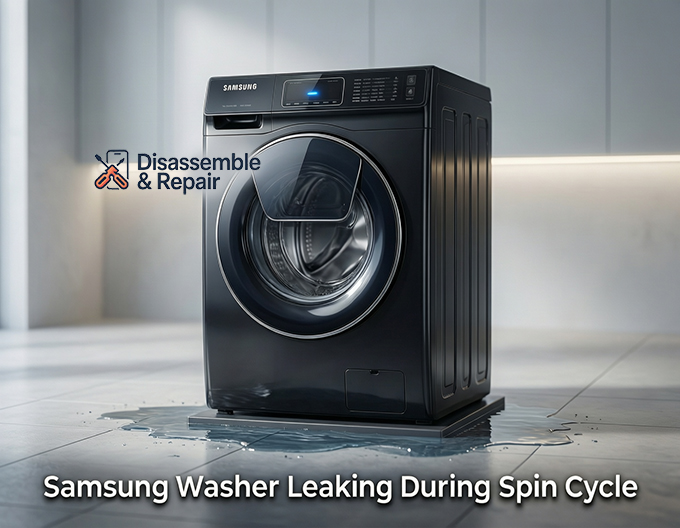
A Samsung washer leaking during spin cycle operations can quickly escalate from a minor annoyance to major water damage if not addressed immediately. The high speeds reached during this specific phase often expose vulnerabilities in seals, hoses, or internal components that remain watertight during slower wash stages.
When your washing machine enters the high-RPM spin mode, intense vibration and centrifugal force can force water through hairline cracks or compromised gaskets that otherwise hold firm. Troubleshooting this issue requires a systematic approach to identify which component is failing under pressure.
Why Is My Samsung Washer Leaking During Spin Cycle?
The spin cycle is the most physically demanding part of the wash program. During this phase, the drum rotates at high velocity to extract moisture, creating significant internal pressure and vibration. A Samsung washer leaking during spin cycle is often a symptom of structural or sealing failures that cannot withstand these forces. Unlike fill-cycle leaks which usually indicate inlet valve issues, spin-cycle leaks point toward drainage components, tub integrity, or suspension failures.
1. Compromised Door Gasket (Diaphragm)
For a Front load washer, the door gasket is the most common culprit. This large rubber seal prevents water from escaping the front of the drum.
- The Issue: Over time, the rubber can become brittle, develop small tears, or accumulate mold and debris. During the high-speed spin, water is flung against the door glass and gasket with force. If there is even a microscopic tear or if the seal is warped, water will escape.
- The Fix: Inspect the “bellows” (folds) of the gasket for punctures or trapped items like coins. If you find damage, the entire gasket must be replaced to ensure a watertight seal.
2. Detergent Drawer Leaks
A leak originating from the top left corner of the machine often points to the detergent drawer.
Read more Samsung washing machine 4C2 error
- The Issue: If the dispenser housing is cracked or the siphon jets are clogged with old soap, the intense vibration of the spin cycle can cause residual water to splash out over the top of the housing.
- The Fix: Remove the drawer and clean it thoroughly with warm water. Check the plastic housing for cracks. Reducing the amount of High-Efficiency (HE) detergent you use can also prevent excess suds from creating pressure leaks.
3. Drainage System Failures
The drainage system is under maximum load just before and during the spin cycle.
- Drain Hose: Check the hose running from the back of the machine. Kinks, cracks, or a loose connection at the drain pump can spray water when the pump activates to clear the drum. Ensure the hose is inserted correctly into the standpipe—if it is too deep or too shallow, it can cause backflow or splashing.
- Drain Pump: The drain pump assembly, usually located at the bottom of the washer, can develop cracks in its body or have a failed seal. If you see water pooling directly underneath the machine near the filter housing, the pump typically requires replacement.
4. Outer Tub and Tub Seal Issues
This is a more serious mechanical failure often requiring professional repair.
- Tub Seal: The tub seal sits between the transmission and the outer tub. If this seal wears out, water can leak directly onto the floor or into the transmission assembly. This is often accompanied by a loud roaring noise, indicating the bearings have also been water-damaged.
- Outer Tub Damage: Plastic outer tubs can develop hairline cracks. During the spin cycle, the centrifugal force pushes water outward against the tub walls. If a crack exists, the pressure will force the water open, creating a leak that only appears when the drum is spinning fast.
5. Suspension and Balance Issues
Leaks can sometimes be a secondary effect of violent shaking caused by an Unbalanced load.
- Suspension Rods and Shock Absorbers: These components stabilize the heavy drum. If the Suspension rods (in top loaders) or Shock absorbers (in front loaders) are worn, the tub will bang violently against the cabinet. This excessive movement can tug on internal hoses, momentarily loosening connections or causing water to splash out of the tub cover.
- The Fix: Run a calibration mode if available on your model. If the washer constantly hits the cabinet walls even with small loads, the suspension kit likely needs replacement.
6. Water Inlet Valve
Although primarily active during the fill cycle, a faulty Water inlet valve can drip or weep under the vibration of the spin cycle. Inspect the valve connections at the back of the washer for any signs of rust or moisture.
Deciphering Samsung Error Codes Related to Leaks
Your machine may try to tell you what is wrong before you see the water. Watch for these codes:
Read more Samsung washing machine 4C error
- LC or LE: These codes specifically indicate a water leak. The washer’s moisture sensor, located in the base pan, has detected water. The machine will often automatically drain to prevent flooding.
- UB or UE: These indicate an Unbalanced load. While not a leak code itself, ignored balance issues can physically damage the tub or hoses, leading to leaks.
- 5C or 5E: These are drainage errors. If the water cannot drain fast enough before the spin starts, the excess water can overflow or leak from the door seal due to high water levels during rotation.
Troubleshooting Checklist
If you catch your Samsung washer leaking during spin cycle, follow these immediate steps:
- Stop the Cycle: Pause or cancel the operation immediately to minimize water damage.
- Inspect the Door: Clean the glass and the rubber gasket. Look for hair or lint preventing a tight seal.
- Check the Filter: Open the debris filter door (usually bottom front). Ensure the clean-out cap is screwed on tightly.
- Level the Washer: Use a spirit level to ensure the machine is perfectly flat. Adjust the feet as necessary to reduce vibration.
- Examine Hoses: Pull the machine forward and inspect all accessible hoses for wetness or corrosion.
By methodically checking these components, you can isolate the source of the leak. While simple fixes like cleaning the detergent drawer or tightening a hose clamp are DIY-friendly, issues involving the Outer tub, Tub seal, or transmission usually require a qualified technician to ensure the machine is reassembled correctly and safely.
Frequently Asked Questions
Why does my Samsung washer only leak during the spin cycle and not during the wash?
The spin cycle is the most demanding phase, reaching high RPMs that create significant centrifugal force and vibration. This pressure can force water through hairline cracks, worn seals, or loose hose connections that are strong enough to hold water during the slower movements of the regular wash cycle.
What should I do if my washer displays an LC or LE error code?
These specific codes indicate that the washer’s internal moisture sensor has detected water in the base pan. You should immediately stop the cycle to prevent further damage. Check the drainage filter, inspect the door gasket for tears, and ensure all external hoses are securely connected before attempting to restart the machine.
Can an unbalanced load actually lead to a water leak?
Yes. While an unbalanced load usually causes a UB or UE error, the resulting violent shaking can have secondary effects. Excessive vibration can pull on internal hoses, loosening their clamps, or cause the tub to bang against the cabinet, which may lead to water splashing out of the tub cover or damaging internal components.
How can I tell if the leak is coming from the detergent drawer?
If you notice water dripping down the front-left corner of the machine, the detergent drawer is the likely source. This often happens if the drawer is clogged with old soap or if the machine is vibrating excessively, causing residual water to splash out of the housing. Cleaning the drawer and reducing the amount of HE detergent used can often resolve this.
Read more Samsung washer keeps stopping on spin cycle
When does a leak require a professional technician instead of a DIY fix?
If the leak is accompanied by a loud roaring or grinding noise during the spin cycle, it usually indicates a failed tub seal and damaged bearings. These issues, along with cracks in the outer plastic tub, involve significant disassembly of the machine’s core and typically require a qualified professional to ensure a safe and proper repair.