

Discovering Samsung washer mold in detergent dispenser compartments is a frustrating reality for many owners of high-efficiency appliances. While Samsung manufactures state-of-the-art laundry solutions, the specific design of the dispenser drawer often creates an environment conducive to fungal growth if not rigorously maintained. As a Senior SEO Specialist and appliance maintenance expert, I have compiled this comprehensive guide to help you identify, remove, and prevent the accumulation of mold and mildew in your washing machine.
Understanding the Environment of a Front-Load Washing Machine
To effectively combat the issue, one must first understand the mechanics of a front-load washing machine. Unlike top-loading models, front-loaders are designed to be airtight and watertight to prevent leaks during operation. However, this engineering marvel creates a specific drawback: moisture retention.
When the wash cycle concludes, residual water often remains trapped within the internal components. The detergent drawer is particularly susceptible because it acts as a conduit for water, soap, and additives. If the drawer is closed immediately after a cycle, the lack of ventilation prevents evaporation, creating a dark, damp ecosystem perfect for microbial growth.
The Role of Fabric Softener Residue
A primary catalyst for mold proliferation is fabric softener residue. Fabric softeners are typically lipid-based, meaning they leave behind a waxy film. When this film coats the plastic surfaces of the dispenser, it creates a sticky substrate known as biofilm. This biofilm creates a nutrient-rich feeding ground for mildew spores and bacteria. Over time, the combination of standing water and decaying organic matter (soap scum and lipids) manifests as black, slimy mold.
Effective Techniques for Removing Samsung washer mold in detergent dispenser
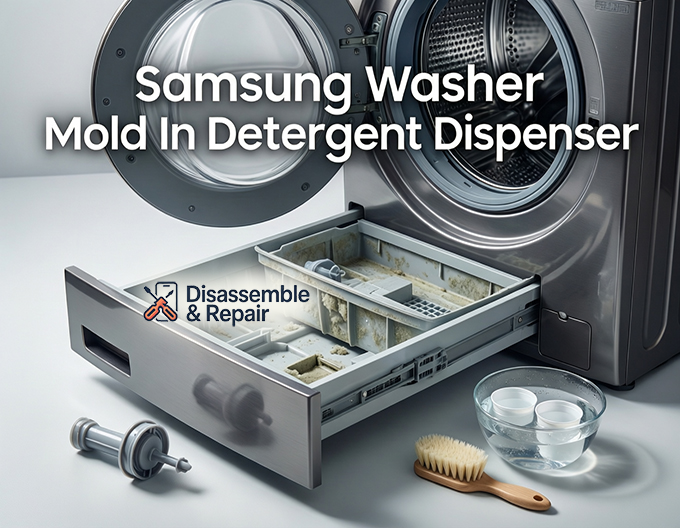
If you have visually identified black spots or smell a musty odor, immediate action is required. The following process details how to thoroughly clean the unit, specifically targeting the Samsung washer mold in detergent dispenser area to restore sanitary conditions.
Step 1: Disassembling the Components
Safety and thoroughness are paramount. Begin by pulling the detergent drawer out until it stops. locate the release lever—often a tab within the fabric softener compartment—and press it down to fully remove the drawer from the machine.
Once removed, you must disassemble the drawer further. Most Samsung drawers have removable inserts, specifically the siphon cap covering the softener and bleach compartments. These caps are critical because mold often grows on the underside where it is not immediately visible.
Step 2: The Soaking Solution
Avoid using harsh chemicals that might degrade the plastic or seals. Instead, utilize the cleaning power of white vinegar. Vinegar is a mild acid that is exceptionally effective at killing mold at the root, whereas bleach often only bleaches the surface color without destroying the internal fungal structure.
Read more How to clean Samsung washer touch screen
- Fill a basin or sink with hot water.
- Add two cups of white vinegar.
- Submerge the drawer body and the siphon cap completely.
- Allow the components to soak for at least one hour to loosen the biofilm.
Step 3: Mechanical Cleaning
After soaking, use a dedicated soft-bristle brush (an old toothbrush works well) to scrub every crevice. Pay close attention to the corners and the underside of the siphon mechanism. The goal is to physically agitate and remove the fabric softener residue that has hardened on the plastic. Rinse thoroughly with hot water to ensure all spores and vinegar are washed away.
Read more Samsung Tub Clean cycle instructions
Deep Cleaning the Dispenser Housing
Cleaning the removable drawer is only half the battle. You must also address the dispenser housing—the empty slot inside the machine where the drawer slides in. This area is often the most neglected part of a front-load washing machine and can harbor significant microbial growth.
Inspection and Scrubbing
Use a flashlight to inspect the ceiling and back walls of the housing. You will likely see water jets and potentially patches of mold.
- Prepare a spray bottle with a 50/50 mixture of water and white vinegar.
- Spray the interior of the dispenser housing liberally.
- Let it sit for 15 minutes to penetrate the grime.
- Use a long-handled bottle brush to scrub the internal surfaces.
- Wipe the area clean with a microfiber cloth.
This step is crucial because if mold remains in the housing, it will quickly re-contaminate your freshly cleaned drawer.
Prevention Strategies and Maintenance
Once you have eradicated the existing mold, maintaining a mold-free environment requires a shift in laundry habits. Implementing a strict routine can prevent moisture retention and ensure your clothes remain hygienic.
Improving Ventilation
The simplest and most effective preventative measure is airflow. After every wash cycle, leave the detergent drawer pulled out and the main door slightly ajar. This allows ambient air to circulate through the dispenser housing and drum, evaporating residual moisture before mildew spores can germinate.
Managing Detergent and Softener Usage
Modern high-efficiency washers require very little detergent. Overusing detergent or softener leads to excess suds and residue that the machine cannot fully rinse away. strictly adhere to the manufacturer’s recommended amounts. Consider switching to clear, liquid detergents rather than thick, pearlescent ones, as they tend to leave less residue. Additionally, dilute your fabric softener with a small amount of warm water before pouring it into the dispenser to prevent clogging the siphon cap.
Read more How to flush Samsung washer hoses
The Importance of the Maintenance Wash
Samsung washing machines often feature a “Self Clean” or “Pure Cycle” option. If your model lacks this, you must manually perform a maintenance wash.
A maintenance wash is a hot cycle (at least 60°C or 140°F) run without laundry.
- Add a cup of white vinegar or a specialized washing machine cleaner directly to the drum.
- Run the longest, hottest cycle available.
- This process flushes out the internal pipes and the dispenser housing, killing bacteria and dissolving building-up biofilm.
Perform a maintenance wash once a month to keep the internal ecosystem of the washer hostile to mold.
The Health Implications of Neglect
Ignoring mold in your appliance is not merely an aesthetic issue; it is a health concern. As water flows through a moldy dispenser, it picks up mildew spores and deposits them onto your clothing and linens. For individuals with respiratory issues, allergies, or compromised immune systems, wearing clothes contaminated with microbial byproducts can trigger adverse reactions.
Furthermore, the presence of mold indicates that the machine is not performing optimally. The buildup can block water jets, leading to poor cleaning performance and potential mechanical failure of the dispensing system.
Conclusion
The presence of Samsung washer mold in detergent dispenser setups is a common byproduct of the high-efficiency, front-load design, but it is entirely manageable with the right approach. By understanding the interaction between moisture retention and fabric softener residue, you can break the cycle of microbial growth.
Regular cleaning with white vinegar, scrubbing the siphon cap and dispenser housing, and allowing for proper ventilation are the pillars of appliance hygiene. Treat your washing machine not just as a cleaning tool, but as an environment that requires its own maintenance to function safely and effectively. Implementing these professional protocols will extend the lifespan of your appliance and ensure your laundry remains truly clean.
Read more How to clean drain in Samsung washing machine
Frequently Asked Questions
Why is mold common in Samsung washer detergent dispensers?
Front-load washing machines are designed to be airtight to prevent leaks, which leads to moisture retention. The detergent drawer is particularly vulnerable because it frequently holds standing water and fabric softener residue. This residue creates a “biofilm” that serves as a nutrient source for mold and mildew spores to thrive in the dark, damp environment.
Is white vinegar more effective than bleach for cleaning the dispenser?
Yes, white vinegar is often preferred for this specific task. While bleach may remove the dark color of mold on the surface, vinegar is a mild acid that can penetrate porous surfaces to kill mold at the root. Additionally, vinegar is less likely to degrade the plastic components or rubber seals of the dispenser assembly over time.
How often should I perform a maintenance wash on my washing machine?
To keep the internal pipes and dispenser housing free of microbial growth, you should perform a maintenance wash at least once a month. Use the “Self Clean” or “Pure Cycle” setting with hot water (60°C/140°F) and a cup of white vinegar or a specialized cleaner to dissolve biofilm and flush out bacteria.
What simple habits can prevent mold from growing back?
The most effective preventative measure is improving ventilation. Always leave the detergent drawer pulled out and the main washer door slightly ajar after every laundry session to allow moisture to evaporate. Additionally, reduce the amount of detergent and fabric softener used, and consider diluting softener with warm water to prevent it from clogging the siphon cap.