
There is nothing more frustrating than opening your laundry machine to find a pool of standing water because your Samsung washer not draining properly has interrupted the cycle. This common issue can be caused by various factors, ranging from simple clogs to mechanical failures within the drainage system, but fortunately, most solutions can be handled without a professional technician. By understanding the mechanics of your appliance and following a logical troubleshooting process, you can often restore your washer’s functionality within an hour.
This guide provides a professional, step-by-step approach to diagnosing and fixing drainage issues in both front load and top load Samsung models. We will cover error codes, filter maintenance, and hardware inspection to ensure your laundry routine gets back on track.
Read more Samsung washing machine TE1 error
Understanding the Symptoms and Error Codes
Before disassembling your machine, it is vital to understand what the appliance is telling you. Samsung washers are equipped with sophisticated diagnostic systems that display specific codes when the drainage system encounters a fault.
The 5E and SE Error Codes
If your washer stops mid-cycle with water in the drum, look at the digital display. The most common indicators of a drainage problem are the 5E error code or the SE error code. Note that on older digital displays, the “S” often looks like a “5,” making these codes effectively interchangeable.
These codes are triggered when the water level sensor detects that water has not drained from the tub within a specific timeframe (usually about 15 minutes). When you see these codes, the machine is explicitly stating that the water cannot exit the unit, pointing directly to the drain hose, filter, or pump.
Troubleshooting a Samsung Washer Not Draining
If you are currently facing a Samsung washer not draining, follow this detailed diagnostic hierarchy. It is designed to start with the easiest, most common solutions and move toward more complex mechanical repairs.
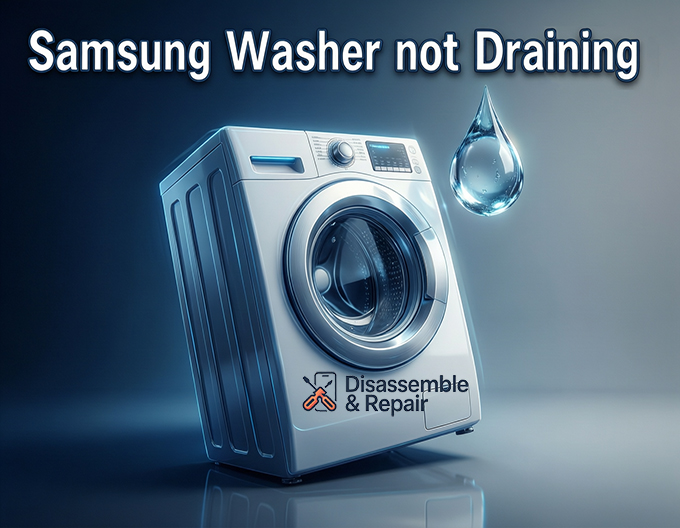
Step 1: Perform a Manual Drain
Before you can inspect the components, you must remove the water from the drum. Opening the door of a front load washer full of water can cause significant flooding.
- Turn off the power and unplug the washer to ensure safety.
- Locate the debris filter access panel, usually found at the bottom front right corner of the machine.
- Place a shallow pan and several towels on the floor beneath the panel.
- Locate the small emergency drain tube (usually black) next to the filter cover.
- Remove the cap from the tube and allow the water to drain into the pan. This is a manual drain process that may take time if the drum is full. Replace the cap securely once the water stops flowing.
Step 2: Clean the Drain Pump Filter
The most frequent culprit for drainage issues is a clogged drain pump filter. This component is designed to catch lint, coins, hair, and other debris to prevent them from damaging the pump. However, if this filter becomes full, water cannot pass through.
- Access the Filter: Once the manual drain is complete, you can safely remove the main filter. Twist the filter cap counter-clockwise (left) to unscrew it.
- Inspect and Clean: Pull the filter assembly out. You will likely find lint, hair, or small objects like bobby pins trapped here. Rinse the filter thoroughly under warm running water.
- Check the Housing: Before reinserting the filter, shine a flashlight into the filter housing. Ensure no debris is stuck deep inside the cavity leading to the impeller.
- Reassemble: Insert the filter back into the housing and twist it clockwise until it is tight. If it is loose, the machine will leak during the next cycle.
Step 3: Inspect the Drain Hose
If the filter is clean but the machine still will not drain, the issue may lie with the drain hose. This hose transports water from the pump to your home’s drain pipe.
- Check for Kinks: Pull the washer slightly away from the wall. Ensure the hose is not bent, kinked, or crushed behind the machine. A pinched hose will physically block water flow.
- Verify Height Requirements: Gravity plays a role in the drainage system. The end of the drain hose must be positioned between 18 and 38 inches from the floor. If the hose is pushed too far down into the standpipe, it can create a siphoning effect where water fills and drains simultaneously. Conversely, if it is too high, the pump may not have enough power to push the water out.
- Check for Clogs: If possible, disconnect the drain hose and run water through it with a garden hose to ensure there are no internal blockages.
Step 4: Examine the Drain Pump and Impeller
If the hose and filter are clear, the problem may be mechanical. The drain pump contains a small fan-like mechanism called an impeller. This component spins to propel water out of the machine.
- Visual Inspection: With the filter removed, look into the pump housing. You should be able to see the impeller blades.
- Spin Test: Use a screwdriver or your finger (ensure the machine is unplugged) to gently push the impeller. It should spin with some magnetic resistance but should not move freely or feel gritty.
- Broken Blades: If the impeller blades are snapped off or the component wobbles significantly, the drain pump itself is defective and requires replacement.
- Debris Removal: Sometimes, a small object like a screw or coin slips past the filter and jams the impeller, preventing it from turning. Removing this obstruction often solves the problem immediately.
Advanced Diagnostics: Sensors and Electronics
If the physical drainage path is clear, but the Samsung washer not draining issue persists, the fault might lie in the electronic monitoring system.
Water Level Sensor (Pressure Switch)
The water level sensor, also known as the pressure switch, tells the control board how much water is in the drum.
- The Tube Issue: This sensor operates via a small air tube connected to the drum. If this tube becomes clogged with “gunk” or debris, or if it develops a crack, the sensor may provide false readings.
- The Symptom: If the machine believes the tub is empty when it is actually full, it will not engage the drain pump. Conversely, if it thinks the tub is full when it is empty, it may run the pump indefinitely.
- The Fix: Inspect the pressure switch tube for blockages. Blowing through the tube (after disconnecting it from the sensor) can sometimes clear minor obstructions.
Control Board Glitches
In rare cases, the main control board may fail to send the voltage signal to the drain pump. If you are comfortable with a multimeter, you can check for voltage at the pump terminals during the drain cycle. If no voltage is present, the control board may need replacement.
Front Load vs. Top Load Specifics
While the general principles of the drainage system are similar, the physical layout differs between a front load washer and a top load washer.
Front Load Washers
Front loaders generally make maintenance easier. The drain pump filter is almost always accessible from the front panel, making the manual drain and cleaning process a standard user maintenance task. These machines are highly sensitive to suds; using non-HE detergent can create excess foam that tricks the pressure switch and prevents draining.
Top Load Washers
In a top load washer, the pump is typically located at the back of the machine near the floor. Unlike front loaders, top loaders often do not have an externally accessible debris filter. To access the pump or clear a clog, you may need to remove the back panel of the washer or tip the machine (carefully) to access components from underneath. This makes dealing with a top loader slightly more labor-intensive.
Prevention and Maintenance Tips
To prevent facing a Samsung washer not draining scenario in the future, adopt these maintenance habits:
Read more Samsung washer won’t turn on
- Monthly Filter Cleaning: Make it a habit to clean the drain pump filter once a month. This prevents the buildup of hair and lint that leads to blockages.
- Check Pockets: Coins, keys, and screws are the enemies of the impeller. Always empty pockets before loading laundry.
- Use High-Efficiency Detergent: Excess suds can trigger drainage errors. Use the correct amount of HE detergent.
- Run Clean Cycles: Run a “Self Clean” or hot water cycle with vinegar periodically to break down detergent buildup and debris in the drain hose and pressure switch tube.
Conclusion
A Samsung washer usually fails to drain due to a blockage rather than a catastrophic failure. By systematically checking the 5E error code, performing a manual drain, cleaning the drain pump filter, and inspecting the drain hose, you can resolve the majority of these issues on your own.
However, if you have cleared all debris, verified the hose installation, and confirmed the impeller is free of obstructions, yet the washer refuses to drain, the drain pump motor or the water level sensor likely requires replacement. In such cases, if the machine is under warranty or if you are uncomfortable handling electrical components, contacting a certified Samsung technician is the recommended course of action.
Frequently Asked Questions
What do the 5E or SE error codes mean on my Samsung washer?
These codes are the most common indicators of a drainage problem. They occur when the water level sensor detects that the drum has not emptied within a specific timeframe (usually about 15 minutes). On many Samsung displays, the “S” looks like a “5,” so these codes are effectively the same and point toward a clog in the filter, a blocked hose, or a pump malfunction.
Read more Samsung AddWash door won’t close
How often should I clean the drain pump filter?
To prevent unexpected drainage issues, you should clean the drain pump filter at least once a month. Regular maintenance prevents the buildup of lint, hair, and small debris like coins or hairpins, which are the primary causes of blockages in the drainage system.
Why won’t my washer drain even though the filter is clean?
If the filter is clear, the problem may be a kinked or pinched drain hose behind the machine. Additionally, check the installation height; the drain hose must be between 18 and 38 inches from the floor to function correctly. If the hose is fine, the issue may be a mechanical failure of the pump impeller or a clogged pressure switch tube.
Can using the wrong detergent cause drainage problems?
Yes, especially in front-load washers. Using non-HE (High-Efficiency) detergent or too much detergent can create excessive suds. These suds can interfere with the water level sensor (pressure switch), tricking the machine into “thinking” it is empty or full when it isn’t, which can prevent the drain cycle from engaging properly.
What should I do if my washer is full of water and won’t start the drain cycle?
You should perform a manual drain before attempting any repairs. For front-load models, use the small emergency drain tube located behind the access panel at the bottom front of the machine. Have a shallow pan and towels ready to catch the water. Once the drum is empty, you can safely unscrew the debris filter to check for clogs.