
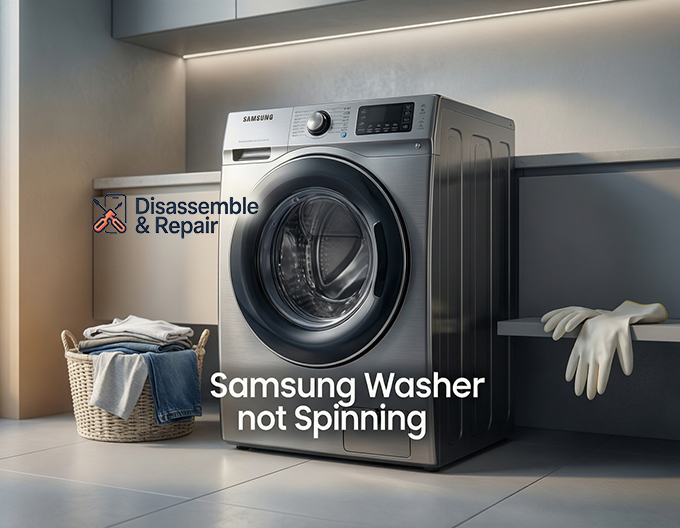
Discovering a Samsung washer not spinning at the end of a wash cycle can be incredibly frustrating, leaving you with a drum full of soaking wet clothes. This common appliance issue prevents the machine from reaching the high-velocity rotations required to extract water, often signaling an underlying mechanical or electronic failure that requires immediate attention. While Samsung appliances are known for their reliability, components do wear down over time, and sensors can drift out of alignment.
As a Senior appliance diagnostic expert, I have compiled a detailed guide to help you identify the root cause of this problem. From simple user errors to complex component failures, we will explore every potential culprit. By understanding how the drain pump, drive motor, and various sensors interact, you can effectively troubleshoot and potentially repair your washing machine.
Initial Checks: Load Balance and Settings
Before dismantling the machine to inspect internal components, it is essential to rule out environmental factors and user settings. The most frequent reason for a washer failing to enter the spin cycle is a safety protocol triggered by the machine itself.
The Unbalanced Load Safety Trigger
Samsung washers are equipped with sensitive weight sensors. If you attempt to wash a single heavy item—such as a comforter, a pair of jeans, or a bath mat—the wet weight may congregate on one side of the drum. This creates an unbalanced load. When the drum attempts to ramp up speed, the excessive wobbling triggers the control unit to kill the engine to prevent catastrophic damage to the shock absorbers and suspension springs.
If the washer senses this imbalance, it may attempt to fill with water and agitate to redistribute the clothes. However, if this fails, the cycle will end without spinning. Open the door, manually redistribute the wet laundry, and try running a “Spin Only” cycle to see if the issue resolves.
Read more Samsung washer shaking violently
Issues with the Door Latch Assembly
Modern washing machines operate under strict safety logic. The door latch assembly is not just a physical lock; it contains a switch that communicates with the main computer. If the latch is physically broken, or if the electrical continuity within the switch is interrupted, the machine will think the door is open.
Consequently, the washer might fill and agitate, but it will almost never enter the high-speed spin cycle if the lock signal is lost. If you hear a clicking noise but the door does not lock, or if the “Door Lock” light does not illuminate, the assembly likely needs replacement.
Common Causes for a Samsung Washer Not Spinning
If the load is balanced and the door is secure, the issue likely resides within the mechanical drainage or drive systems. A washer cannot spin if it still detects water in the drum or if the motor cannot physically turn the tub.
Drainage System Failures
The most common mechanical reason for a spin failure is trapped water. The washer’s logic board will not allow the drum to spin at high RPMs if the pressure sensor detects water, as the weight would damage the machine.
- The Drain Pump: The drain pump is responsible for expelling water from the tub. If the pump is clogged with debris (coins, lint, small socks) or if the impeller is broken, the water will remain in the drum. You can often check the debris filter located at the bottom front of the machine. If the pump hums but does not drain, it is likely restricted or burned out.
- The Drain Hose: Even if the pump is working, a kinked or clogged drain hose will prevent water flow. Ensure the hose is not crushed behind the machine and that it is not inserted too far into the standpipe, which can cause a siphoning effect that confuses the pressure sensor.
Drive Belt Issues (Front and Top Loaders)
For models that are not Direct Drive, a drive belt connects the motor to the drum pulley. Over time, this belt can stretch, crack, or burn. If the motor is running (you can hear the whirring sound) but the drum remains stationary, the belt has likely slipped off or snapped.
A worn belt may provide enough friction to agitate the clothes slowly but will slip under the high torque required for the spin cycle. Inspecting the belt requires removing the back or top panel of the washer.
Advanced Diagnostics: Motor and Sensor Components
When mechanical linkages are intact, the problem often lies in the electronic components that drive the drum and monitor its speed.
The Hall Sensor (Rotor Position Sensor)
In modern Samsung washers, particularly Direct Drive models, the hall sensor (or rotor position sensor) plays a critical role. This component monitors the position and speed of the rotor relative to the stator. It sends precise data back to the control board so the computer knows exactly how fast the drum is spinning.
If the hall sensor is faulty, the main board effectively becomes “blind.” It cannot verify the motor’s speed, so as a safety precaution, it will halt the motor to prevent over-speeding or erratic behavior. A faulty sensor often triggers specific error codes, such as “3E” or “bE,” indicating a motor tacho error.
Read more Samsung washer cycle not starting
Drive Motor, Stator, and Rotor
The drive motor is the muscle of the machine. In Direct Drive units, this consists of a large magnet (rotor) and a coil winding (stator).
- The Stator: This is the stationary part of the motor with copper windings. If the windings are damaged or shorted, the magnetic field necessary to turn the rotor cannot be generated.
- The Rotor: The magnets on the rotor can sometimes crack, or the plastic housing can strip where it connects to the driveshaft.
If the stator is damaged, the machine may attempt to jerk or turn slightly before stopping completely.
Electronic Failures and Recalibration
Sometimes the hardware is fine, but the software or the main controller is confused.
The Main Control Board
The control board is the brain of the washer. It sends voltage to the motor, pump, and lock assembly. If a relay on the board fails, or if there is a burnt soldering joint, the board may fail to send the “spin” command to the motor even if the motor is fully functional. Diagnosing a control board is difficult and usually requires a multimeter to check for voltage output at the motor connections.
Interpreting Error Codes
Samsung washers are designed to self-diagnose. When a component fails, the display will often show error codes. These are vital clues.
- UE / Ub: Unbalanced Load.
- 5E / SE: Drainage issue (Check drain pump and drain hose).
- DE / dE: Door error (Check door latch assembly).
- 3E: Motor drive error (Check hall sensor, stator, or connections).
Always consult your specific user manual to cross-reference these codes, as they can vary slightly by model year.
The Importance of Calibration Mode
One of the most overlooked solutions for a Samsung washer is the calibration mode. This is a system software routine that allows the washer to weigh the empty drum and reset its load sensors.
You should run calibration mode if:
- You have just installed the washer.
- You have moved the washer to a new location.
- You have replaced any internal parts (like the motor, board, or shocks).
How to Run Calibration Mode (General Steps):
- Remove all laundry from the drum.
- Power off the machine.
- Hold down the “Temp” and “Delay End” buttons (buttons vary by model) simultaneously, then press the Power button. The machine should turn on.
- Press the Start/Pause button. The drum will rotate back and forth for a few minutes.
- When the display shows “0” or “End,” the calibration is complete.
Running this mode resets the weight algorithms, often fixing issues where the machine mistakenly “thinks” a load is unbalanced when it is not.
Conclusion
A Samsung washer not spinning is rarely a cause for immediate panic, but it does require a systematic approach to troubleshooting. Start by checking for an unbalanced load and inspecting the drain hose and filter. If the issue persists, examine the door latch assembly and drive belt for physical damage.
For more technical failures involving the hall sensor, stator, or control board, ensure you unplug the machine before testing any electrical components. If the error codes persist after performing a calibration mode reset, it may be time to consult a professional appliance repair technician to handle the high-voltage components safely. By understanding these entities and how they function, you can ensure your washer returns to peak performance, saving you both time and money on unnecessary replacements.
Frequently Asked Questions
Why does my Samsung washer show a “UE” or “Ub” error and stop spinning?
These error codes indicate an “Unbalanced Load.” Samsung washers have sensitive weight sensors that stop the spin cycle if laundry is clumped on one side of the drum. This prevents damage to the shock absorbers and suspension. To fix this, manually redistribute the wet clothes evenly inside the drum and restart a “Spin Only” cycle.
Can a clogged drain filter prevent the machine from spinning?
Yes. If the washer cannot drain water effectively due to a clogged debris filter or a kinked drain hose, the pressure sensor will tell the control board that water is still in the tub. For safety reasons, the washer will not enter a high-speed spin cycle while it detects water. Regularly checking the debris filter at the bottom front of the machine can prevent this issue.
What is the purpose of the Hall sensor?
The Hall sensor, also known as a rotor position sensor, monitors the speed and position of the motor. It sends this data to the control board to ensure the drum is spinning correctly. If this sensor fails, the control board loses its ability to monitor the motor, often resulting in a “3E” error code and the machine halting the spin cycle for safety.
When should I run Calibration Mode on my washer?
You should run Calibration Mode if you have recently installed or moved the washer, or if you have replaced internal components like the motor or control board. This software routine resets the weight sensors by weighing the empty drum, which helps the machine more accurately detect unbalanced loads and avoid unnecessary cycle interruptions.
How do I know if the door latch assembly is broken?
If your washer fills and agitates but refuses to spin, the door latch might be the culprit. The machine requires a specific electronic signal from the latch to confirm the door is securely locked before reaching high speeds. If you see a “DE” or “dE” error code, or if the “Door Lock” light does not illuminate, the assembly is likely faulty and needs replacement.