
Encountering a Samsung washing machine 4E error can be frustrating, especially when you have a pile of laundry waiting to be washed. This specific error code serves as a critical alert from your appliance, indicating that it is struggling to fill with water properly within a designated timeframe. While it may seem alarming, this “water supply error” is often resolved with standard troubleshooting steps that do not require professional intervention.
This guide will walk you through the technical meaning of the 4E code, the mechanical components involved, and a systematic approach to diagnosing and fixing the issue.
Understanding the Samsung Washing Machine 4E Error
The Samsung washing machine 4E error (often displayed as the 4C error code on newer models) is essentially a timeout alert. When you start a cycle, the washing machine’s main computer board sends a signal to the water valves to open. Simultaneously, it monitors the water level sensor. If the machine does not detect a sufficient rise in water level after a few minutes, it halts the operation and displays the 4E or 4C code to prevent damage to the pump or heating element.
This error is rarely caused by a catastrophic failure. Instead, it usually points to a restriction in water flow, low pressure, or a miscommunication between sensors.
Immediate Checks
Before dismantling any part of your machine, perform these preliminary checks:
- Water Supply Valves: Ensure the hot and cold water taps on the wall are fully open. A partially closed valve can restrict flow just enough to trigger the timeout.
- Water Pressure: Your home’s water pressure must be adequate (typically between 20 and 116 psi) for the valve to operate correctly. If you recently had plumbing work done, there might be air locks or debris in the lines.
- Hose Kinks: Inspect the water supply hose leading from the wall to the washer. If the machine was pushed back too forcefully, the inlet hose might be crimped or kinked, physically blocking the water.
Common Causes of the Samsung Washing Machine 4E Error
If the basic external checks don’t resolve the issue, the problem likely lies within the filtration or intake components.
1. Clogged Mesh Filter
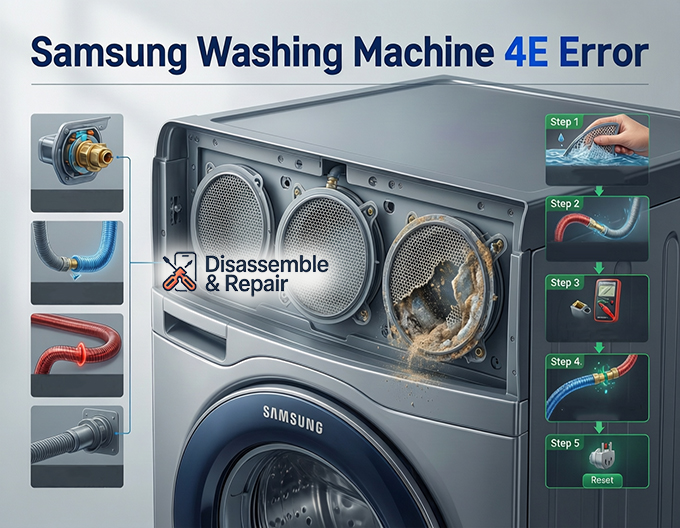
The most frequent culprit behind this error is a clogged filter. Inside the connection point where the water hoses screw into the back of the washer, there are small plastic screens known as mesh filters. These are designed to catch sediment and debris from your home’s water pipes.
Over time, calcium deposits, rust, or sand can obstruct this mesh filter. When this happens, even if your tap is wide open, the water trickles into the drum too slowly, causing the machine to time out and flash the 4E error.
2. Faulty Water Inlet Valve
The water inlet valve is the electro-mechanical gatekeeper of your washing machine. It connects to the hoses and controls the flow of hot and cold water into the tub. This component consists of a solenoid valve—a coil of wire that creates a magnetic field to pull a plunger open when energized.
If the solenoid burns out or the valve gets mechanically stuck, water cannot enter the machine. A multimeter can be used to test the resistance of the solenoid coils; a reading of infinity (open circuit) usually indicates the valve needs replacement.
3. Drainage Issues and Siphoning
Surprisingly, drainage issues can trigger a water supply error. This phenomenon is known as “siphoning.” If the drain hose is inserted too far into the standpipe or if the drain is located lower than the water level in the drum, gravity may pull water out of the machine as fast as it fills.
The pressure switch will never detect the correct water level because the water is constantly escaping. To fix this, ensure the drain hose is not airtight and is positioned correctly according to the manual’s height specifications.
Read more Samsung washing machine 3C1 error
4. Pressure Switch Malfunction
The pressure switch (or water level sensor) tells the control board how much water is in the drum. It does this by measuring air pressure in a small tube connected to the bottom of the tub.
If the tube is clogged with gunk, cracked, or has popped off, the switch cannot measure the pressure rise. Consequently, the control board assumes no water is entering the machine, even if the drum is full, and triggers the 4E error.
Step-by-Step Troubleshooting Guide
Follow this logical progression to isolate and fix the problem.
Step 1: Clean the Mesh Filters
This is the required maintenance step for almost every 4E error case.
- Turn off the water taps at the wall.
- Unscrew the hot and cold water supply hoses from the back of the washing machine. Have a towel ready for residual water.
- Look inside the threaded inlet ports on the washer. You will see small plastic screens (usually blue or orange).
- Use needle-nose pliers to gently pull the mesh filter tabs outward.
- Rinse the filters under warm running water. Use a soft brush to remove stubborn sediment.
- Reinsert the filters, reconnect the hoses, and turn the water back on.
Step 2: Inspect the Inlet Hoses
While the hoses are disconnected, inspect them for internal blockages. Sometimes the rubber washer inside the hose coupling can deform and block water flow. Ensure the inlet hose is not twisted when you push the machine back into place.
Step 3: Test the Water Inlet Valve
If the filters are clean and the water pressure is good, the water inlet valve might be defective.
- Unplug the washing machine.
- Remove the top cover (usually held by two screws at the back).
- Locate the inlet valve assembly at the back where the hoses connect.
- Inspect the wiring harnesses to ensure they are secure.
- If you have a multimeter, set it to measure resistance (Ohms). Test the contacts on the solenoid valve. A working valve typically reads between 500 and 1500 Ohms. If you get no reading, the part is dead and requires replacement.
Step 4: Check the Pressure Switch Tube
- With the top cover still off, locate the pressure switch (usually a round disc with a small rubber tube attached, often mounted near the top side).
- Follow the small black or clear tube down to the bottom of the tub.
- Ensure the tube is not pinched, punctured, or disconnected.
- If the tube is clear, verify the electrical connections to the pressure sensor are tight.
Step 5: Evaluate the Control Board
If all mechanical components test fine—water enters, the valve opens, the sensor works, and no siphoning is occurring—the issue may stem from the main control board (PCB). The board might not be sending the 120V signal to the intake valves or failing to read the pressure switch data.
Resetting the board is a simple first step:
- Unplug the washer.
- Wait for 5 minutes to discharge residual power.
- Plug it back in and attempt a rinse and spin cycle.
If the error persists after a hard reset and all other components are verified, a professional technician may need to diagnose the PCB.
Read more Samsung washing machine water drain problem
Prevention and Maintenance
To prevent the recurrence of the Samsung washing machine 4E error, incorporate these habits into your laundry routine:
- Semi-Annual Filter Cleaning: Clean the inlet mesh filters every six months, or more frequently if you live in an area with hard water or older plumbing.
- Hose Replacement: Replace your rubber water supply hoses every 5 years. Old hoses can degrade internally, sending bits of rubber into the valve and causing a clogged filter.
- Winter Care: If your washer is in a garage or unheated space, ensure the hoses do not freeze in winter. Frozen water in the line acts as a blockage, instantly triggering the 4E or 4C error code.
- Detergent Drawer Care: Occasionally, a clogged detergent drawer can restrict water flow into the tub (since water flows through the dispenser). Remove the drawer and rinse it with hot water to remove caked-on soap.
Conclusion
The “Samsung washing machine 4E error” is your appliance’s way of protecting itself from running dry. By systematically checking the water supply, cleaning the mesh filters, and inspecting the water inlet valve, you can resolve the majority of these cases without a service call. Remember that this code is synonymous with the 4C error code on newer models, and the troubleshooting logic remains identical. Regular maintenance of your hoses and filters will ensure your machine operates efficiently for years to come.
Frequently Asked Questions
What is the difference between the 4E and 4C error codes?
They are essentially the same alert. The 4E code is typically found on older Samsung models, while the 4C code is used on newer machines. Both indicate a “water supply error,” meaning the machine is not detecting a sufficient rise in the water level within a specific amount of time.
What is the most common cause of the 4E error code?
The most frequent cause is a clogged mesh filter. These small plastic screens are located inside the water inlet ports on the back of the machine. Over time, they collect sediment, rust, and calcium deposits from your home’s plumbing, which restricts water flow and triggers the timeout error.
Can a problem with my drain hose cause a water supply error?
Yes, this is known as siphoning. If the drain hose is pushed too far into the standpipe or is installed too low, gravity can pull water out of the drum as it is filling. Because the water level never rises high enough for the pressure sensor to detect it, the control board assumes there is a supply issue and displays the 4E code.
How do I perform a hard reset to clear the error?
If you have checked the hoses and cleaned the filters but the code remains, you can try to reset the main control board. Unplug the washing machine from the power outlet and wait for at least 5 minutes to allow residual electricity to discharge. Plug the unit back in and start a fresh rinse and spin cycle to see if the code clears.
How often should I maintain my washing machine to prevent water supply issues?
To prevent the 4E error, you should clean the inlet mesh filters at least every six months. Additionally, it is recommended to replace your rubber water supply hoses every five years, as old hoses can degrade internally and cause blockages in the intake valves.