
Encountering a Samsung washing machine BE error can be frustrating, especially when your laundry pile is growing and the appliance refuses to start. This alphanumeric code is a specific signal from your washer’s diagnostic system indicating an issue with the control buttons or the internal electronic components managing them. Whether you own a modern front-load washer or a top-loading model, understanding this error is the first step toward restoring your appliance’s functionality.
This professional troubleshooting guide will walk you through the technical meaning of the BE error family (including BE1, BE2, and bE), potential causes ranging from simple stuck buttons to complex PCB board failures, and step-by-step repair strategies.
Read more Samsung washing machine 5E error
Understanding the Samsung Washing Machine BE Error
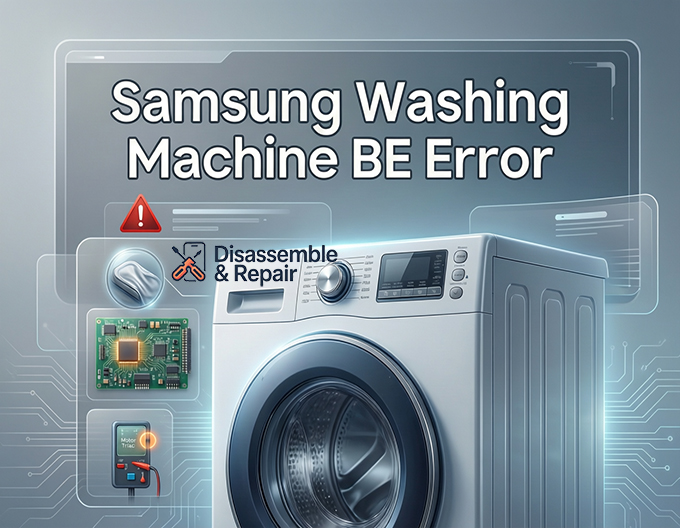
The Samsung washing machine BE error generally points to a malfunction in the user interface or the motor control system. Depending on your specific model and the exact code displayed (bE, bE1, bE2, or EB), the root cause usually falls into one of two categories: a physical obstruction on the control panel or an electrical short within the internal circuitry.
Decoding the Variations: BE, BE1, and BE2 Error Code
While they share a common prefix, the specific numbers can offer a more precise diagnosis:
- BE / bE: Often indicates a general “Button Error” where a key is detected as being pressed continuously for more than 12-30 seconds. In some technical manuals, this can also refer to a motor triac error, suggesting a short circuit in the motor control component.
- Samsung washer BE1 Error: This variation typically reinforces the diagnosis of a stuck power button. It signals that the main power relay or the button itself is engaged longer than normal operational parameters allow.
- Samsung washer BE2 Error: This is explicitly defined as a “Jammed Button Error” in many Samsung service manuals. It occurs when any button other than the power button is depressed continuously. This often happens if the button membrane is deformed or if debris is lodged behind the plastic casing.
Common Causes of the BE Error
Before attempting any repairs, it is crucial to identify what triggered the fault.
1. Stuck Buttons on the Control Panel
The most frequent culprit is a physical issue with the interface. If a user leans against the machine, or if the plastic buttons lose their springiness over time, a button may remain in the “pressed” position. The washing machine’s processor interprets this as a continuous input command, which conflicts with its programming, triggering the error.
2. Deformed Button Membrane
Over time, the plastic or rubber membrane behind the display panel can warp due to heat, humidity, or excessive force. If the membrane collapses, it may permanently push against the electronic switch on the circuit board, simulating a stuck button.
3. PCB Board Malfunction
The PCB board (Printed Circuit Board) is the brain of your washing machine. If the physical buttons are fine, the fault may lie within the electronic pathways of the PCB itself. A short circuit, damaged relay, or corrosion can send false signals to the central processor, tricking it into believing a button is being held down.
4. Motor Triac Issues
In less common scenarios, particularly with the generic “bE” code, the issue might not be with the buttons at all. It could indicate a short in the motor triac, a semiconductor device that controls the motor’s speed and direction. If this component fails, the machine effectively loses control over the motor, necessitating a more technical repair.
Step-by-Step Troubleshooting Guide
Follow these steps in order to diagnose and resolve the Samsung washing machine BE error.
Read more Samsung washer not draining
Step 1: Perform a Hard Power Cycle
The first and simplest solution is to reset the machine’s electronic memory.
- Turn off the washing machine using the power button (if responsive).
- Unplug the machine from the wall outlet.
- Wait for at least 5 to 10 minutes. This allows the electrical charge in the capacitors on the PCB board to dissipate completely.
- Plug the machine back in and attempt to turn it on.
This power cycle is often enough to clear temporary software glitches or static charges that might be causing the error.
Step 2: Inspect and Massage the Buttons
If the error persists after a reset, focus on the stuck buttons.
- Visually inspect the control panel. Look for any buttons that appear depressed, tilted, or seated lower than the others.
- Run your fingers over every button on the panel. Press each one firmly and wiggle it slightly to ensure it pops back out.
- Listen for the “click” sound. Each button should provide tactile feedback. If a button feels mushy or doesn’t click, the button membrane underneath may be damaged.
- Pay close attention to the Start/Pause and Power buttons, as these are the most frequently used and prone to wear.
Step 3: Clean the Button Gaps
Dirt, dried detergent, or fabric softener residue can seep into the gaps around the buttons, acting like glue.
- Use a soft-bristled toothbrush or a thin plastic tool (like a guitar pick) to gently clean the perimeter of each button.
- Avoid using excessive water or liquid cleaners that could seep inside and damage the electronics.
- Compressed air can also be helpful to blow out debris lodged behind the plastic fascia.
Step 4: Reset the Error Code
While there is no dedicated “reset button,” specific button combinations can sometimes clear the error memory, though this varies by model.
- Error code reset usually happens automatically once the underlying cause (the stuck button) is fixed.
- If your machine allows, try entering diagnostic mode (refer to your specific front-load washer manual) to test individual buttons.
Advanced Repair: Hardware Replacement
If the external troubleshooting steps fail, the issue likely resides in the internal hardware. These steps involve disassembly and should be performed with caution. Always unplug the machine before removing any panels.
Inspecting the Display Panel and PCB
- Remove the Top Cover: On most front-load washers, this involves removing two screws at the back and sliding the top panel off.
- Access the Control Panel: Remove the detergent drawer and the screws located behind it and along the top of the metal frame. Carefully unclip the control panel fascia.
- Check Connections: Ensure the wire harnesses connecting the display panel to the main PCB are secure. Loose connections can sometimes cause communication errors that mimic button faults.
- Inspect the PCB: Look for visible signs of damage on the board, such as burn marks, swollen capacitors, or corrosion. If you suspect the motor triac is the culprit, you will likely need a multimeter to test for continuity and shorts.
Replacing the User Interface Board
If a button is permanently collapsed or the membrane is torn, you typically cannot replace just the button. You will need to replace the entire User Interface (UI) board or the plastic fascia assembly.
- Disconnect the wire harnesses from the old UI board.
- Unscrew the board from the plastic housing.
- Install the new board, ensuring the buttons align perfectly with the switches.
- Reassemble the machine and run a test cycle.
Replacing the Main PCB Board
If the UI board is functioning correctly (verified by continuity testing) but the Samsung washing machine BE error remains, the main power board is likely at fault. This is a more expensive repair.
- Locate the main PCB, usually housed in a plastic casing at the back or bottom of the machine.
- Take a photo of the wiring connections for reference.
- Disconnect all wires and remove the board.
- Install the manufacturer-approved replacement part. Note: Some new PCBs require configuration codes specific to your model.
Prevention and Maintenance
To prevent the BE error from returning, adopt these best practices:
- Gentle Operation: Press buttons with the pad of your finger, not your fingernail, and avoid using excessive force.
- Clean Regularly: Wipe down the control panel with a damp cloth after every few washes to prevent detergent buildup.
- Ventilation: Ensure your laundry room is well-ventilated to prevent high humidity from affecting the electronic circuits and PCB board.
When to Call a Professional
While many “stuck button” scenarios are DIY-friendly, certain situations require a certified technician:
- If the error code persists after replacing the display board.
- If the error is intermittent and accompanied by a burning smell (indicating a serious electrical short).
- If you are uncomfortable working with electronic components like the motor triac.
By methodically checking the buttons, performing a power cycle, and inspecting the internal electronics, you can effectively diagnose and often resolve the Samsung washing machine BE error. Whether it requires a simple cleaning or a new component, this guide provides the roadmap to getting your washer back to peak performance.
Frequently Asked Questions
What is the difference between the BE1 and BE2 error codes?
While both indicate a “Button Error,” the specific number helps pinpoint the location. A BE1 error typically signals that the Power button is stuck or its relay is engaged for too long. A BE2 error is specifically for any button other than the Power button, such as Start/Pause or cycle selectors, that the machine detects as being continuously pressed.
Can I fix the Samsung BE error without calling a technician?
Yes, many cases are caused by simple physical obstructions. You can often resolve the error by performing a hard power cycle (unplugging the machine for 10 minutes) or by gently massaging the buttons on the control panel to ensure they aren’t physically jammed. Cleaning the gaps around the buttons with a dry toothbrush to remove detergent residue also frequently clears the code.
What should I do if the buttons feel normal but the BE error persists?
If the buttons click correctly and aren’t physically stuck, the issue may be internal. This could indicate a warped button membrane that is permanently pressing against the electronic switch, a short circuit on the User Interface (UI) board, or a fault in the main PCB. In some cases, a generic “bE” code may also point to a failed motor triac, which requires technical testing with a multimeter.
How long should I leave my washing machine unplugged to reset the error?
To perform a proper hard power cycle and clear the electronic memory, you should leave the washing machine unplugged for at least 5 to 10 minutes. This ensures that the electrical charge in the PCB capacitors has fully dissipated, allowing the system to reset completely.
How can I prevent the BE error from happening again?
To prevent future button errors, always press the control panel buttons gently with the pad of your finger rather than your fingernail. Regularly wipe down the control panel to prevent soap scum and fabric softener from gunking up the button housings, and ensure your laundry room is well-ventilated to protect the internal electronics from excessive humidity.