
Modern washing machines are marvels of convenience, but seeing a cryptic code flash on the display can stop your laundry day in its tracks. A Samsung washing machine error code list is your primary translation tool for understanding what your appliance is trying to tell you, whether it’s a simple door latch issue or a more complex drainage problem. Instead of guessing, you can use these codes to pinpoint the exact malfunction and decide if it is a DIY fix or requires professional help.
Below is a comprehensive guide to interpreting these codes, troubleshooting common issues, and maintaining your washer for peak performance.
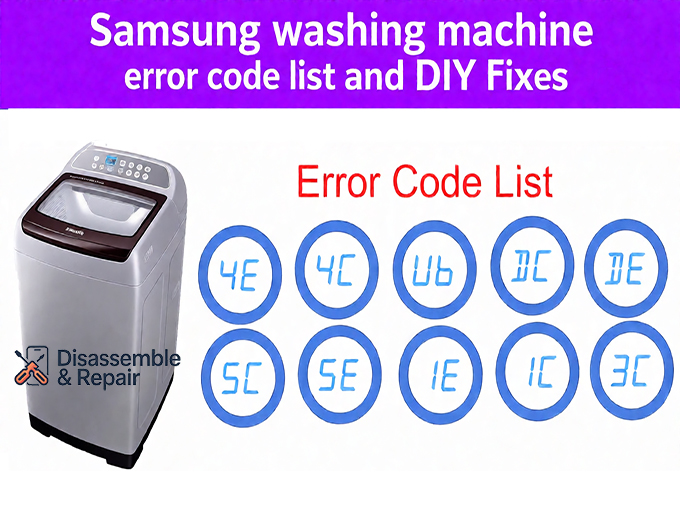
Samsung Washing Machine Error Code List
Samsung washers use a standardized system of codes to report faults. While some codes differ slightly between front load washer and top load washer models, most fall into key categories related to water, motors, sensors, and doors.
Water Supply & Drainage Codes
- 4E / 4C: Water supply error. The machine detects that water is not entering the drum fast enough.
- 5E / 5C / nd: Water drainage error. The washer cannot drain water effectively.
- 1E / IE / LE / LC: Water level sensor or leakage error. The machine detects a water leak or a failure in the water level sensor (pressure switch).
- OE / OF: Overflow error. There is too much water in the drum.
Electrical & Motor Codes
- 3E / 3C: Motor defect. Issues with the drive motor or the tachometer signal.
- 9E / UC: Power error. Voltage is too low or too high (often caused by using extension cords).
- HE / tE: Heating error. Problem with the water heater or temperature sensor.
Door & Lock Codes
- dE / dC / dE1 / dE2: Door error. The door is not closed properly, or the door lock assembly is faulty.
- dS: Door is open while the washer is running.
- LO / FL: Door lock error. The door fails to unlock.
Operational & Sensor Codes
- UE / UB / U6: Unbalanced load. The laundry load is unevenly distributed, preventing the drum from spinning safely.
- Sud / 5d: Suds error. Too much detergent has been detected (often from using non-HE detergent).
Detailed Troubleshooting Guide by Error Type
1. Water Supply Issues (Error 4E / 4C)
This error indicates the machine is “thirsty”—it cannot fill with water within a set time limit.
- Check the Taps: Ensure the water taps are fully open.
- Inspect Hoses: Check for kinks or bends in the supply hoses.
- Clean the Filter: Turn off the water, disconnect the hoses from the back of the machine, and clean the mesh filters inside the water inlet valve. Sediment buildup here is a common culprit.
2. Drainage System Problems (Error 5E / 5C)
If your washer is full of water and refuses to empty, the drainage system is likely compromised.
- Clean the Debris Filter: On front loaders, locate the small door at the bottom front. Open it, drain the emergency tube, and unscrew the filter to remove coins, lint, or buttons.
- Check the Drain Hose: Ensure the hose isn’t kinked or inserted too far down the standpipe (it should only be about 6 inches down).
- Inspect the Drain Pump: If the filter is clear but the machine still hums without draining, the drain pump impeller might be broken or jammed.
3. Unbalanced Load Errors (Error UE / UB)
This occurs during the spin cycle when wet clothes bunch up on one side of the drum.
- Redistribute Laundry: Pause the cycle, open the door, and untangle the items.
- Adjust Load Size: A single heavy item (like a bath mat) or an overloaded drum can trigger this. Add a few towels to balance a single heavy item.
- Check Leveling: Ensure the washer feet are adjusted so the machine sits perfectly flat on the floor.
4. Door Latch Malfunctions (Error dE / dC)
A washer will not start if it cannot verify the door is safely locked.
- Check for Obstructions: Ensure no clothes are caught between the door glass and the rubber seal.
- Listen for the Click: When you start a cycle, you should hear the door lock assembly engage. If it clicks repeatedly but doesn’t lock, the mechanism may need replacement.
- Firm Push: sometimes, a gentle push on the door handle area while the latch engages is enough to clear the error.
5. Water Level & Leakage (Error IE / 1E)
These codes often point to the pressure switch (water level sensor) or a physical leak.
- Check for Leaks: Look for water on the floor. A loose drain hose or cracked tub can trigger the LE sensor.
- Pressure Switch: If there is no leak, the pressure switch tube might be clogged or disconnected. This switch tells the control board how much water is in the drum. If it fails, the machine may overfill or refuse to start.
Advanced Diagnostics: Smart Care and Resetting
Using the Smart Care App
Modern Samsung washers feature a diagnostic system called Smart Care. If your panel displays a code, you can use the Samsung Smart Washer/Dryer app on your smartphone to interpret it.
- Open the app and select “Smart Care”.
- Press the Smart Care button on your washer (or the button combination indicated in your user manual).
- Scan the code on the washer’s display using your phone’s camera.
- The app will provide the diagnosis and suggested fixes.
Resetting Samsung Washer
Sometimes, a computer glitch causes a false error code. Resetting Samsung washer electronics can often clear these “ghost” errors.
- Power Cycle: Unplug the washing machine from the power outlet.
- Wait: Leave it unplugged for at least 5 to 10 minutes to allow the capacitors to discharge.
- Restart: Plug it back in and try running a Rinse+Spin cycle to see if the code returns.
Conclusion
Understanding the Samsung washing machine error code list transforms a stressful breakdown into a manageable task. While simple issues like an unbalanced load or a clogged filter are easy DIY fixes, persistent codes related to the drain pump or electrical components may require a professional. Always consult your troubleshooting guide and user manual before attempting repairs, and remember that regular maintenance—like cleaning the filter and checking pockets—is the best way to keep your appliance running smoothly for years.
Frequently Asked Questions
What should I do if my washer shows a 4E or 4C error code?
These codes indicate a water supply issue where the machine is not filling quickly enough. To resolve this, ensure your water taps are fully open, check for kinks in the supply hoses, and clean the mesh filters located inside the water inlet valves at the back of the machine.
How can I fix a drainage error like 5E or 5C?
If your washer isn’t draining, first clean the debris filter (found behind a small door at the bottom front of front-load models) to remove lint or trapped objects. Additionally, ensure the drain hose is not kinked and is not inserted more than 6 inches into the standpipe.
What does it mean when the display says “Sud” or “5d”?
This is a suds error indicating that too much detergent has been detected. This usually happens if you use non-HE detergent or an excessive amount of soap. You may need to wait for the suds to clear or run a cycle without detergent to flush the system.
How do I resolve an unbalanced load (UE or UB) error?
An unbalanced load occurs when laundry bunches up on one side of the drum. Pause the cycle, manually redistribute the wet clothes, and ensure the machine is perfectly level on the floor. Avoid washing single heavy items, like a bath mat, by themselves; add a few towels to help balance the weight.
Can I reset my Samsung washing machine to clear an error code?
Yes, sometimes a “ghost” error can be cleared by power cycling the machine. Unplug the washer from the power outlet for at least 5 to 10 minutes to allow the capacitors to discharge, then plug it back in and attempt to run a Rinse+Spin cycle.