
Modern appliances are designed with self-diagnostic systems, and consulting a Sharp washing machine error code list is the first step toward resolving operational failures. Whether you own a front-loading or top-loading model, understanding these fault codes can save you time and money on unnecessary service calls.
This guide provides a comprehensive breakdown of common error codes, diagnostic procedures, and troubleshooting steps for key components like the drain pump, water inlet valve, and pressure sensor.
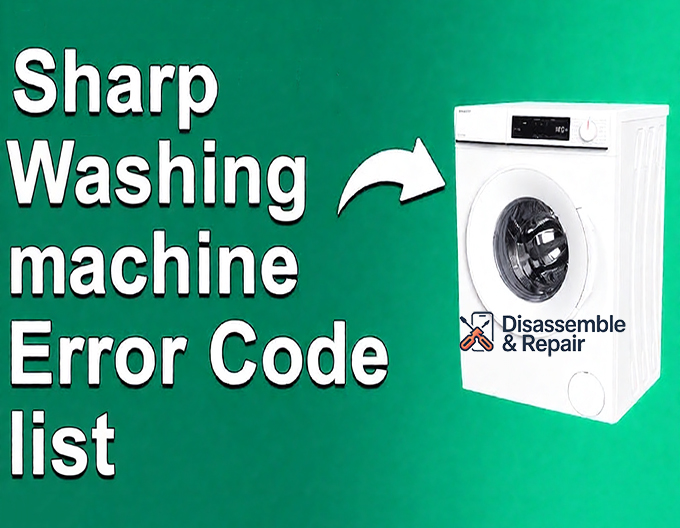
Understanding the Sharp Washing Machine Error Code List
The Sharp washing machine error code list serves as a direct communication line between the appliance’s control board and the user. When a fault occurs, the machine triggers a specific alphanumeric sequence to indicate which component is malfunctioning.
While some codes are universal, others may differ slightly between front-loading and top-loading models. Below is a detailed categorization of these faults to help you pinpoint the issue effectively.
Common Water Supply and Drainage Codes
These codes typically appear when the machine cannot fill with water or drain it out within a set timeframe.
| Error Code | Potential Meaning | Troubleshooting Focus |
|---|---|---|
| E1 / E02 | Water Supply Error | Water inlet valve, faucet, inlet filter mesh. |
| E3 / E03 | Drainage Error | Drain pump, drain hose blockage, coin trap. |
| E4 / E04 | Overfill / Pressure Sensor | Pressure sensor, water level switch, excess detergent. |
| C2 | Abnormal Water Level | Level sensor calibration or wiring issues. |
Troubleshooting Tip: For E1 errors, always check if the water tap is fully open and the mesh filter inside the inlet hose is free of sediment before inspecting the internal water inlet valve.
Door and Lid Lock Fault Codes
Safety mechanisms prevent the machine from operating if the drum is not secure.
| Error Code | Potential Meaning | Troubleshooting Focus |
|---|---|---|
| E2 / E01 | Door Lock Failure | Door lock assembly, loose wiring, obstruction. |
| LE / LE1 | Lid Open (Top Load) | Lid switch, magnetic sensor, physical latch alignment. |
| U9 | Child Lock Active | Disengage Child Lock function via the user manual instructions. |
If you encounter an E2 or LE code, ensure that the door or lid is firmly pressed shut. In many cases, a misaligned latch prevents the control board from receiving the “closed” signal.
Motor and Balance Issues
These faults often stop the machine during the spin cycle to prevent physical damage.
| Error Code | Potential Meaning | Troubleshooting Focus |
|---|---|---|
| E4 (Top Load) | Unbalanced Load | Redistribution of laundry, leveling legs. |
| E9 | Abnormal Motor Operation | Motor capacitor, wiring harness, or control board. |
Note: The E4 code can be ambiguous. On top-loading units, it often signals an unbalanced load, whereas on front-loading units, it may indicate a water overflow or sensor fault. Always cross-reference with your specific user manual.
Diagnostic Mode and Reset Procedures
Before attempting invasive appliance repair, it is advisable to reset the machine or enter diagnostic mode. This process can clear temporary glitches in the control board or help you test individual components like the drain pump or motor without running a full cycle.
How to Perform a Master Reset
A simple power cycle can often clear non-critical fault codes.
- Turn off the washing machine and unplug it from the power outlet.
- Wait for at least 5 minutes to allow the capacitors on the control board to discharge.
- Plug the machine back in and attempt to run a short Rinse/Spin cycle.
Entering Diagnostic Mode
Accessing the diagnostic menu varies by model series (e.g., ES- series). However, a common method for many Sharp washers involves the following steps:
- Ensure the machine is empty and turned off.
- Press and hold two specific buttons simultaneously (often Spin Speed + Soil Level or Water Level + Preset).
- While holding these buttons, press the Power button.
- Listen for a beep or watch for all LED lights to flash.
- Use the Program dial or Start button to cycle through individual component tests (e.g., testing the water inlet valve or spinning the motor).
Caution: Diagnostic mode bypasses safety sensors. Keep hands clear of moving parts and consult a technical service manual if available.
Troubleshooting Major Components
When the Sharp washing machine error code list points to a specific part, you can perform targeted troubleshooting. Below are the procedures for the most common failure points.
1. The Drain Pump (Error E3 / E03)
The drain pump is responsible for expelling water from the drum. If it fails or becomes clogged, the machine will time out and display an error.
- Filter Check: Locate the service flap at the bottom right of the machine. Open it to access the pump filter. remove any coins, lint, or debris that may be jamming the impeller.
- Hose Inspection: Ensure the drain hose is not kinked or positioned too high. If the hose end is submerged in water, it may cause a siphoning effect.
- Electrical Test: If the pump is clean but silent, it may have failed electrically. A multimeter can be used to check for continuity across the pump terminals.
2. The Door Lock / Lid Switch (Error E2 / LE)
The door lock is a safety device that uses a wax motor or solenoid to secure the door during operation.
- Mechanical Failure: Inspect the latch on the door itself. If the plastic hook is broken or the spring is weak, it won’t engage the lock assembly.
- Thermal Lock Issues: After a cycle ends, the lock may take 1-2 minutes to release. Forcing it open can damage the mechanism. If the E2 error persists, the lock assembly inside the front panel likely needs replacement.
- Wiring: Vibration can sometimes loosen the wire harness connecting the lock to the main control board.
3. The Water Inlet Valve (Error E1 / E02)
This component controls the flow of hot and cold water into the machine.
- Sediment Buildup: Turn off the water supply and unscrew the hoses from the back of the machine. Inside the valve ports, you will see small mesh screens. If these are clogged with sand or grit, clean them carefully.
- Solenoid Test: If the screens are clean but water does not enter, the solenoid coil may be burnt out. This usually requires replacing the entire valve assembly.
4. The Pressure Sensor (Error E4 / C2)
The pressure sensor (or water level switch) tells the machine how much water is in the drum.
- Air Tube Blockage: A small rubber tube connects the drum to the sensor. If this tube gets clogged with soap scum or develops a pinhole leak, the sensor will give false readings, causing the machine to overfill or refuse to spin.
- Sensor Fault: If the tube is clear, the sensor itself may be stuck. This is a common cause for the machine filling indefinitely or draining immediately after filling.
Preventive Maintenance Tips
To avoid seeing the Sharp washing machine error code list frequently, regular maintenance is essential.
- Clean the Drain Filter: Perform this monthly to prevent E3 errors.
- Descale the Drum: Run a hot wash with a descaling agent or vinegar every 3 months to remove detergent buildup that can affect the pressure sensor.
- Check Hoses: Inspect water inlet hoses for bulges or wear annually to prevent bursts and E1 errors.
- Balance Loads: Avoid washing single heavy items (like a rug) alone. Add towels to balance the drum and prevent top-loading suspension errors.
When to Call a Professional
While many codes can be resolved with DIY troubleshooting, some indicate serious electrical faults. You should contact a professional appliance repair technician if:
- You smell burning plastic or rubber.
- The machine trips your home’s circuit breaker.
- The error code persists despite replacing the indicated component (suggesting a control board failure).
- The drum makes a loud grinding noise (indicating bearing failure).
By correctly interpreting the fault codes and understanding the function of each component, you can extend the life of your Sharp washing machine and ensure it operates efficiently for years to come. Always remember to prioritize safety by disconnecting power before performing any repairs.
Frequently Asked Questions
What should I do if my Sharp washing machine displays an E1 or E02 error?
These codes indicate a water supply problem. You should first ensure that your water taps are fully open and that the inlet hoses are not kinked. If the issue persists, unscrew the hoses and clean the small mesh filters inside the water inlet valve to remove any trapped sediment or grit.
Why does the E4 error code mean different things on different models?
The E4 code’s meaning depends on the design of the machine. On top-loading models, it is most commonly triggered by an unbalanced load, which can be fixed by redistributing the laundry. However, on front-loading models, E4 typically signals a water overfill or an issue with the pressure sensor. Always check your specific user manual to confirm the definition for your model.
How can I clear a fault code that appears to be a temporary glitch?
The most effective way to clear a temporary error is to perform a master reset. Turn off the appliance and unplug it from the wall for at least five minutes. This allows the electrical capacitors on the control board to discharge completely. After plugging it back in, run a short cycle to see if the code has cleared.
How often should I clean the drain pump filter to avoid E3 errors?
To prevent drainage failures and E3/E03 error codes, you should clean the drain pump filter at least once a month. This filter, located behind a small flap at the bottom of the machine, catches coins, lint, and other debris that can jam the pump’s impeller and prevent water from exiting the drum.
When is it necessary to stop troubleshooting and call a professional technician?
You should contact a professional if you smell burning, if the machine repeatedly trips your home’s circuit breaker, or if you hear a loud grinding noise during the spin cycle. Additionally, if an error code remains on the screen after you have already replaced the faulty component, it likely indicates a failure within the main electronic control board.