

If you have recently noticed a musty smell coming from your laundry room, you may be asking yourself, “Should I leave Samsung washer door open?” The professional consensus is a definitive yes; leaving the door ajar between cycles is a critical step in preventing mold and ensuring the longevity of your appliance. While modern appliances are designed for efficiency and convenience, the watertight mechanics of a front-load washing machine require specific maintenance habits to prevent hygiene issues.
This comprehensive guide will explore the technical reasons behind this recommendation, the risks associated with moisture buildup, and best practices for washing machine maintenance to keep your Samsung appliance running at peak performance.
The Verdict: Should I leave Samsung washer door open?
To answer the specific query directly: Should I leave Samsung washer door open? Yes, you absolutely should, provided it is safe to do so regarding children and pets in the household.
The engineering that makes front-loading washers so water-efficient is the same engineering that makes them prone to odors. Unlike top-loading machines, where the door is not usually airtight, a front-loader utilizes a heavy-duty watertight seal to keep water inside the drum during operation. When you close the door immediately after a wash cycle, you are effectively sealing humidity, heat, and residual water inside an airtight container.
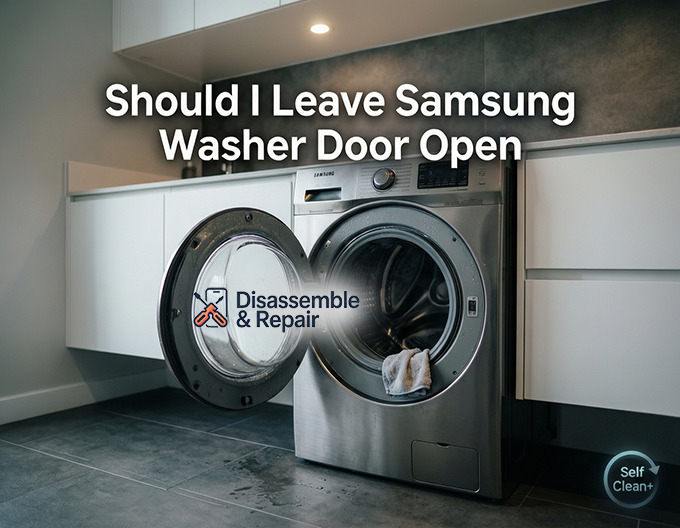
This environment is the perfect breeding ground for bacteria growth and fungi. By leaving the door slightly ajar—often referred to as the “ventilation position”—you allow air circulation to move through the drum. This airflow evaporates the remaining moisture, returning the internal humidity levels to normal and neutralizing the environment that promotes unwanted organic growth.
The Mechanics of Mold and Mildew in Front-Loaders
To understand the necessity of ventilation, one must understand the anatomy of the machine, specifically the door gasket.
The Role of the Rubber Seal
The rubber seal (or boot) located at the opening of the washer is designed to prevent leaks. However, this component creates a deep fold where water, lint, and detergent residue often accumulate. Because the seal is made of rubber, it does not absorb water; instead, water sits on the surface.
If the door is closed, that water remains stagnant. Over time, this stagnant water combines with organic debris from your clothing and soap scum to create a sludge-like substance. This is the primary catalyst for mold and mildew development. Once mold penetrates the porous surface of the rubber, it can be incredibly difficult to remove, often requiring the complete replacement of the gasket.
Read more Samsung front load washer smells bad
Humidity and Bacteria Growth
Bacteria thrive in dark, warm, and damp environments. A closed washer drum provides all three. By failing to vent the unit, you encourage bacteria growth not only on the seal but also behind the drum and in the drainage system. This bacteria is often the source of the “rotten egg” or mildew smell that can transfer onto your clean clothes, defeating the purpose of washing them in the first place.
Best Practices for Air Circulation and Odor Prevention
Effective odor prevention requires a multi-faceted approach. While leaving the door open is the most important step, there are other areas of the machine that require ventilation.
Venting the Detergent Drawer
Many users overlook the detergent drawer. Just like the drum, the dispenser drawer retains water after every cycle. If you use liquid detergents or fabric softeners, the residue can become sticky and trap moisture.
Professionals recommend removing the detergent drawer periodically to rinse it out and letting it air dry. Between washes, leave the drawer pulled out slightly. This creates a secondary airflow channel, allowing air to pass through the dispenser housing and into the main drum, further improving air circulation and drying out internal hoses.
How Wide Should the Door Be Open?
You do not need to leave the door swinging wide open, which can be an obstruction in smaller laundry rooms or hallways. Most Samsung washers are designed with a magnetic plunger or a friction hinge that allows the door to stay propped open just an inch or two. This small gap is sufficient for moisture to escape without blocking your walking path.
Utilizing the Samsung Self Clean+ Cycle
Samsung has recognized the challenges associated with front-load maintenance and engineered a solution: the Self Clean+ cycle. This feature is designed to clean the drum and the door gasket without the need for harsh chemicals.
How Self Clean+ Works
The Self Clean+ cycle uses hot water and high-speed drum rotations to dislodge dirt and bacteria from the diaphragm and the glass door. It effectively sanitizes the interior surfaces where moisture tends to linger.
Frequency of Use
For optimal washing machine maintenance, you should run the Self Clean+ cycle:
- Once every 40 washes (many Samsung models will display a reminder icon on the control panel).
- Anytime you detect a faint odor.
- After washing heavily soiled items or pet bedding.
However, it is important to note that the Self Clean+ cycle is a corrective and preventative maintenance tool, but it does not replace the daily habit of ventilation. Even if you use this cycle regularly, closing the door immediately afterward will still trap steam and lead to moisture buildup.
Safety Considerations: When to Close the Door
While the answer to “Should I leave Samsung washer door open?” is generally yes, there are safety exceptions. Front-load washers are accessible to small children and pets, who may climb inside the drum.
If you have curious toddlers or climbing pets (like cats) in your home, leaving the door open poses a risk of entrapment. In these scenarios, you have two options:
- Install a Door Stopper: Use a specialized flexible door prop that keeps the door slightly ajar for air but prevents it from opening wide enough for a child or pet to enter.
- Secure the Laundry Room: If possible, keep the door to the laundry room itself locked, allowing you to leave the washer door open safely behind a closed room door.
- Wipe and Close: If you absolutely must keep the washer door closed for safety, you must manually dry the interior. After every load, take a microfiber cloth and thoroughly dry the rubber seal, the inside of the glass, and the drum. Once strictly dry, you can close the door with less risk of mold, though ventilation is still superior.
Advanced Maintenance: Cleaning the Door Gasket
If you have neglected to leave the door open in the past and are currently dealing with mold and mildew, simple ventilation might not be enough. You will need to physically clean the door gasket.
Step-by-Step Cleaning Process
- Inspect the Seal: Gently pull back the folds of the rubber seal. This is where hair, lint, and slime hide.
- Remove Debris: Remove any foreign objects or clumps of lint manually.
- Apply Cleaner: Use a mixture of warm water and mild soap, or a dedicated washer cleaner. Avoid harsh bleach unless the mold is severe, as frequent bleach use can degrade the rubber over time.
- Scrub Gently: Use a soft brush or cloth to wipe the seal. Pay close attention to the drainage holes at the bottom of the gasket; if these are clogged, water cannot drain back into the machine, leading to rapid moisture buildup.
- Dry Thoroughly: Wipe the area completely dry.
Summary of Samsung Washer Care
To maintain a hygienic appliance and ensure fresh-smelling clothes, you must treat the washing machine as a device that requires airflow. The airtight design that saves water requires your assistance to dry out between uses.
Key Takeaways:
- Leave the door ajar: This is the single most effective way to prevent odors.
- Vent the dispenser: Pull the detergent drawer out to prevent mold in the housing.
- Wipe the seal: Regularly check the rubber seal for trapped water and debris.
- Run Self Clean+: Utilize the built-in technology to sanitize the drum every 40 cycles.
By incorporating these simple steps into your routine, you protect your investment and ensure your Samsung washer operates efficiently for years to come. So, the next time someone asks, “Should I leave Samsung washer door open?” you can confidently explain that it is an essential part of modern appliance care.
Frequently Asked Questions
Why is it necessary to leave my Samsung washer door ajar?
Front-load washers are designed with a watertight rubber seal that traps humidity, heat, and residual water inside an airtight environment. Leaving the door open allows for essential air circulation, which evaporates moisture and prevents the growth of odor-causing bacteria, mold, and mildew.
Read more Samsung washer drain pump filter cleaning
Do I need to leave the door wide open for it to be effective?
No, you do not need to leave the door fully open. Leaving it open just an inch or two—often called the “ventilation position”—is sufficient to allow moisture to escape. Many Samsung washers are equipped with a magnetic plunger or friction hinge specifically designed to keep the door propped open slightly without it becoming an obstruction.
Should I also leave the detergent drawer open?
Yes, the detergent dispenser drawer often retains water and soap residue that can lead to mold growth within the housing. Pulling the drawer out slightly after use creates a secondary airflow channel through the internal hoses and the main drum, further improving the machine’s overall ventilation.
Is it safe to leave the door open if I have small children or pets?
If you have toddlers or pets that might climb into the drum, safety comes first. You can use a specialized door stopper that keeps the door slightly ajar for air but prevents it from opening wide enough for entry. If that isn’t possible, you should manually wipe the rubber seal, the glass, and the drum dry with a microfiber cloth after every load before closing the door.
Does the Self Clean+ cycle replace the need for ventilation?
No, the Self Clean+ cycle is a preventative maintenance tool meant to be used every 40 washes to sanitize the interior. While it is highly effective at cleaning the drum and gasket, it does not replace the daily habit of leaving the door open. Even after a cleaning cycle, closing the door immediately will trap steam and moisture, which can quickly lead to new bacterial growth.