

Whether you are a seasoned repair shop owner diagnosing a motherboard fault or an engineering student attempting to reverse-engineer a mechanism, the success of your endeavor relies heavily on preparation. The difference between a successful repair and a permanently damaged device often comes down to the quality and suitability of the equipment at your disposal. Before you remove the first screw or separate the first seam, you must ensure your workbench is equipped with the essentials. In this guide, we will explore Precision Demolition: The Top 10 Tools You Need for Disassembly in Your Toolkit to ensure every project is executed with professional efficiency.
Every technician knows the sinking feeling of stripping a screw head or cracking a delicate plastic casing because the implement in hand was not designed for the specific task. Assembling a professional-grade toolkit is not merely about acquiring objects; it is about investing in the capability to perform surgical operations on hardware without leaving a trace. A robust toolkit empowers the user to approach disassembly with confidence, knowing that for every fastener, clip, and adhesive bond, there is a specific instrument designed to neutralize it safely.
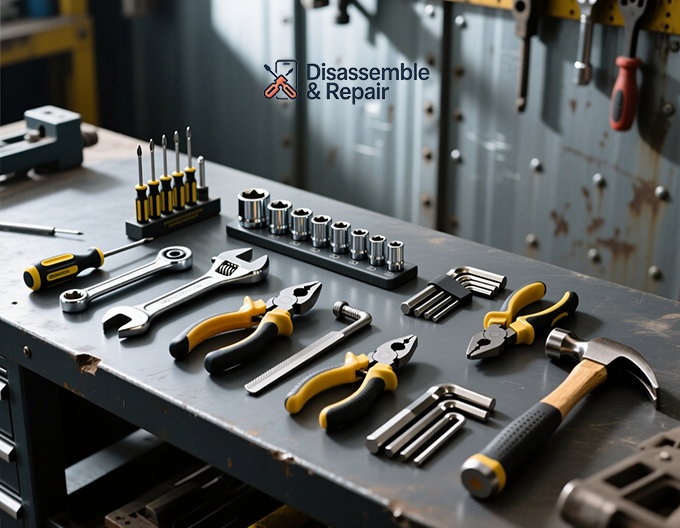
1. The Comprehensive Precision Screwdriver Set
The foundation of any disassembly station is, without question, the screwdriver. However, a standard household driver is rarely sufficient for modern electronics or intricate mechanical assemblies. What is required is a comprehensive precision screwdriver set. Modern devices utilize a bewildering array of fastener standards, ranging from the ubiquitously standard Phillips and Flathead to the proprietary Pentalobe, Torx Security, and Tri-Point screws found in high-end consumer electronics.
When selecting a screwdriver set, one must prioritize steel quality. Bits manufactured from S2 tool steel offer superior hardness compared to standard chrome-vanadium varieties, significantly reducing the risk of the bit stripping or the tip shearing off under torque. Furthermore, the handle requires ergonomic consideration; a spinner cap on the handle allows for constant pressure with the palm while rotating with the fingers, a technique that is essential for maintaining control during the delicate removal of microscopic screws. Without this specific tool, you risk rendering a device unopenable before you have even truly begun.
2. The Versatile Spudger Tool
Once the fasteners are removed, the challenge shifts to separating components that are often held together by internal plastic clips or pressure-fit mechanisms. This is the domain of the spudger tool. Originally utilized in the telecommunications industry for manipulating wires on punch-down blocks, the spudger has evolved into an indispensable implement for prying open electronics without damaging the cosmetic finish of the device.
A high-quality spudger tool generally features a dual-ended design: a flat, wedge-like end for prying and a pointed end for probing or manipulating small components. It is crucial to have spudgers made from different materials. A nylon or plastic spudger is non-conductive and softer than the device chassis, ensuring that if something slips, the tool will scratch rather than the device. Conversely, for stubborn clips in non-electronic or heavy-duty environments, a metal spudger may be required, though it demands a much steadier hand to avoid gouging soft aluminum or plastic casings.
3. Specialized Prying Tools
While the spudger is excellent for general separation, certain tasks require more specialized leverage. A dedicated set of prying tools is essential for navigating the tight tolerances of modern manufacturing. These tools often resemble bladed weapons or palette knives, designed to slip into the microscopic gaps between a screen and a frame or two halves of a seamless shell.
Effective prying tools must strike a delicate balance between flexibility and rigidity. A tool that is too flexible will bend under the force required to pop a heavy-duty retention clip, while a tool that is too rigid may crack a glass display. Many professionals prefer flexible steel blades that can contour to the curve of a device, allowing the technician to “saw” through weak adhesives or gently rock clips loose. It is advisable to maintain a variety of widths and thicknesses, as the gap tolerances will vary drastically between a smartphone, a laptop, and an automotive dashboard console.
4. The Anti-Static Wrist Strap
In the realm of electronics repair—whether dealing with PC components, mobile phones, or circuit boards—electrostatic discharge (ESD) is the silent killer. A latent failure caused by static electricity may not manifest immediately; the device might function for days or weeks before failing inexplicably. To mitigate this risk, an anti-static wrist strap is a non-negotiable safety requirement.
The function of the anti-static wrist strap is to equalize the electrical potential between the technician and the device. By grounding the user, typically through a connection to a grounded mat or the chassis of a plugged-in (but powered off) unit, static buildup is safely dissipated. For professional repair shop owners and serious PC builders, using this tool demonstrates a commitment to industry standards. It transforms the human body from a potential capacitor of damaging energy into a neutral element of the repair environment.
5. Opening Picks
For devices sealed with adhesive—a common practice in modern smartphones, tablets, and ultra-thin laptops—screwdrivers and heavy pry bars are often useless. The solution lies in using opening picks. These triangular pieces of plastic, reminiscent of guitar picks, are designed to slice through adhesive bonds and prevent resealing.
The utility of opening picks lies in their ability to be inserted and left in place. As you navigate the perimeter of a glued display, you can insert a pick every few inches to keep the gap open, preventing the adhesive from cooling and re-bonding behind you. They are sacrificial tools; their plastic edges will eventually become jagged and worn, but they protect the pristine glass and metal of the device. A professional toolkit should contain dozens of these, as they are consumed rapidly during the disassembly of water-resistant devices.
6. Precision Tweezers
Once a device is opened, the internal landscape often presents components too small for human fingers to manipulate effectively. Ribbons, cables, jumper pins, and miniature screws require the extension of dexterity provided by precision tweezers. However, not all tweezers are created equal.
For disassembly purposes, one requires a set comprising both angled and straight tips. Angled tips allow for visibility when working under a microscope or in a deep recess, while straight tips offer direct force application. Furthermore, the material is critical. ESD-safe tweezers, often coated with a dissipative material or made from ceramic, prevent static shocks from traveling through the tool into sensitive chips. Using cosmetic tweezers from a bathroom cabinet is a recipe for short circuits and frustration; professional disassembly demands professional grasping tools.
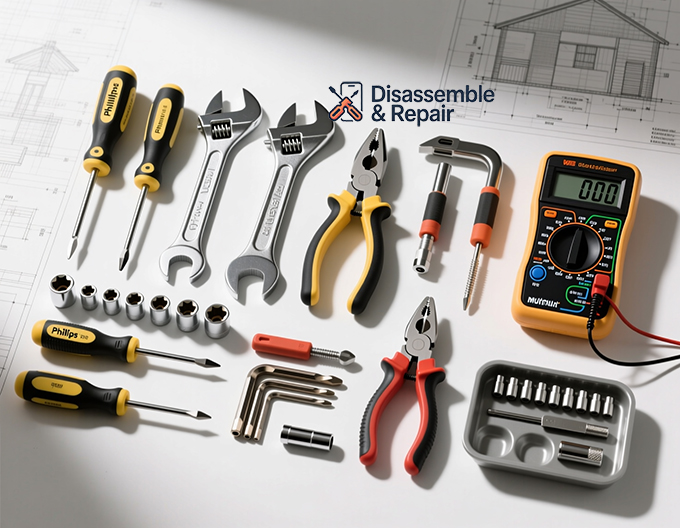
7. Suction Cups and Pliers
In the era of glass-sandwich design, where both the front and back of devices are made of glass, applying prying force directly to the edge often results in shattering. Suction cups provide a method to apply force perpendicular to the face of the component. By lifting the glass straight up, a gap is created for the insertion of opening picks or prying tools.
For heavy-duty disassembly, simple suction cups may not suffice. Heavy-duty suction pliers, which allow you to squeeze a handle to separate the front and back of a phone simultaneously, provide a controlled, measured force that human hands cannot replicate consistently. This tool minimizes the risk of ripping internal cables, which can happen when a tightly glued screen suddenly gives way under manual pulling force.
8. Heat Gun or iOpener
Ideally, disassembly is a mechanical process, but modern adhesives have introduced a thermal requirement. Waterproofing glues used by manufacturers are often extremely strong at room temperature but become pliable and soft when heated. Attempting to pry open a cold, glued device is the primary cause of cracked screens.
A variable-temperature heat gun allows the technician to raise the surface temperature of a device to approximately 60-80 degrees Celsius—hot enough to soften the adhesive, but not hot enough to damage the LCD or battery. For those wary of blowing hot air, an iOpener (a heated gel pack) provides a safer, conductive heat source. This thermal preparation makes the mechanical work of the spudger tool significantly easier and reduces the physical stress placed on the components.
9. Magnetic Project Mat
Disassembly is actually the easy part of the equation; reassembly is where chaos often ensues. The primary enemy of a successful reassembly is the “leftover screw.” Complex devices may use screws that differ in length by mere fractions of a millimeter. Inserting a long screw into a hole designed for a short one can pierce the motherboard traces below, destroying the device instantly.
A magnetic project mat is the solution to organizational entropy. These mats allow you to arrange screws and small brackets spatially, mirroring their location in the device. The magnetic surface prevents small ferrous fasteners from rolling off the table if bumped. Many mats also feature a dry-erase surface, allowing the technician to label steps, note screw lengths, or draw diagrams of cable routing. Organization is not a luxury in disassembly; it is a technical requirement.
10. Magnification and Lighting
The final tool in the arsenal addresses the limitations of human biology. As components shrink to microscopic scales, reliance on the naked eye becomes a liability. A high-quality magnifying visor, or for more advanced work, a stereo microscope, is essential for inspecting connectors, identifying water damage, or ensuring a ribbon cable is seated correctly.
Coupled with magnification is the need for intense, focused lighting. A shadow-free workspace allows you to see deep into the chassis of a computer or the recess of an engine block. Being able to see the orientation of a microscopic locking latch prevents the brute-force breakage that occurs when a technician “feels” their way through a disassembly blindly.
The Strategy of Disassembly: How to Proceed
Having these tools is only the first step; knowing how to deploy them effectively is what distinguishes an expert from a novice. The process of disassembly should always follow a logical, structural flow.
Preparation and Safety
Before touching the device, ensure your workspace is clear and your anti-static wrist strap is connected. Analyze the device. Look for visible screws and hidden seams. Consult service manuals if available.
The Initial Breach
Begin with your screwdriver set to remove all external fasteners. If the device is glued, apply heat immediately. Do not force a cold device. Once heated, use a suction cup to create an initial gap.
Navigating the Seam
Insert your opening picks to
Frequently Asked Questions
What are the essential tools needed for electronics disassembly and repair?
To perform repairs safely and efficiently, a professional toolkit should include a comprehensive precision screwdriver set (preferably S2 tool steel), a versatile spudger tool for separating clips, specialized prying tools, an anti-static wrist strap, opening picks for adhesive, ESD-safe tweezers, and suction cups for handling glass components.
Why is an anti-static wrist strap necessary for PC and phone repairs?
An anti-static wrist strap is critical because electrostatic discharge (ESD) is a “silent killer” for electronics. It equalizes the electrical potential between the technician and the device, safely dissipating static buildup. Without it, you risk causing latent failures in sensitive circuit boards that may not manifest immediately but will permanently damage the device.
What should I look for when buying a precision screwdriver set?
When selecting a screwdriver set, prioritize bits made from S2 tool steel, which offers superior hardness compared to chrome-vanadium and reduces the risk of stripping screws. Additionally, look for a handle with a spinner cap; this ergonomic feature allows you to apply constant palm pressure while rotating with your fingers, providing the control needed for microscopic fasteners.
What is the difference between a spudger and an opening pick?
A spudger tool is generally a dual-ended stick (often nylon or plastic) used to pry open pressure-fit mechanisms and internal clips without scratching the device’s finish. Opening picks, shaped like guitar picks, are specifically designed to slice through adhesive bonds (common in modern smartphones) and keep gaps open to prevent the adhesive from resealing during disassembly.