
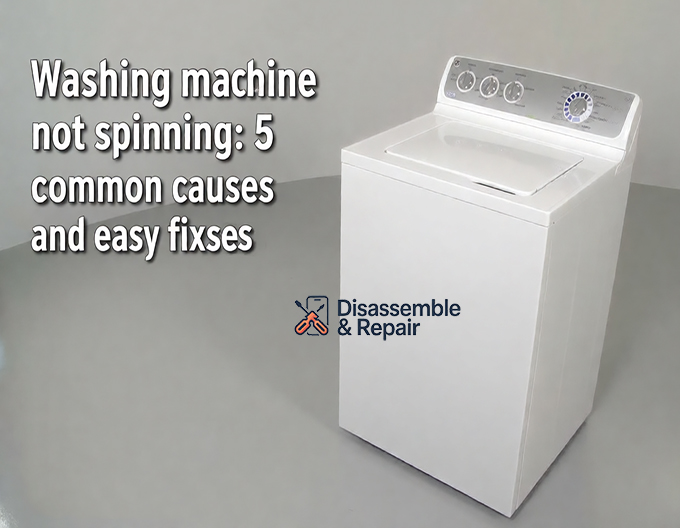
Finding your clothes soaking wet because you have a washing machine not spinning can be a frustrating disruption to your household routine. Whether the appliance hums but refuses to turn or simply sits silent after the wash cycle, a washing machine not spinning is a common issue that often stems from identifiable mechanical or electrical failures.
While modern appliances are complex, many spin cycle problems are caused by specific components that you can inspect and potentially repair. This guide explores the twelve most critical entities—from the drive belt to the control board—that play a role in the spinning process, helping you diagnose the root cause effectively.
Common Reasons for a Washing Machine Not Spinning
When a washer fails to spin, the problem usually falls into one of three categories: load management, drainage failures, or mechanical component breakdown. Before disassembling your machine, it is vital to understand how these parts interact.
1. Unbalanced Load
The most frequent and easily fixable cause is an unbalanced load. Modern washing machines are equipped with sensors that detect when wet laundry has clumped on one side of the drum. To prevent violent shaking that could damage the machine, the internal logic will automatically abort the spin cycle.
- The Fix: Manually redistribute the wet clothing evenly around the agitator or drum. If washing a single heavy item like a blanket, add towels to balance the weight.
2. Faulty Lid Switch
Top-loading washers rely on a lid switch as a primary safety feature. This small plastic component detects whether the lid is closed. If the lid switch is broken or the striker is misaligned, the motor circuit will remain open, preventing the machine from entering the spin cycle even if the lid appears closed.
- The Check: Listen for a “click” when you close the lid. If it is silent, or if the washer agitates but stops before spinning, testing the switch for continuity with a multimeter is necessary.
3. Malfunctioning Door Latch Assembly
Similar to the lid switch, front-loading washers use a door latch assembly. This complex mechanism not only signals that the door is closed but physically locks it during high-speed operation. If the lock wax motor fails or the electrical contacts inside the latch are burnt, the main control board will not send power to the drive motor for the spin cycle.
4. Defective Drain Pump
A washing machine will not spin if it is filled with water. The drain pump is responsible for evacuating water before the high-speed spin begins. If the pump is clogged with debris (coins, lint, small socks) or if the impeller is broken, the machine’s safety protocols—specifically the pressure switch—will prevent the drum from spinning to avoid water damage.
- The Symptom: You will hear a humming sound from the pump, or the machine will remain full of water.
5. Pressure Switch Issues
The pressure switch (or water level control switch) tells the control board how much water is in the tub. It operates via a small air tube connected to the drum. If this tube is blocked with gunk or the switch contacts stick in the “full” position, the washer will “think” it is still full of water. Consequently, the machine will disable the spin cycle to prevent flooding, even if the tub is actually empty.
Mechanical Drive Failures
If the water has drained and the door is locked, but the drum still refuses to move, the issue likely lies within the drive system.
6. Worn or Broken Drive Belt
In belt-driven washing machines, the drive belt connects the drive motor to the transmission or the drum. Over time, this rubber belt can stretch, glaze, or snap completely. A loose belt may allow the motor to run while the drum slips and fails to reach the necessary speed to extract water.
- Visual Inspection: Remove the back or bottom panel. If the belt is cracked, frayed, or has fallen off the drive pulley, it must be replaced.
7. Drive Motor and Capacitor
The drive motor is the muscle of the appliance. If the motor hums but does not turn, it may have a failed capacitor. The capacitor acts like a battery to give the motor the jolting torque needed to start spinning a heavy load of wet clothes. If the capacitor is bulging or leaking, the motor cannot start. Conversely, if the motor windings are burnt out, the entire motor unit will need replacement.
8. Motor Brushes
On many front-load washers and some top-loaders, the motor uses motor brushes to conduct electricity to the spinning armature. These carbon brushes wear down physically over years of use. When they become too short to make solid contact with the motor’s commutator, the electrical circuit breaks.
- The Symptom: This often presents as intermittent spinning or sparking noises coming from the bottom of the machine before it fails completely.
9. Drive Pulley
The drive pulley is the wheel attached to the motor or the transmission that the belt rides on. In some cases, the pulley can wear out or the nut holding it in place can loosen. If the drive pulley is just spinning freely on the motor shaft without engaging the belt, the drum will remain stationary.
NOTE: You can also check out our article on washing machine error codes—this is another common issue you should be aware of.
Internal and Electronic Components
When mechanical parts seem intact, the issue may be located deeper inside the machine’s transmission or electronic controls.
10. Stripped Drive Block (Agitator Context)
In top-loading machines, the agitator sits on top of the drive shaft. While the agitator is primarily for washing, its removal is often required to inspect the “drive block.” The drive block connects the washer transmission to the spin basket. If the ears on the drive block are stripped due to heavy loads, the motor transmission will spin the shaft, but the basket itself will not engage.
- Note: You must remove the agitator cap and bolt to inspect the drive block beneath it.
11. Main Control Board
The control board is the brain of the washer. It sends voltage to the motor, drain pump, and lock assemblies in a specific sequence. If the board has a burnt relay or a soldered connection has vibrated loose, it may fail to send the specific “spin” signal to the motor, even if the wash and rinse cycles work perfectly. This is often a difficult diagnosis to make without professional testing equipment but can be visually identified by looking for burn marks on the circuit board.
Summary of Troubleshooting Steps
To effectively fix a washer that is not spinning, follow this logical order of operations:
- Check the Load: Ensure no unbalanced load has triggered a safety stop.
- Verify Drainage: confirm the drain pump is clear and the pressure switch tube is not clogged.
- Test Safety Switches: Use a multimeter to ensure the lid switch or door latch assembly has continuity.
- Inspect the Drive System: Check the tension of the drive belt and the condition of the drive pulley.
- Examine the Motor: Look for worn motor brushes or a failed capacitor if the motor hums but doesn’t move.
- Deep Inspection: If necessary, remove the agitator to check the drive block or inspect the control board for electrical damage.
By systematically eliminating these twelve entities as potential causes, you can isolate the problem and determine if a simple DIY part replacement will get your laundry routine back on track.
Frequently Asked Questions
Why is my washing machine making a humming sound but the drum won’t turn?
A humming sound usually indicates that the machine is receiving power but a mechanical failure is preventing movement. This is often caused by a seized drain pump, a worn-out motor capacitor that can’t provide the necessary starting torque, or a drive belt that has slipped off the pulley.
How can I tell if the problem is just an unbalanced load?
If your machine stops spinning and the clothes inside are clumped on one side, it is likely an unbalanced load. Modern machines use sensors to detect this to prevent damage from violent shaking. Try redistributing the wet laundry evenly around the drum or adding a few towels to balance out a single heavy item like a comforter.
Why does my washer stop and refuse to spin while it is still full of water?
Washing machines are designed with a safety protocol that prevents the spin cycle from starting if the water has not drained. This is usually due to a clogged or defective drain pump. If the pump cannot evacuate the water, the pressure switch will signal the control board to disable the high-speed spin to avoid potential water damage.
What should I check if my top-loading washer agitates but won’t spin?
The most likely culprit in this scenario is a faulty lid switch. While the machine may be able to agitate with the lid closed, the spin cycle requires a confirmed connection from the switch to operate the motor at high speeds. If the switch is broken or misaligned, the circuit remains open and the spin cycle will never engage.
When should I suspect a problem with the main control board?
You should consider the control board if you have already tested the safety switches, drive belt, and motor, and found them to be functional. If the washer completes other cycles (like filling and agitating) but consistently fails to trigger the spin sequence, the board may have a burnt relay or a damaged electrical path. Visual cues like scorch marks on the board are often a clear sign of failure.