
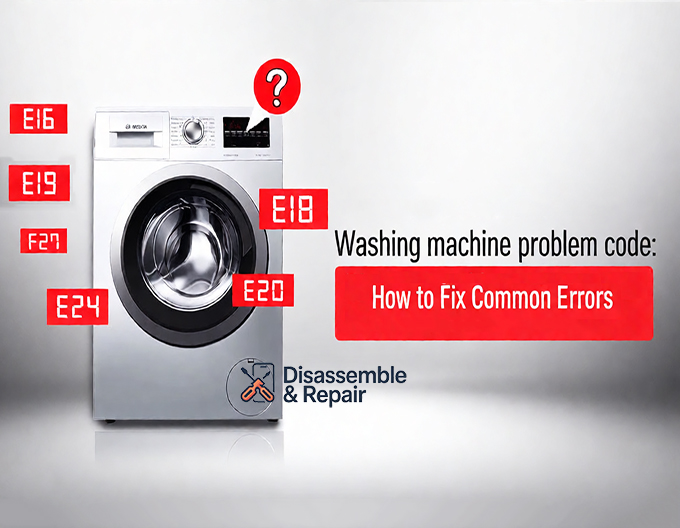
Encountering a sudden Washing machine problem code on your appliance’s digital display can disrupt your entire household routine and lead to unnecessary panic. This alphanumeric sequence is not merely a random error; it is a specific diagnostic message sent from the machine’s central computer to help you pinpoint exactly what is going wrong. Modern laundry appliances are sophisticated pieces of technology equipped with sensitive sensors and complex logic boards designed to self-diagnose issues before they cause catastrophic damage.
As a homeowner, understanding the language of your appliance is the first step toward a solution. Whether you own a high-efficiency front-load washer or a traditional top-loader, the appearance of fault codes indicates that the electronic control board has detected an anomaly in the system. This guide will walk you through the logic behind these codes, how to interpret them, and when to engage in DIY troubleshooting versus calling for professional appliance repair.
The Logic Behind a Washing Machine Problem Code
To effectively troubleshoot, one must first understand how modern washers operate. The “brain” of the unit is the electronic control board. Throughout the wash cycle, this board constantly monitors various components—from the water temperature to the drum speed. When a component fails to return the expected signal, the board interrupts the cycle and generates a Washing machine problem code.
These codes are generally categorized into specific systems:
- Water Supply Issues: Problems with filling the tub.
- Drainage Issues: Inability to expel water.
- Door/Lid Lock Issues: Safety mechanism failures.
- Motor/Drum Issues: Problems with spinning or agitation.
- Sensor/Electronic Issues: Communication errors within the machine.
While the specific syntax of the code varies by manufacturer (e.g., “F01” vs. “E2”), the underlying triggers are often identical. Ignoring these codes or repeatedly unplugging the machine to clear them without addressing the root cause can lead to more severe damage, such as burning out the motor or flooding your laundry room.
Common Components Triggering Fault Codes
When you see a code flash, it is usually pointing toward one of several hardworking components. Understanding these parts will help you utilize your troubleshooting guide more effectively.
The Water Inlet Valve
If your machine displays a code related to “Low Flow” or “No Fill,” the water inlet valve is the usual suspect. This component controls the flow of hot and cold water into the machine. If the screens inside the valve become clogged with sediment, or if the solenoids fail, the electronic control board will detect that the water level has not been reached within a set time limit, triggering an error.
The Drain Pump
Perhaps the most common source of error codes involves drainage. If the washer fails to empty the water, it cannot unlock the door or proceed to the spin cycle. This is often caused by a blockage in the drain pump filter (coins, lint, or small socks) or a mechanical failure of the pump itself. Codes indicating “OE” (Output Error) or “ND” (No Drain) usually point here.
Door Latches and Sensors
For a front-load washer, the door lock assembly is critical. If the computer cannot verify that the door is locked and sealed, it will not start the cycle. Similarly, a sensor failure regarding the water level (pressure switch) or temperature can halt operations immediately.
Interpreting a Washing Machine Problem Code by Brand
While it is impossible to list every code for every model in existence, understanding the nomenclature of major brands will help you navigate your user manual or online resources.
Whirlpool and Maytag
These manufacturers often use an “F” and “E” system. The “F” stands for “Fault” and usually indicates the system (e.g., Motor, Heater), while the “E” stands for “Error” and specifies the problem within that system.
- F08 E01: This often indicates a water supply issue, suggesting the machine is detecting an overflow or insufficient water.
- F01: Often relates to the primary electronic control board failing to communicate.
- F06: Typically a motor tachometer issue, meaning the machine cannot sense the speed of the motor.
Samsung
Samsung washers typically use two-character codes on their digital display.
- 4E or 4C: Water supply error. The machine is not filling.
- 5E or 5C: Drain error. The water is not leaving the drum, usually implicating the drain pump or a kinked hose.
- UE or Ub: Unbalanced load. This is a common sensor failure warning where the weight distribution in the drum is uneven, preventing a safe high-speed spin.
LG
LG uses a similar mnemonic approach to their fault codes.
- IE: Input Error (Water inlet valve issues).
- OE: Output Error (Drainage issues).
- LE: Locked Motor Error. This is a serious code often indicating the motor is locked up or the Hall sensor has failed.
GE Appliances
GE codes can be numeric or alphanumeric depending on the age of the machine.
- E22: Water fill timeout.
- E31: Drain timeout.
- E42/E45: Motor drive block issues, often requiring significant appliance repair expertise.
How to Enter Diagnostic Mode
If the error code is ambiguous, or if you have cleared the code but want to verify the machine’s health, you can enter the machine’s “Diagnostic Mode.” This is a hidden menu used by technicians to test individual components without running a full wash cycle.
To find the specific key combination for your washer, you must consult the “Tech Sheet.” This is distinct from the standard user manual. The Tech Sheet is often taped inside the machine’s service panel or hidden behind the bottom kickplate.
General steps often used to enter Diagnostic Mode:
- Ensure the machine is plugged in but turned off.
- Press a specific combination of buttons (e.g., “Soil Level” + “Spin” + “Power”) simultaneously for 3 seconds.
- The digital display will light up, often showing “88” or a test code.
- Use the dial to toggle through tests: checking the water inlet valve, activating the drain pump, or spinning the drum.
Note: Entering diagnostic mode varies significantly between a front-load washer and a top-loader. Always refer to your specific model’s documentation.
Step-by-Step Troubleshooting Guide
Before calling a professional, follow this troubleshooting guide to rule out environmental factors or simple maintenance issues.
Step 1: The Hard Reset
Electronics can glitch. Sometimes, the electronic control board needs a reboot. Unplug the washing machine from the power outlet for at least five minutes. Plug it back in and attempt to run a short cycle. If the code clears and does not return, it may have been a momentary voltage spike or software glitch.
Step 2: Check Water and Drain Lines
Inspect the hoses behind the washer. Is the water supply turned on fully? Are the hoses kinked? For drainage issues, check the drain hose where it enters the standpipe. Ensure it is not pushed down too far, which can cause siphoning.
Step 3: Clean the Filters
If you have a front-load washer, locate the drain pump filter access door at the bottom front of the machine. Open it (have a towel ready for water spill) and unscrew the filter. Clean out any lint, coins, or debris. This simple act solves a vast majority of drainage-related error codes.
Step 4: Balance the Load
If you are seeing imbalance codes, the machine is protecting itself from shaking apart. Open the door and manually redistribute the wet clothes. If washing a single heavy item like a blanket, add a few towels to balance the weight distribution.
Step 5: Inspect the Door Strike
Check the door latch for debris or damage. If the latch cannot engage fully, the sensor will report the door as “Open,” preventing the machine from starting. Clean the connection points with a damp cloth.
When to Call for Professional Appliance Repair
While many codes can be resolved with a screwdriver and some patience, certain signals indicate a failure that requires professional intervention.
Electronic Control Board Failure:
If the machine displays erratic codes that change constantly, or if the display does not light up at all despite having power, the main board may be dead. Replacing a board is expensive and requires precise part matching.
Motor and Transmission Issues:
Loud grinding noises accompanied by motor error codes usually suggest internal mechanical failure. In direct-drive motors, a sensor failure within the stator assembly can be complex to diagnose without a multimeter and specific electrical knowledge.
Electrical Smells:
If a code appears accompanied by the smell of burning plastic or ozone, unplug the machine immediately. This indicates a short circuit or an overheating component, posing a fire risk. Do not attempt to reset the machine.
Conclusion
A flashing Washing machine problem code is your appliance’s way of asking for help. By treating these codes as valuable data points rather than annoyances, you can extend the life of your washer and save money on unnecessary repairs. Start by consulting your user manual to identify the code, perform basic maintenance like cleaning the drain pump filter, and verify your water connections.
However, recognize the limits of DIY repair. Modern appliances are high-voltage machines involving water and electricity—a dangerous combination. If the troubleshooting guide does not resolve the issue, or if the fault lies within the complex circuitry of the electronic control board, contacting a certified appliance repair technician is the safest and most efficient route to getting your laundry routine back on track.
Frequently Asked Questions
Why is my washing machine displaying an alphanumeric error code?
These codes are diagnostic messages sent from your machine’s electronic control board. When the internal sensors detect an anomaly—such as the water not draining fast enough or the door failing to lock—the “brain” of the washer interrupts the cycle and displays a code to help you pinpoint the specific component that needs attention.
Can I fix a washing machine error code myself?
Many common codes can be resolved with basic DIY maintenance. Simple steps like performing a hard reset (unplugging the unit for five minutes), cleaning out the drain pump filter, straightening kinked hoses, or redistributing an unbalanced load of laundry can often clear the fault and return the machine to normal operation.
What should I do if my washer shows a drainage error like “OE,” “5C,” or “E31”?
Drainage errors are typically caused by a blockage. You should first check the drain hose for kinks and then inspect the drain pump filter, which is usually located behind a small access door at the bottom front of the machine. Removing debris like coins, lint, or small items of clothing from this filter often solves the problem immediately.
What does an “unbalanced load” code mean?
Codes such as “UE” or “Ub” indicate that the weight of the laundry is not distributed evenly inside the drum. To protect itself from damage caused by heavy vibrations, the machine will stop the spin cycle. You can usually fix this by opening the door and manually rearranging the wet clothes or adding a few towels to balance out a single heavy item like a comforter.
When is it time to stop troubleshooting and call a professional?
You should contact a certified technician if you notice the smell of burning plastic or ozone, as this indicates a dangerous electrical short. Additionally, if the machine displays erratic codes that change constantly, or if the issue involves the motor, transmission, or the main electronic control board, professional expertise is required to ensure a safe and proper repair.