
Whirlpool Refrigerator Condenser Fan Motor Replacement
Is your refrigerator running loud or failing to keep your food cold? You might be facing a Whirlpool refrigerator condenser fan motor replacement if the cooling system is struggling to dissipate heat efficiently. This critical component plays a vital role in maintaining the longevity of your appliance, and replacing it is a manageable DIY task that can save you expensive repair bills.
Understanding the Role of the Condenser Fan Motor
The refrigerator cooling system relies on a cycle of compressing and expanding refrigerant to remove heat from the interior. The condenser coils, usually located at the back or bottom of the unit, release this heat into the surrounding room. The condenser fan motor forces air over these coils and the compressor to speed up heat dissipation.
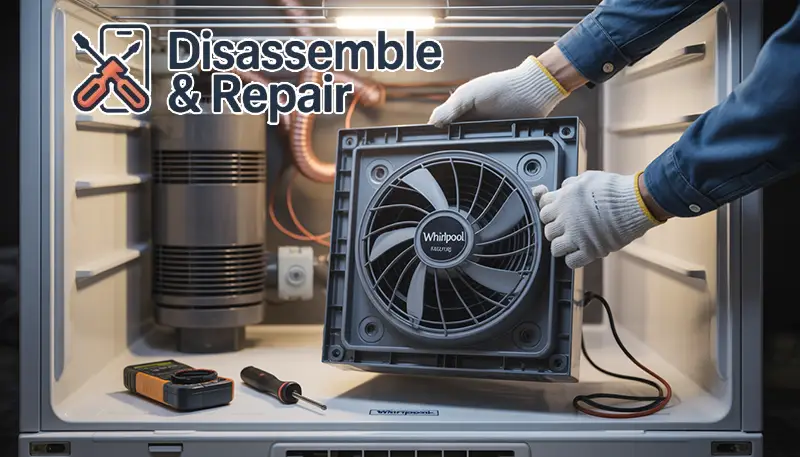
If this fan fails, the condenser coils cannot release heat effectively. This causes the compressor to work harder than necessary, leading to overheating and potentially a complete system failure. Unlike the evaporator fan, which circulates cold air inside the freezer and fridge compartments, the condenser fan is strictly responsible for cooling the mechanical components at the bottom of the machine.
Symptoms of a Faulty Condenser Fan Motor
Before ordering OEM replacement parts, confirm that the motor is indeed the culprit. Look for these common signs:
- Loud Noises: A buzzing or grinding sound coming from the back of the fridge often indicates the fan blade is obstructed or the motor bearings are worn.
- Compressor Overheating: If the compressor feels extremely hot to the touch or clicks off frequently, it may lack proper airflow.
- Refrigerator Not Cooling: The interior temperature rises because the refrigerant isn’t cooling down enough before entering the evaporator.
- Fan Not Spinning: If you visually inspect the fan and it is stationary while the compressor is running, the motor is likely dead.
Tools Required for the Job
Gather the following tools to perform the Whirlpool refrigerator condenser fan motor replacement safely and efficiently:
- Nut driver set (typically 1/4″ and 5/16″)
- Multimeter (for diagnostic testing)
- Flathead screwdriver
- Pliers
- Vacuum cleaner (to clean dust from coils)
- Work gloves
Step-by-Step Replacement Guide
1. Safety First
Always start by unplugging the refrigerator from the wall outlet. Working on a refrigerator cooling system with live power is dangerous. Pull the unit away from the wall to gain access to the rear.
2. Remove the Back Access Panel
Locate the back access panel at the bottom rear of the refrigerator. Use a nut driver (usually 1/4″) to remove the screws securing the panel. Set the screws aside in a safe place.
Read more whirlpool refrigerator water filter replacement schedule
3. Inspect and Clean
With the panel removed, you will see the condenser coils, the compressor, and the condenser fan. This is an excellent time to vacuum away any dust or pet hair clogging the condenser coils, as this debris can mimic the symptoms of a bad fan.
Read more whirlpool refrigerator summer cooling tips
4. Test the Motor (Optional but Recommended)
If the fan isn’t spinning but isn’t obstructed, you can perform a continuity test to confirm failure.
Read more whirlpool refrigerator door alarm
- Set your multimeter to the Ohms (resistance) setting.
- Disconnect the electrical connector feeding power to the fan motor.
- Touch the multimeter probes to the motor’s terminals.
- A reading of infinity (open loop) indicates a broken internal circuit, confirming the need for a Whirlpool refrigerator condenser fan motor replacement.
5. Remove the Old Motor
Disconnect the wire harness if you haven’t already. Depending on your specific model number, the motor mount may be secured with screws (often 5/16″) or a bracket system.
- Use your nut driver to unfasten the motor from the mounting bracket.
- Carefully pull the motor out.
- Remove the fan blade from the old motor shaft. You may need pliers to hold the shaft while pulling the blade off. Note: Be gentle with the fan blade; if it is bent or damaged, it will cause vibration noise later.
6. Install the New Motor
- Attach the fan blade to the new motor shaft, ensuring it is fully seated.
- Transfer any rubber grommets or mounting hardware from the old motor to the new OEM replacement parts if they were not included.
- Position the new motor into the bracket and secure it with the screws.
- Reconnect the electrical connector firmly until it clicks into place.
7. Reassemble and Test
Replace the back access panel and secure it with the screws. Plug the refrigerator back in and listen. You should hear the compressor kick on, followed shortly by the smooth hum of the new condenser fan.
Conclusion
Performing a Whirlpool refrigerator condenser fan motor replacement is a straightforward repair that restores your appliance’s efficiency. By addressing the issue promptly, you protect the compressor from overheating and ensure your food stays fresh. Always remember to check your refrigerator’s model number before purchasing parts to ensure compatibility.
Read more whirlpool vs ge refrigerator
Frequently Asked Questions
How can I tell if the condenser fan motor is failing or if the coils are just dirty?
If your refrigerator is struggling to stay cool or making unusual noises, start by vacuuming the dust and debris from the condenser coils. If the fan still does not spin while the compressor is running, or if it continues to produce a grinding or buzzing sound after cleaning, the motor is likely faulty and requires replacement.
Do I need to buy a specific motor for my Whirlpool refrigerator?
Yes. It is essential to locate your refrigerator’s specific model number, which is typically found on a sticker inside the door or on the frame. Using OEM (Original Equipment Manufacturer) replacement parts ensures that the new motor will fit the mounting bracket and electrical connectors correctly.
Read more whirlpool refrigerator delivery and installation
What is the difference between a condenser fan and an evaporator fan?
While both are part of the cooling system, they serve different purposes. The condenser fan is located at the bottom of the unit near the compressor and cools the mechanical components and coils. The evaporator fan is located inside the freezer or fridge compartment and is responsible for circulating cold air to maintain food temperatures.
Why is my compressor clicking off shortly after it starts?
A clicking compressor is often a sign of overheating. If the condenser fan motor is not functioning, the compressor cannot dissipate heat efficiently and will trigger a safety shut-off to prevent permanent damage. Replacing the fan motor is a common fix for this issue.