

Whirlpool Refrigerator Energy Consumption
Optimizing Your Kitchen: A Comprehensive Analysis of Whirlpool Refrigerator Energy Consumption
Managing household utility bills starts with understanding your major appliances, specifically the Whirlpool Refrigerator Energy Consumption metrics found on modern units. As one of the few appliances in a home that must operate continuously, the refrigerator represents a significant portion of residential electricity use, making its efficiency a critical factor for both your finances and environmental footprint. Whirlpool, a global leader in appliance manufacturing, has made significant strides in engineering cooling systems that balance performance with power conservation.
This guide provides a professional analysis of how these refrigerators utilize electricity, the variables that impact their efficiency, and how consumers can interpret technical data to maximize savings. By examining specific components and operational standards, homeowners can make informed decisions when purchasing new units or maintaining existing ones.
Understanding Whirlpool Refrigerator Energy Consumption
To truly grasp the efficiency of a specific unit, one must look beyond the brand name and analyze the technical data provided. Whirlpool Refrigerator Energy Consumption is generally measured in kilowatt-hours (kWh) per year. This metric provides a standardized way to compare the energy demands of different models under typical usage conditions.
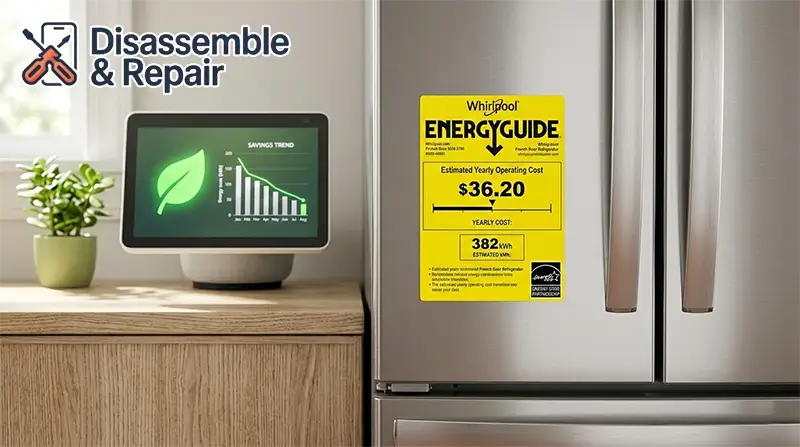
The primary source of this information is the Energy Guide Label, a yellow tag required by the Federal Trade Commission on all new appliances. This label offers a snapshot of the estimated Annual Operating Cost based on national average electricity rates. For a Whirlpool unit, this label serves as the first line of transparency, allowing the consumer to calculate the potential long-term cost of ownership. While a refrigerator might have a lower upfront retail price, a high kWh rating on the Energy Guide Label indicates that it will cost significantly more to run over its 10 to 15-year lifespan.
Read more whirlpool refrigerator door seal replacement
When analyzing the consumption data, it is vital to understand that these numbers are estimates derived from controlled test environments. Real-world usage—such as the ambient temperature of the kitchen, how often the door is opened, and the volume of food stored—will inevitably influence the actual electricity draw. However, the baseline kWh rating remains the most reliable metric for comparing efficiency across the Whirlpool product line.
Read more whirlpool refrigerator water dispenser cleaning
The Role of Advanced Technology in Efficiency
The reduction in energy usage seen in modern Whirlpool refrigerators is largely attributed to advancements in internal mechanical components. The most critical component is the Compressor, which acts as the heart of the cooling system. Older refrigerators utilized single-speed compressors that would run at full power until the target temperature was reached and then shut off completely. This “stop-start” cycle consumes a vast amount of energy due to the surge required to restart the motor frequently.
Modern high-efficiency Whirlpool models often utilize Inverter Technology. Unlike traditional compressors, an inverter compressor can operate at variable speeds. It ramps up to cool the fridge quickly when necessary—such as after the door has been opened—but runs at a low, steady speed to maintain the temperature during idle periods. This technology significantly reduces wear and tear on the motor and drastically lowers electricity consumption by eliminating energy-intensive startup spikes.
Read more whirlpool refrigerator ice maker kit installation
Furthermore, the design of the Condenser Coils plays a pivotal role. These coils are responsible for dissipating the heat removed from the refrigerator interior. In high-efficiency models, the surface area and placement of these coils are optimized to release heat more effectively. When the condenser coils function efficiently, the compressor does not have to work as hard to maintain the internal temperature, directly correlating to a lower kWh usage on your utility bill.
Comparing Models: French Door vs. Side-by-Side
Not all refrigerator styles are created equal regarding energy demands. The physical configuration of the unit affects its thermal retention and, consequently, its power usage. When evaluating a French Door Refrigerator against a Side-by-Side Model, distinct differences in energy consumption emerge.
The French Door Refrigerator is currently one of the most popular configurations. While aesthetically pleasing and functional, these models often feature through-the-door ice and water dispensers. While convenient, the ice maker is a significant energy draw. Additionally, the dispenser requires a break in the insulation of the door, creating a potential point for thermal leakage. However, Whirlpool has engineered newer French Door models with improved insulation materials to mitigate these losses, often allowing them to meet strict efficiency standards.
Conversely, the Side-by-Side Model often has a larger vertical freezer section. Because the freezer and fresh food compartments run the full height of the unit, there is a substantial amount of surface area between the two zones. This can sometimes lead to higher energy transfer, requiring the system to work harder to keep the freezer at zero degrees. Generally, top-freezer models (where the freezer is a simple box on top) are the most energy-efficient due to their simplicity and distance of the heat source (compressor) from the cooling box, but French Door and Side-by-Side models are closing the gap thanks to better engineering.
Regardless of the style, looking for the Energy Star Rating is non-negotiable for the energy-conscious consumer. An Energy Star-certified Whirlpool refrigerator exceeds the federal minimum energy efficiency standards, often by 10% to 20%. This certification guarantees that the specific configuration—whether French Door or Side-by-Side—utilizes advanced insulation and high-efficiency compressors to minimize waste.
Read more whirlpool refrigerator control board replacement
Operational Factors and Temperature Settings
While the hardware dictates the potential efficiency, user behavior and settings dictate the actual Whirlpool Refrigerator Energy Consumption. The most direct control a user has is over the Temperature Settings.
For optimal efficiency and food safety, the fresh food compartment should be set between 37°F and 40°F, while the freezer should be set at 0°F. Setting the temperature lower than necessary forces the compressor to run longer cycles to achieve a marginal difference in cooling, resulting in wasted electricity. Conversely, setting it too high risks food spoilage, which is a financial loss that outweighs energy savings.
Another critical automated process is the Defrost Cycle. Modern frost-free refrigerators utilize a heater to melt frost accumulation on the evaporator coils. While this process uses electricity, it prevents the buildup of ice which acts as an insulator on the coils, preventing them from cooling the air efficiently. If the defrost cycle malfunctions or if a manual defrost model is not maintained, the compressor must run continuously to compensate for the insulating layer of ice, causing energy usage to skyrocket.
Maintenance: The Key to Sustained Efficiency
To ensure that a Whirlpool refrigerator maintains its factory-rated energy consumption levels throughout its lifespan, regular maintenance is required. Over time, efficiency can degrade due to simple mechanical wear or accumulation of debris.
The condition of the Door Gaskets is frequently overlooked. These magnetic rubber seals line the perimeter of the doors and ensure an airtight closure. If a gasket becomes brittle, cracked, or dirty, cold air escapes, and warm ambient air infiltrates the compartment. This forces the compressor to engage more frequently to combat the temperature rise. A simple visual inspection and cleaning of the door gaskets can prevent substantial energy waste.
Similarly, the cleanliness of the Condenser Coils is paramount. Located at the back or bottom of the unit, these coils attract dust and pet hair. When covered in debris, the coils cannot release heat effectively. The refrigerator becomes a heat trap, and the system acts as if it is working in a much hotter environment. Cleaning these coils every six to twelve months ensures the heat exchange process remains efficient, keeping the Annual Operating Cost in line with the estimates on the Energy Guide Label.
Read more whirlpool refrigerator crisper drawer replacement
Conclusion
The Whirlpool Refrigerator Energy Consumption is a multifaceted metric influenced by engineering, configuration, and user maintenance. From the integration of Inverter Technology to the integrity of Door Gaskets, every element plays a role in how much electricity the unit draws from the grid.
For the modern homeowner, the goal is to select a model with a favorable Energy Star Rating and a low Kilowatt-hour (kWh) estimate, while also committing to the necessary upkeep. By understanding the function of components like the Compressor and the Defrost Cycle, consumers can ensure their Whirlpool refrigerator operates at peak efficiency, providing reliable cooling without unnecessary financial or environmental costs. Whether you choose a spacious French Door Refrigerator or a practical Side-by-Side Model, mindful usage and proper settings will ensure that your appliance remains an asset rather than a liability.
Frequently Asked Questions
How can I determine the estimated yearly energy cost of a Whirlpool refrigerator?
The most reliable way to determine energy consumption is by checking the yellow Energy Guide Label required on all new units. This label provides the estimated annual kilowatt-hours (kWh) the appliance will use and the projected yearly operating cost based on national average electricity rates.
What is the benefit of Inverter Technology in modern Whirlpool models?
Unlike traditional compressors that use a “stop-start” cycle, inverter compressors operate at variable speeds. This technology allows the refrigerator to run at a low, steady pace to maintain temperatures rather than using a large surge of electricity to restart the motor frequently, resulting in significant energy savings and less mechanical wear.
Which refrigerator configuration is the most energy-efficient?
Generally, top-freezer models are the most energy-efficient due to their simple design and the distance between the compressor and the cooling zones. While French Door and Side-by-Side models often consume more power due to features like through-the-door ice dispensers, choosing a model with an Energy Star Rating ensures it meets or exceeds strict federal efficiency standards.
What are the ideal temperature settings for balancing food safety and energy use?
To maximize efficiency while keeping food fresh, you should set the refrigerator compartment between 37°F and 40°F and the freezer at exactly 0°F. Setting temperatures lower than these recommended levels forces the compressor to run longer cycles without providing additional food safety benefits, leading to higher utility bills.
How often should I perform maintenance to keep energy consumption low?
You should clean the condenser coils every six to twelve months to prevent dust buildup, which can trap heat and force the system to work harder. Additionally, you should periodically inspect the door gaskets to ensure they provide an airtight seal; leaky gaskets allow cold air to escape, significantly increasing the unit’s electricity draw.