

Discovering that you have a Whirlpool refrigerator ice maker not working is a frustrating experience, particularly when you rely on the convenience of chilled beverages daily. Fortunately, diagnosing the root cause of the malfunction is often a straightforward process that does not always require professional intervention. By understanding the mechanical and electrical components involved in ice production, you can systematically troubleshoot the issue.
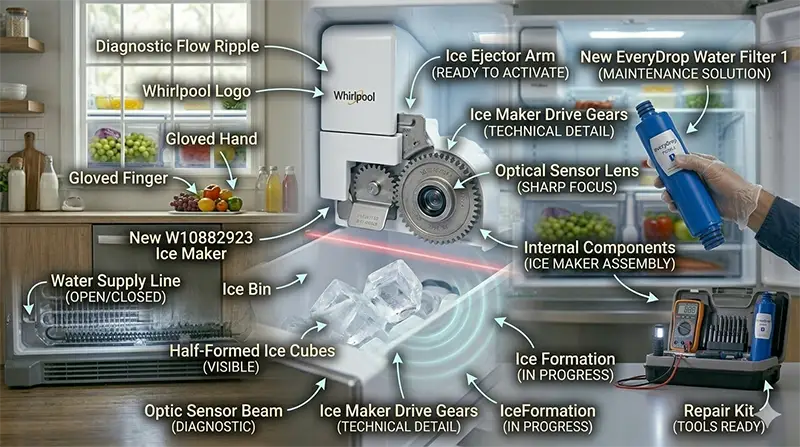
This guide provides a professional, step-by-step analysis of the most common failures associated with Whirlpool refrigeration units. We will examine critical components, ranging from water supply issues to complex electrical failures, ensuring you have the knowledge to restore your appliance to full functionality.
Read more whirlpool refrigerator freezer not cold enough
Understanding the Ice Production Cycle
Before attempting repairs, it is essential to understand how your unit operates. The ice-making cycle is a sequence of events controlled by thermostats, sensors, and mechanical switches. When the freezer reaches a specific temperature, the thermostat signals the water inlet valve to open, allowing water to flow through the water filter and into the ice mold. Once the water freezes, a mold heater warms the tray slightly to loosen the cubes, and the ejector arm pushes the ice into the bin. If any part of this chain is broken, the entire system fails.
Top Reasons for a Whirlpool Refrigerator Ice Maker Not Working
There are several distinct categories of failure that can lead to a Whirlpool refrigerator ice maker not working, ranging from simple obstructions to component burnout. We have categorized these issues to help you isolate the problem efficiently.
1. Water Supply and Filtration Issues
The most common culprit when an ice maker stops producing ice is a restriction in the water supply. Without consistent water flow, the mold cannot fill.
The Water Filter
A clogged or expired water filter is the first component you should inspect. As the filter captures contaminants, it can become restricted, lowering the water flow to the dispenser and ice maker. If you have not changed your filter in the last six months, or if the flow at the water dispenser is noticeably slow, replace the filter immediately. A new filter ensures adequate flow reaches the internal components.
The Water Inlet Valve
The water inlet valve is an electrically operated valve that opens to supply water to the dispenser and ice maker. This valve requires a minimum amount of water pressure (typically 20 psi) to function correctly. If the pressure from your home supply is sufficient but the valve fails to open, the valve itself may be defective. You can test the valve for continuity using a multimeter. If the electrical coils inside the valve have no continuity, the valve must be replaced.
Frozen Water Line
Sometimes, the issue lies within the plumbing of the refrigerator door or cabinet. A frozen water line can block water from reaching the ice mold. This often occurs if the freezer temperature is set too low or if the insulation around the line has degraded. Thawing the line with a hair dryer (set to low heat) or simply unplugging the refrigerator for a few hours can temporarily resolve this, but you must address the temperature settings to prevent recurrence.
2. Freezing and Fill Tube Obstructions
Even if water is flowing through the valve, it must pass through the fill tube to reach the ice maker assembly.
The Fill Tube
The fill tube is the small pipe located above the ice maker cup. It is susceptible to freezing, especially if water pressure is low, causing water to trickle and freeze before it enters the mold. If you see a plug of ice at the end of the tube, it is obstructed. You can melt this ice using warm water or a hair dryer. However, you must also investigate the water inlet valve, as a valve that does not close completely can drip water into the tube, causing it to freeze gradually.
3. Temperature and Thermostat Malfunctions
Temperature regulation is vital for ice production. If the freezer is not cold enough, the cycle will never begin.
The Thermostat
The ice maker generally has an internal thermostat or thermal fuse that monitors the temperature of the ice mold. The cycle will not initiate until the temperature drops to approximately 9°F (-13°C). If your freezer is running warmer than 10°F (-12°C), the ice maker will not cycle. Ensure your condenser coils are clean and the condenser fan is working to maintain proper freezing temperatures. If the temperature is correct but the unit won’t cycle, the internal thermostat of the ice maker may be defective.
4. Sensor and Control Failures
Modern Whirlpool refrigerators utilize advanced sensors to manage ice levels. A failure in these systems will halt production to prevent overflow.
Optic Sensor Beam and Infrared Sensor
Many Whirlpool models feature an infrared sensor system, often referred to as the optic sensor beam. These sensors consist of an emitter and a receiver located on opposite sides of the freezer lining. They create a beam of light across the ice bin. When the bin is full, the ice breaks the beam, signaling the system to stop.
If the optic sensor beam is blocked by debris, or if the sensor lenses are dirty, the system may falsely detect a full bin and stop making ice. Furthermore, verify the diagnostic light on the right-hand side of the freezer. A specific blinking pattern can indicate if the optics boards have failed. If the light flashes twice followed by a pause, this usually indicates a faulty sensor board.
Control Board
The main control board is the brain of the refrigerator. It governs the power distribution to the compressor, fans, and the ice maker system. If you have verified that the water supply, temperature, and individual ice maker components are functional, the control board might not be sending the correct voltage to the system. While less common than mechanical failures, a bad control board requires a complete replacement.
Read more whirlpool refrigerator humidity control
5. Mechanical Component Failures
Finally, the physical mechanism of the ice maker itself may be the issue.
Ice Maker Assembly
The ice maker assembly is the complete unit housing the motor, gears, and mold. Over time, the motor that drives the cycle can burn out, or the gears can strip. If the unit receives power and water but refuses to cycle or eject ice, the entire assembly typically needs to be replaced.
Mold Heater
Once the ice is frozen, the mold heater turns on to slightly melt the surface of the cubes, allowing them to release from the metal tray. If the heater fails, the ice remains stuck in the mold. The motor will attempt to push the ice out, but because it is frozen solid to the tray, it will stall. If you find ice cubes sitting in the tray for days without being ejected, the mold heater is the likely suspect.
Ejector Arm
The ejector arm is the plastic or metal rake that sweeps the ice out of the mold and into the bin. It can become jammed if an ice cube is not fully frozen or if a foreign object obstructs it. If the arm is stuck, do not force it, as you may strip the motor gears. Check for obstructions and clear them. If the arm is broken, you may need to replace the assembly.
Diagnostic Steps: A Logical Approach
To effectively repair a Whirlpool refrigerator ice maker not working, follow this logical diagnostic path:
Read more whirlpool refrigerator troubleshooting
- Check the Shut-off Arm: Ensure the wire shut-off arm (on older models) is in the down position, or the optic sensors (on newer models) are not obstructed.
- Verify Temperature: Place a thermometer in the freezer. It must be between 0°F and 5°F for optimal performance.
- Inspect Water Flow: Attempt to dispense water from the door dispenser. If the flow is weak, check the water filter and water pressure.
- Examine the Fill Tube: Look above the ice maker. If the fill tube is frozen solid, thaw it and check the inlet valve.
- Test the Optic Sensors: Open the freezer door and press the flapper on the left side to unblock the beam. Observe the LED status light. A steady light usually indicates the sensors are working; a blinking light indicates a fault.
- Force a Cycle (Jumper Test): On many modular ice makers, you can remove the front cover and use a jumper wire between test points “T” and “H” to bypass the thermostat and force the motor to run. If the motor runs, the ice maker assembly is likely good, and the issue may be the thermostat.
When to Consult a Professional
While many of these issues can be resolved by a handy homeowner, certain situations necessitate professional assistance.
If your diagnostic tests point toward a failure in the main control board or if the problem involves the sealed refrigeration system (compressor or refrigerant leak causing high temperatures), these repairs require specialized tools and expertise. Additionally, electrical testing involving live voltage carries safety risks. If you are uncomfortable using a multimeter or accessing high-voltage components, it is safer to hire a certified technician.
Read more whirlpool refrigerator ice dispenser jammed
Conclusion
A malfunctioning ice maker is often caused by a single, identifiable component failure rather than a systemic breakdown of the refrigerator. By systematically checking the water inlet valve, ensuring the fill tube is clear, verifying the status of the optic sensor beam, and inspecting the ice maker assembly, you can pinpoint the problem.
Regular maintenance, such as changing the water filter and keeping the freezer at the correct temperature, will prevent many of these issues. Whether it is a simple frozen line or a defective mold heater, understanding the function of these entities empowers you to make informed repair decisions. Hopefully, this guide has provided the clarity needed to fix your Whirlpool refrigerator ice maker not working and get the ice flowing again.
Frequently Asked Questions
Why is my Whirlpool ice maker not producing any ice even though the freezer is cold?
The most common cause is a restriction in the water supply. Check your water filter first; if it hasn’t been changed in six months, it may be clogged and restricting flow. Additionally, inspect the small fill tube above the ice maker to see if it has frozen solid, which prevents water from entering the mold.
What temperature does my freezer need to be for the ice maker to cycle?
For the ice maker’s internal thermostat to trigger a new cycle, the freezer must reach a temperature of approximately 9°F (-13°C) or lower. Whirlpool recommends keeping your freezer set between 0°F and 5°F to ensure consistent ice production and proper operation of the mechanical components.
How can I tell if the optic sensors are preventing the ice maker from working?
Check the LED diagnostic light located on the right-hand side of the freezer interior. A steady light usually indicates the sensors are functioning, while a specific blinking pattern (such as two flashes followed by a pause) typically indicates a fault in the optic sensor boards. Also, ensure no ice or debris is blocking the infrared beam between the emitter and receiver.
What should I do if the ice is stuck in the mold and won’t eject?
If the mold is full of ice but the ejector arm isn’t moving, the mold heater may have failed. This heater is responsible for slightly warming the tray to release the cubes. You should also check for any physical obstructions or jammed cubes that might be blocking the ejector arm. If the heater is defective or the motor is stalled, the ice maker assembly usually requires replacement.