
Whirlpool Refrigerator Water Dispenser Leaking
Is a puddle forming on your kitchen floor because your Whirlpool refrigerator water dispenser leaking issue has gone unresolved? Finding water pooling beneath your appliance or dripping down the front of the freezer door is a frustrating experience that can lead to water damage if not addressed quickly. While Whirlpool refrigerators are known for their durability, the water dispensing system is a complex network of valves, tubes, and seals that can develop faults over time.
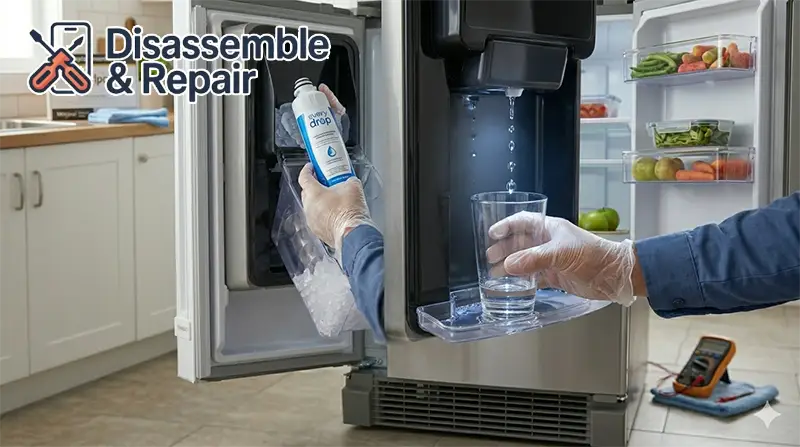
This guide provides a comprehensive technical breakdown of why these leaks occur and how to fix them. We will examine critical components like the water inlet valve, EveryDrop water filter, and solenoid valve to help you identify the root cause.
Common Reasons for a Whirlpool Refrigerator Water Dispenser Leaking
When diagnosing a Whirlpool refrigerator water dispenser leaking, it is essential to distinguish between a constant drip, a leak that occurs only during use, and water pooling at the bottom of the unit. The source of the problem usually stems from one of the following mechanical or hydraulic failures.
Read more whirlpool refrigerator extended warranty
1. Air in the Water Line
One of the most frequent causes of a drip immediately after dispensing water is air in the water line. Air pockets act like a spring; when you release the dispenser lever, the compressed air expands and pushes out a few extra milliliters of water, causing a drip. This often happens after replacing a filter or if the home water supply was recently shut off.
The accumulation of air can also affect the water reservoir, a tank located inside the refrigerator section that chills the water. If air is trapped here, it creates uneven pressure, leading to sporadic dripping from the dispenser nozzle.
2. Issues with the Water Filter and O-Rings
Your water filter is a primary suspect for leaks, especially if it was recently replaced. Whirlpool refrigerators are designed to work specifically with the EveryDrop water filter. Generic or off-brand filters often have slight size discrepancies that prevent a watertight seal.
Read more whirlpool refrigerator gallon door storage
Even with a genuine filter, the O-ring (the rubber gasket on the filter’s neck) can be the culprit. If the O-ring is nicked, twisted, or missing, water will bypass the seal and leak into the filter housing. This water often drips down inside the refrigerator or pools in the drip tray until it overflows.
3. Faulty Water Inlet Valve
The water inlet valve is the electronic gatekeeper of your refrigerator’s water supply. Located at the back of the fridge, this component uses a solenoid valve to open and close the water flow when you press the dispenser lever.
If the solenoid fails mechanically or gets clogged with mineral deposits, the valve may not close completely. This condition is known as a “seeping valve.” It allows a tiny, continuous stream of water to enter the system, increasing pressure until it forces its way out of the dispenser nozzle. A leaking inlet valve can also cause the ice maker to overfill.
Read more whirlpool refrigerator smart features
4. Low Water Pressure
It may seem counterintuitive, but low water pressure is a leading cause of dispenser leaks. The water inlet valve requires a minimum of 20 psi (pounds per square inch) to close properly. If the pressure from your home’s supply line is too weak, the internal spring in the valve cannot overcome the water flow to seal it shut. This results in a valve that stays slightly open, causing a constant drip at the dispenser.
5. Frozen Water Line
In many side-by-side Whirlpool models, the water line runs through the freezer door. If the insulation in the door is compromised or the freezer temperature is set too low, you may experience a frozen water line. As the ice plug forms, it can expand and crack the plastic tubing or the water reservoir.
Initially, a frozen line stops water flow. However, as the ice melts during a defrost cycle or if the crack widens, water will begin to leak inside the door panel and drip out from the bottom of the dispenser area.
6. Damaged Water Line Coupler
The water line coupler is a push-connect fitting that joins two sections of water tubing, typically found at the bottom of the freezer door behind the kick plate. Vibration from the compressor or opening and closing the door can eventually loosen this connection. If the tubing is not fully seated in the coupler, or if the coupler itself is cracked, water will spray or drip onto the floor whenever the dispenser is activated.
Step-by-Step Troubleshooting and Repair Guide
Before attempting any repairs, ensure you have a towel handy to catch spills and, for safety, unplug the refrigerator when working on internal electrical components like the valve.
Inspecting and Reseating the Water Filter
If you suspect the filter is the issue, follow these steps:
- Remove the Filter: Take out the current water filter and inspect the head.
- Check the O-rings: Look closely at the rubber O-ring seals. They should be smooth and round. If they are flat, cracked, or torn, the filter needs replacement.
- Verify the Brand: Ensure you are using an OEM EveryDrop water filter. Generic filters are a common source of “mystery leaks” where no other part seems broken.
- Reseat the Filter: Reinstall the filter, pushing it in firmly until it clicks or twists into the locked position. A loose filter will almost always leak.
Purging Air from the System
If your dispenser drips a few drops after you pull your glass away, you likely need to bleed the line:
- Place a large container under the dispenser.
- Press and hold the dispenser lever for 5 seconds, then release for 5 seconds.
- Repeat this cycle for about 2-3 minutes. This pulsing action helps dislodge air bubbles trapped in the water reservoir and tubing.
- Continue until the water stream is solid and steady, without sputtering.
Diagnosing the Water Inlet Valve
To check if the solenoid valve is defective:
- Pull the refrigerator away from the wall and locate the water supply line at the bottom rear.
- Turn off the water supply at the saddle valve or shut-off valve.
- Disconnect the water supply tube from the refrigerator.
- Place a bucket under the supply tube and turn the water back on briefly to check water pressure. The stream should be strong and vigorous. If it is weak, the problem is your home plumbing (or a clogged saddle valve), causing the refrigerator valve to fail to close.
- If pressure is good, the water inlet valve on the fridge is likely the issue. Inspect it for signs of leakage or corrosion. If the valve is seeping while disconnected from power, the mechanical seal inside the solenoid has failed, and the valve assembly must be replaced.
Fixing a Frozen Water Line
If the dispenser works intermittently or not at all, and then leaks, you might have a freeze issue:
- Open the freezer door and locate the water line at the bottom hinge.
- Disconnect the water line coupler (usually by pressing in on a small collar and pulling the tube out).
- Press the dispenser lever. If water comes out of the tube coming from the fridge (upstream), but not through the door (downstream), the blockage is inside the door.
- Use a hairdryer on a low setting to gently warm the door surface along the path of the water line. Do not use high heat as you can warp the plastic liner.
- Once the ice melts, flush the system thoroughly. Consider raising the freezer temperature slightly to prevent recurrence.
Checking the Water Reservoir and Drip Tray
Sometimes a leak is internal. The water reservoir is a coil of tubing usually located behind the crisper drawers in the fridge compartment.
- Remove the crisper drawers and inspect the reservoir for cracks. If water is pooling under the drawers, the reservoir may have frozen and split.
- Check the drip tray at the bottom of the dispenser alcove. This tray has a limited capacity. If your valve is leaking slowly, this tray will fill up and overflow. While the tray itself doesn’t “leak” (unless cracked), an overflowing tray is a symptom of a deeper issue like a leaking filter connection or air in the line.
When to Replace the Dispenser Lever Assembly
In rare cases, the dispenser lever itself (or the actuator switch behind it) can get stuck in the “pressed” position due to sticky residue from sugary drinks or mechanical failure.
- Symptom: The water continues to flow at full force even after you pull your glass away.
- Fix: Try cleaning the lever hinges with warm water and mild soap. If the lever remains physically stuck or the microswitch is electrically stuck (keeps activating the solenoid valve), the entire dispenser control assembly may need to be replaced.
Preventive Maintenance to Avoid Leaks
Maintaining your Whirlpool refrigerator is the best way to prevent future puddles.
- Change Filters on Schedule: Replace your EveryDrop water filter every 6 months. Old filters can get clogged, reducing pressure and causing back-pressure leaks at the water inlet valve.
- Inspect Water Lines: Every year, check the plastic tubing behind the fridge and at the water line coupler for brittleness or stress cracks.
- Monitor Water Pressure: If you add a reverse osmosis system to your home, ensure it delivers adequate pressure to the fridge. You may need a booster pump to keep the water pressure high enough for the fridge valve to close correctly.
By systematically checking the water filter, purging air in the water line, and inspecting the water inlet valve, you can solve almost any Whirlpool refrigerator water dispenser leaking problem. Most of these repairs are simple DIY tasks that save you the cost of a service call and protect your kitchen floor from water damage.
Frequently Asked Questions
Why does my dispenser drip for a few seconds after I finish getting water?
This is typically caused by air trapped in the water line or the internal water reservoir. Air pockets act like a spring; they compress while you are dispensing water and then expand once you release the lever, pushing out a few extra drops. To resolve this, purge the system by dispensing water in five-second intervals (5 seconds on, 5 seconds off) for approximately three minutes to flush out all trapped air.
Can using a generic water filter lead to leaks in my Whirlpool refrigerator?
Yes. Whirlpool refrigerators are engineered to work with OEM EveryDrop water filters. Generic or off-brand filters often have minute size discrepancies or lower-quality O-rings that do not create a perfect seal. This can cause “mystery leaks” where water bypasses the filter housing and drips down the back of the fridge or pools in the drip tray.
How can low home water pressure cause the dispenser to leak?
It seems counterintuitive, but the water inlet valve requires a minimum of 20 psi to snap shut completely. If your home’s water pressure is too low—which can happen with certain reverse osmosis systems or clogged saddle valves—the internal spring cannot overcome the water flow to seal the valve. This results in a “seeping” valve that allows a constant, slow drip from the dispenser nozzle.
What should I do if water is leaking from the bottom of the freezer door?
Check the water line coupler located behind the kick plate at the bottom of the refrigerator. This push-connect fitting joins the main water line to the tube running up through the door. If the tube isn’t fully seated or the coupler is cracked, water will leak onto the floor whenever the dispenser is used. Additionally, check if the water line inside the door has frozen and cracked, which can happen if the freezer temperature is set too low.
How often should I replace my filter to prevent dispensing issues?
You should replace your EveryDrop water filter every six months. Beyond just filtering contaminants, an old, clogged filter can cause a significant drop in water pressure. This drop in pressure can prevent the inlet valve from closing properly and may eventually lead to internal leaks or damage to the solenoid valve.