

Whirlpool Refrigerator Water Dispenser Not Working
Comprehensive Guide: Troubleshooting a Whirlpool Refrigerator Water Dispenser
Dealing with a Whirlpool Refrigerator Water Dispenser Not Working can be a significant inconvenience, particularly when you rely on your appliance for clean, filtered water daily. While Whirlpool refrigerators are renowned for their durability and engineering, components within the dispensing system can fail due to wear and tear, obstruction, or electrical faults.
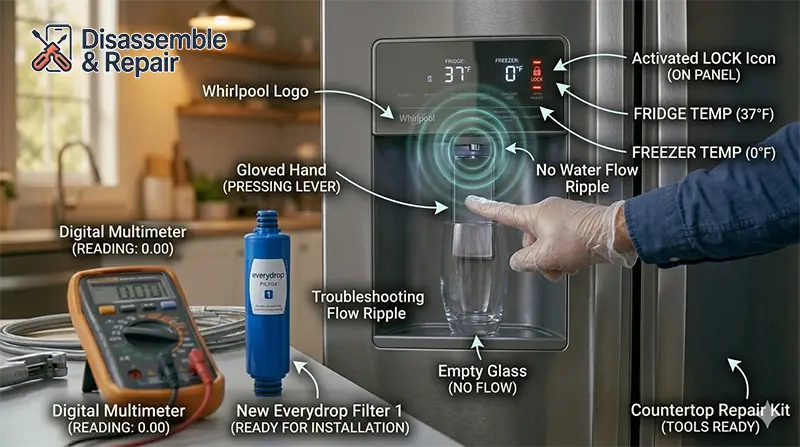
This guide provides a professional, deep dive into the diagnostics and repair procedures necessary to resolve these issues. We will examine the hydraulic and electrical pathways of your refrigerator, identifying common points of failure from the water source to the control electronics.
Primary Causes for a Whirlpool Refrigerator Water Dispenser Not Working
When diagnostics begin, it is essential to categorize the problem into one of three areas: restriction of flow, mechanical failure, or electrical malfunction. The following sections detail the specific components that most frequently lead to a dispenser failure.
1. The Water Filter and Filter Housing
The most common cause of low water flow or a complete cessation of dispensing is the Water Filter. Whirlpool manufacturers recommend changing the filter every six months. As the filter traps sediments, calcium, and particulates, it becomes clogged. Over time, this blockage restricts water flow to the point where the dispenser drips or stops working entirely.
However, the issue is not always the filter cartridge itself. The Filter Housing can also sustain damage. If the housing is cracked or the internal mechanism that engages the filter is broken, the water will not flow through the system correctly.
Troubleshooting Steps:
- Remove the old water filter.
- If you have a bypass plug (supplied with the fridge), insert it. If the water flows with the bypass plug installed, the issue is isolated to the clogged filter.
- Inspect the housing for leaks or cracks. If the new filter does not snap into place securely, the housing unit may require replacement.
2. The Child Lock Feature
Before disassembling the refrigerator, ensure the issue is not a user setting. Most modern Whirlpool models feature a Child Lock designed to prevent accidental spills. If the lock is engaged, the dispenser pad will not respond to pressure, and no water will release.
Troubleshooting Steps:
- Locate the lock button on the display panel.
- Press and hold the button (usually for 3 seconds) to disengage the feature.
- Test the dispenser again.
3. Water Inlet Valve Malfunction
The Water Inlet Valve is the electromechanical gatekeeper of your refrigerator’s water supply. It uses solenoids to open and close the flow of water to the dispenser and the Ice Maker. If the solenoid coils fail electrically, or if the valve becomes physically clogged with mineral deposits, the valve will not open.
It is worth noting that if your Ice Maker is producing ice but the water dispenser is not working, the issue may lie with the specific solenoid dedicated to the water line, rather than the entire valve assembly.
Troubleshooting Steps:
Read more whirlpool french door refrigerator reviews
- Access the valve at the back of the refrigerator (bottom access panel).
- Use a multimeter to check the solenoids for continuity. If the resistance reading indicates an open circuit (infinity), the valve is defective.
- Ensure the water supply line connected to the valve is not kinked or blocked.
4. Frozen Water Line
A frequent issue in side-by-side and French door models is a Frozen Water Line. This typically occurs in the plastic tubing that runs through the refrigerator door. Because this line is positioned close to the freezer compartment, inadequate insulation or a slight temperature drop can cause the standing water inside the tube to freeze, creating an ice plug.
Troubleshooting Steps:
Read more whirlpool refrigerator water leaking
- Disconnect the water tube at the bottom of the door hinge.
- Press the dispenser. If water flows out of the tube at the bottom but not the top, the blockage is inside the door.
- Use a specialized frozen line tool or a hair dryer on a low setting (exercising extreme caution not to warp the plastic liner) to thaw the line.
5. Defective Door Switch
The Door Switch serves a safety function: it turns off the water dispenser and ice maker when the refrigerator door is open. If this switch fails electrically, the control system will believe the door is permanently open, thereby disabling the dispenser.
Troubleshooting Steps:
- Locate the switch on the door frame.
- Press the switch manually and listen for the fan motor to engage or the light to turn off.
- Test the switch for continuity using a multimeter. If there is no continuity when the switch is depressed, it must be replaced.
6. Dispenser Switch and Microswitch
The Dispenser Switch (often a lever or paddle) is the component you physically press to request water. Behind this lever sits a small Microswitch. When the lever is pressed, it actuates the microswitch, which sends a low-voltage signal to the Control Board to open the water inlet valve.
If the microswitch is burned out or the plastic actuator on the dispenser lever is broken, the signal never initiates.
Troubleshooting Steps:
- Unplug the refrigerator and remove the dispenser control panel.
- Inspect the plastic brackets and the lever for physical damage.
- Test the microswitch for continuity. It should show a closed circuit when the button is pressed.
7. Frozen Water Tank
Many Whirlpool models utilize a Water Tank (reservoir) located behind the crisper drawers to chill the water before it is dispensed. If the fresh food compartment is set too cold (below 32°F or 0°C), the water inside this tank can freeze solid.
Troubleshooting Steps:
- Check the temperature setting of the refrigerator. Ideally, it should be between 37°F and 40°F.
- Remove the crisper drawers and inspect the tank. If it is frozen, increase the refrigerator temperature and allow it to thaw over 24 hours.
8. Water Pressure Issues
For the water inlet valve to function correctly, it requires a minimum Water Pressure of 20 PSI. If the pressure from your home’s water supply is too weak, the valve may not close fully after dispensing (leading to dripping) or may not open at all.
Troubleshooting Steps:
- Check the saddle valve or shut-off valve supplying water to the fridge. Ensure it is fully open.
- If you use a reverse osmosis filtration system, the output pressure might be too low for the refrigerator’s valve to operate efficiently.
9. Control Board Failure
If all mechanical components—filters, valves, switches, and lines—are functioning correctly, the fault may lie with the main Control Board. This electronic brain manages the power distribution to the entire appliance. If the circuitry governing the dispenser system is damaged (often due to power surges), it will fail to send voltage to the water inlet valve.
Troubleshooting Steps:
- Inspect the board for burn marks or swollen capacitors.
- Diagnosing a control board is complex and often requires a professional technician to verify voltage outputs before replacement.
Advanced Diagnostic Flowchart
To systematically resolve the issue, follow this logical progression:
- Verification: Check the Child Lock and ensure the water supply valve is open.
- Hydraulics: Replace the Water Filter. If that fails, check the Water Pressure and inspect the Filter Housing.
- Mechanical/Electrical: Listen for a “click” when the dispenser is pressed.
- If no click: Suspect the Microswitch, Dispenser Switch, Door Switch, or Control Board.
- If it clicks but no water: Suspect the Water Inlet Valve, Frozen Water Line, or Frozen Water Tank.
- Isolation: Check if the Ice Maker is receiving water. If yes, the primary water supply is good, and the issue is localized to the dispenser solenoid or the door line.
Conclusion
A Whirlpool Refrigerator Water Dispenser Not Working is rarely a catastrophic failure; it is usually a specific component that has reached the end of its lifecycle or a maintenance issue regarding filtration and temperature. By systematically checking the Water Inlet Valve, Water Filter, and electrical switches, you can isolate the problem.
Read more whirlpool refrigerator serial number lookup
While replacing a filter or thawing a line are manageable DIY tasks, electrical testing of the Control Board or high-voltage wiring should be handled with care. Always unplug the appliance before attempting to access internal components. If the problem persists after these troubleshooting steps, consulting a certified repair technician is recommended to ensure the longevity of your appliance.
Frequently Asked Questions
Why is my ice maker still producing ice even though the water dispenser isn’t working?
This typically indicates that your home’s main water supply is active, but the issue is localized to the dispenser system. The water inlet valve often has separate solenoids for the ice maker and the water dispenser; one may fail while the other continues to function. Alternatively, the water line running through the freezer door may be frozen, which blocks water to the dispenser but does not affect the ice maker located inside the unit.
How can I determine if my water filter is clogged without buying a new one first?
The most effective way to test this is by using the bypass plug that originally came with your Whirlpool refrigerator. If you remove the filter and install the bypass plug, and the water begins to flow normally, the filter was the source of the restriction. If the dispenser still does not work with the bypass plug, the issue likely lies with the filter housing or the water inlet valve.
What temperature should I set my refrigerator to prevent the water from freezing?
To ensure that the water tank behind the crisper drawers and the lines in the door do not freeze, you should maintain a refrigerator temperature between 37°F and 40°F (3°C to 4°C). If the temperature drops below 32°F, the standing water in the reservoir or tubing can turn into ice, completely blocking the flow of water to the dispenser.
How do I know if the Child Lock feature is the reason the dispenser isn’t responding?
If the Child Lock is engaged, the dispenser pad or lever will not trigger any mechanical sounds or water flow when pressed. On most Whirlpool models, you can verify this by looking at the display panel for a lock icon. To disengage it, press and hold the designated “Lock” button for approximately three seconds until the indicator light turns off or the panel beeps.
Does low water pressure affect how the refrigerator dispenser functions?
Yes. Whirlpool water inlet valves require a minimum of 20 PSI to open and close properly. If your home’s water pressure is too low, or if you are using a reverse osmosis system that reduces pressure, the valve may fail to actuate. Low pressure can also prevent the valve from sealing correctly after use, which often results in a persistent drip from the dispenser.