

Homeowners often find themselves searching for solutions when faced with Whirlpool Side By Side Refrigerator Problems, as these issues can disrupt daily routines and lead to food spoilage. Identifying the root cause of these malfunctions is crucial for determining whether a simple DIY fix is possible or if professional intervention is required. This guide delves into the technical intricacies of these appliances, analyzing common failure points and providing actionable maintenance strategies.
Common Whirlpool Side By Side Refrigerator Problems
When diagnosing Whirlpool Side By Side Refrigerator Problems, it is essential to categorize the symptoms to pinpoint the malfunctioning component. Most issues stem from temperature irregularities, airflow obstructions, or electrical faults. By understanding the interplay between the cooling loop and the control systems, you can effectively troubleshoot your unit.
1. Temperature Fluctuations and Cooling Failures
One of the most frequent complaints regarding side-by-side models is the refrigerator section being too warm while the freezer remains cold, or the entire unit failing to cool.
Dirty Condenser Coils
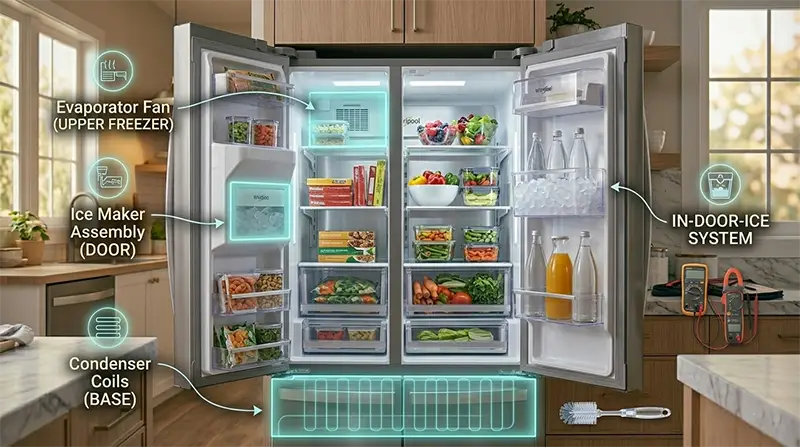
The cooling cycle relies heavily on the Condenser coils to dissipate heat removed from the interior. Located at the bottom or back of the unit, these coils act as a radiator. Over time, dust and pet hair accumulate, insulating the coils and preventing heat release. This forces the system to work harder, often leading to inadequate cooling. Cleaning these coils every six months is a primary maintenance step.
Compressor Malfunctions
The Compressor is the heart of the refrigerator, responsible for circulating refrigerant. If you hear a loud clicking noise followed by silence, the compressor start relay may have failed. However, if the compressor runs continuously but the fridge remains warm, the compressor itself may be inefficient or damaged. A failing compressor typically requires professional replacement due to the complexity of the sealed system.
Evaporator Fan Failure
The Evaporator fan is responsible for drawing air across the cooling coils and circulating it throughout the freezer and refrigerator compartments. If this fan fails, you may notice the freezer gets cold, but the fridge section stays warm because cold air is not being pushed through the damper. A noisy fan—often described as a squealing or chirping sound—is a precursor to total failure.
Refrigerant Leakage
In rare but serious cases, a lack of cooling may be due to Refrigerant leakage. Symptoms include a compressor that runs non-stop without lowering the temperature and an oily residue around the refrigerant lines. This is a chemical hazard and an environmental issue that requires a licensed technician to repair and recharge the system.
2. Airflow and Regulation Issues
Balancing the temperature between the two compartments is a delicate process managed by mechanical and electronic controls.
Damper Control Assembly
The Damper control is a small motorized door located between the freezer and fresh food compartments. It opens and closes to allow cold air from the freezer to enter the fridge. If the damper is stuck closed, the fridge will be warm; if stuck open, your vegetables may freeze. Diagnosing this involves listening for the motor or physically inspecting the airflow vent.
Thermostat and Temperature Sensors
The Thermostat (or thermistor in modern units) monitors the internal temperature and signals the compressor to turn on or off. A faulty thermostat can cause the unit to run indefinitely, freezing food, or never turn on, leading to spoilage. Testing this component usually requires a multimeter to check for continuity at various temperatures.
3. Defrost System Failures
Modern refrigerators are “frost-free,” meaning they automatically melt ice buildup on the evaporator coils. When this system fails, cooling efficiency plummets.
Defrost Heater and Timer
The Defrost heater turns on periodically to melt frost off the evaporator coils. If the heater or the defrost timer fails, ice will accumulate on the coils. This buildup eventually blocks airflow, causing the temperature in the refrigerator to rise. If you see a thick layer of frost on the back wall of the freezer, the defrost system is likely the culprit.
4. Ice Maker and Water Dispenser Issues
The convenience of an in-door dispenser is lost when these components malfunction.
Ice Maker Assembly
If the Ice maker stops producing ice, the issue could be mechanical or water-related. Ensure the bail arm (shut-off arm) is in the down position. If the module motor is broken, the entire assembly may need replacement.
Read more whirlpool refrigerator light not working
Water Filter and Inlet Valve
A clogged Water filter significantly reduces water pressure, which can result in hollow or small ice cubes and a slow water dispenser. Manufacturers recommend replacing the filter every six months. If the filter is new and problems persist, the water inlet valve (solenoid) may be defective, failing to open to supply water to the system.
5. Leaks and Moisture Problems
Finding water on the kitchen floor or inside the fridge is a common sign of gasket or drainage failure.
Door Gasket Integrity
The Door gasket is the magnetic seal that keeps cold air in and warm, humid air out. If the gasket is torn or brittle, warm air enters the unit, causing condensation and making the compressor overwork. Visually inspect the seal and use the “dollar bill test”—close the door on a dollar bill; if you can pull it out easily, the seal is weak.
Clogged Defrost Drain
When the defrost heater melts ice, the water drips into a drain pan via a tube. If this tube is clogged with debris or ice, water will overflow into the bottom of the freezer or leak onto the floor. Flushing the drain with hot water is a common fix.
Read more whirlpool refrigerator organize interior
6. Electrical and Control System Faults
Modern Whirlpool side-by-side refrigerators rely on sophisticated electronics to manage operations.
Control Board Failures
The Control board acts as the brain of the appliance, coordinating the compressor, fans, and defrost cycles. If the board malfunctions, the fridge may exhibit erratic behavior, such as random shut-offs, failure to cool, or blinking lights. Board failures are often difficult to diagnose without ruling out other components first.
Interpreting Error Codes
Newer models are equipped with digital displays that show Error codes when a fault is detected. These alphanumeric codes (e.g., PO for power outage, or specific codes for sensor failures) provide a direct map to the problem. Consulting the user manual or a technical service sheet is essential for decoding these signals accurately.
Troubleshooting Checklist for Homeowners
Before calling a professional, run through this concise diagnostic checklist to isolate the issue.
- Check Power and Settings: Ensure the unit is plugged in and the temperature settings have not been accidentally adjusted.
- Listen to the Unit:
- Buzzing: Could indicate a struggling compressor or dirty coils.
- Clicking: Potential start relay failure.
- Squealing: Likely a failing evaporator fan motor.
- Inspect the Coils: Pull the fridge out and check the Condenser coils. If they are gray with dust, vacuum them immediately.
- Verify Airflow: Open the freezer and check if the vents are blocked by food packaging. Listen for the fan running.
- Examine the Seal: Check the Door gasket for cracks or gaps. Clean it with warm soapy water to ensure a good grip.
- Filter Maintenance: If the ice or water flow is weak, replace the Water filter immediately.
When to Call a Professional
While many maintenance tasks are DIY-friendly, certain Whirlpool Side By Side Refrigerator Problems require specialized tools and certification.
- Sealed System Repairs: Any issue involving Refrigerant leakage or compressor replacement requires an EPA-certified technician. Handling refrigerant without certification is illegal and dangerous.
- Electrical Hazards: If the Control board or main wiring harness needs replacement, professional installation ensures the correct voltage is applied and prevents fire hazards.
- Persistent Error Codes: If resetting the unit does not clear Error codes, a technician can use diagnostic computers to read the appliance’s history and pinpoint the sensor failure.
Conclusion
Maintaining a Whirlpool side-by-side refrigerator requires a proactive approach to care. By understanding the function of critical entities like the Compressor, Evaporator fan, and Defrost heater, homeowners can prevent minor issues from escalating into costly repairs. Regular cleaning of Condenser coils and timely replacement of the Water filter and Door gasket will not only extend the lifespan of the appliance but also ensure it operates at peak energy efficiency. When in doubt, consulting the specific technical manual for your model or hiring a certified professional is the safest path to restoring your kitchen’s functionality.
Frequently Asked Questions
Why is my refrigerator section warm while the freezer remains cold?
This common issue usually indicates an airflow problem rather than a total cooling failure. It is often caused by a faulty evaporator fan that isn’t pushing cold air into the fridge, or a stuck damper control assembly—the small door that regulates air passage between the two compartments. Additionally, check to ensure that food packaging is not blocking the internal air vents.
How often should I clean my Whirlpool refrigerator’s condenser coils?
To maintain peak efficiency and prevent the compressor from overheating, you should clean the condenser coils at least every six months. If you have pets that shed hair, you may need to vacuum them more frequently. Dirty coils insulate heat, forcing the system to work harder and increasing the risk of a premature compressor failure.
What does it mean if I see a thick layer of frost on the back wall of my freezer?
A significant accumulation of frost typically points to a failure in the automatic defrost system. This could be a broken defrost heater, a faulty defrost timer, or a malfunctioning thermostat. When these components fail, ice builds up on the evaporator coils, eventually blocking airflow and causing the refrigerator’s temperature to rise.
Why is my water dispenser slow or my ice cubes very small?
The most frequent cause for low water pressure in the dispenser or ice maker is a clogged water filter. Manufacturers recommend replacing the filter every six months to prevent mineral buildup and debris from restricting flow. If replacing the filter does not solve the problem, the water inlet valve may be defective and require professional replacement.
How can I check if my refrigerator door gaskets are still working properly?
You can perform the “dollar bill test” to check the integrity of the magnetic seal. Close the refrigerator door on a dollar bill so that half is sticking out. If you can pull the bill out easily with no resistance, the gasket is weak, brittle, or torn and is allowing cold air to escape. This causes the unit to run more often and can lead to moisture buildup.