
It can be incredibly frustrating to open your refrigerator door and discover that your food is spoiling, leaving you wondering, “Why is my fridge not cooling but the light is on?” This specific problem is one of the most common issues homeowners face, indicating that while the unit is receiving electrical power, a critical component within the cooling system has failed.
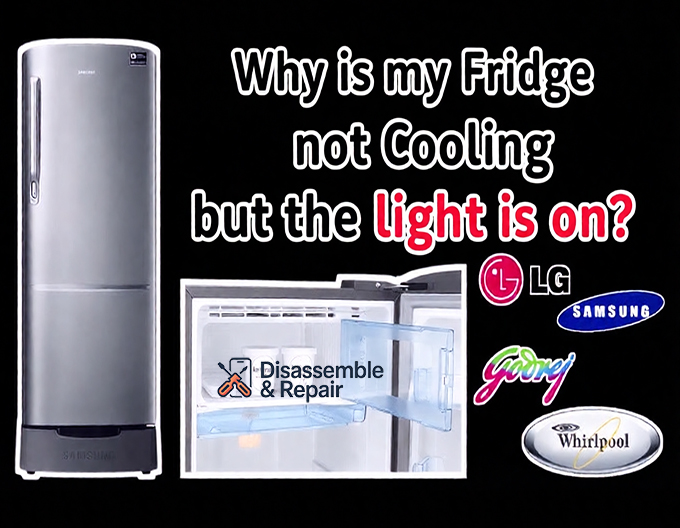
Why is my fridge not cooling but the light is on
When the internal light illuminates, you can immediately rule out a complete power outage or a tripped circuit breaker. This isolates the issue to the mechanical or electronic components responsible for generating and distributing cold air. Below is a comprehensive guide to troubleshooting the specific parts that lead to this malfunction.
1. Blocked Airflow and Vents
Before dismantling your appliance, you should inspect the interior for simple obstructions. Proper airflow is the lifeblood of any refrigerator. If you have overpacked shelves or placed large items directly in front of the air vents (often located in the back of the freezer or fridge compartments), cold air cannot circulate effectively.
Ensure there is a clear path for air to travel between the freezer and the refrigerator. If the vents are clear, but you feel no air coming through, the issue likely lies deeper in the fan or defrost systems.
2. Dirty Condenser Coils
One of the most frequent culprits for a refrigerator that runs but does not cool is a buildup of dust and debris on the condenser coils. These coils are typically located at the bottom or back of the unit and are responsible for dissipating the heat removed from the fridge’s interior.
When the condenser coils are coated in a thick layer of dust or pet hair, they cannot release heat efficiently. This forces the compressor to work overtime, eventually leading to overheating and system failure. Cleaning these coils with a vacuum or a specialized brush can often restore cooling power immediately.
3. Malfunctioning Condenser Fan
If your unit has condenser coils located along the bottom, it will also have a condenser fan next to them. This fan draws air through the front grille and over the coils to aid in heat dissipation.
If the condenser fan is obstructed by debris or the motor has seized, the refrigerant will not cool down enough to absorb heat from inside the fridge. You can check this by pulling the fridge away from the wall and removing the rear access panel. If the fan blade is not spinning while the compressor is running, the fan motor likely needs replacement.
4. Evaporator Fan Motor Failure
While the condenser fan cools the mechanical parts, the evaporator fan motor is responsible for circulating cold air inside the freezer and refrigerator compartments. If you hear the compressor running but the inside of the fridge is warm, listen for the sound of a fan inside the freezer.
A failed evaporator fan motor often produces a loud squealing noise before it dies completely. If this fan stops, the coils will freeze over, and cold air will never reach the main food compartment, even though the light remains on.
5. Defrost System Issues
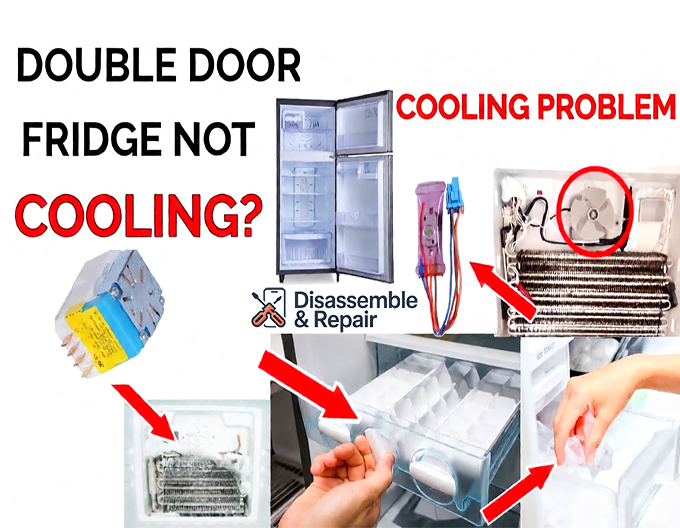
Modern refrigerators are “frost-free,” meaning they use a heater to melt ice off the evaporator coils automatically. This cycle is regulated by a defrost timer.
- Stuck in Defrost Mode: If the defrost timer gets stuck in the defrost cycle, the compressor will shut off to melt ice, but it will never turn back on to cool the unit.
- Stuck in Cooling Mode: Conversely, if it gets stuck in the cooling mode, frost will eventually build up so heavily on the evaporator coils that it blocks airflow.
If you notice a heavy buildup of ice on the back wall of your freezer, your defrost timer or the defrost heater itself may be defective.
6. Compressor and Start Relay
The compressor is the heart of the refrigeration cycle. It compresses the refrigerant and circulates it through the coils. If the compressor fails, the fridge will essentially become a quiet, lit box with no cooling ability.
However, before condemning the expensive compressor, check the start relay. This small device, usually attached to the side of the compressor, helps jump-start the motor. If you hear a clicking sound coming from the back of the fridge every few minutes, it is a classic sign that the start relay is trying to engage the compressor but failing. Replacing a faulty start relay is a simple and inexpensive fix compared to replacing the compressor.
7. Thermostat and Temperature Control
The thermostat acts as the brain for the cooling cycle, telling the compressor and fans when to turn on and off based on the internal temperature. If the thermostat is broken, it may not send the signal to start the cooling system, even though the light circuit remains unaffected.
To test this, you can sometimes turn the temperature dial from the lowest to the highest setting. If you do not hear a “click” or the system does not engage, the thermostat contacts may be corroded or broken.
8. Electronic Control Issues: Main Control Board and Thermistor
In newer, digital refrigerators, a mechanical thermostat is often replaced by a main control board and a thermistor.
- Thermistor: This is a sensor that monitors the air temperature. If the thermistor is faulty, it might “tell” the control board that the fridge is already cold, preventing the cooling cycle from starting.
- Main Control Board: This is the computer that governs all components. If the board has a short circuit or a fried component, it may fail to send voltage to the compressor or fans. Diagnosing a main control board usually involves looking for burn marks on the circuit board or using a multimeter to test for power output.
9. Compromised Door Gasket
Sometimes the hardware is working fine, but the cold air is escaping. The door gasket is the rubber seal that runs around the perimeter of the door. If this gasket is torn, brittle, or dirty, warm air from your kitchen will constantly seep into the fridge.
This influx of warm air brings moisture, which can cause frost buildup and make the fridge work harder than it is designed to. Visually inspect the door gasket for cracks and ensure it seals tightly when the door shuts. A loose seal can easily be the reason your fridge struggles to maintain temperature.
10. Low or Leaking Refrigerant
Finally, if the compressor runs continuously but the air inside is room temperature, you may have a refrigerant leak. The refrigerant (often Freon or R-134a) is the chemical substance that absorbs heat.
A leak is a serious issue. You might notice an oily residue on the floor near the fridge or a chemical smell. Unlike the other parts mentioned, handling refrigerant requires a licensed professional because it involves a sealed system that must be pressurized and recharged.
Conclusion
Troubleshooting a refrigerator that has a working light but no cooling requires a systematic approach. Start with the easiest maintenance tasks, such as checking for blocked airflow and cleaning the condenser coils. If these do not resolve the issue, proceed to inspect the fans, the start relay, and the defrost timer.
While simple part replacements like a door gasket or a thermostat are DIY-friendly, issues involving the compressor, main control board, or refrigerant often require the expertise of a certified appliance repair technician. By identifying the specific symptoms associated with each entity, you can make an informed decision on how to get your appliance back to optimal performance.
Frequently Asked Questions
Why is the light still working if the refrigerator isn’t cooling?
The interior light and the cooling system operate on separate electrical circuits. A working light simply confirms that the appliance is receiving power from the outlet and that the circuit breaker has not tripped, but it does not mean the mechanical components like the compressor or fans are functional.
How often should I clean my condenser coils to prevent cooling issues?
You should typically clean your condenser coils every six to twelve months. If you have pets that shed hair, you may need to clean them more frequently. Dust and hair buildup on these coils prevent heat from escaping, which is one of the most common reasons a fridge stops cooling.
What does it mean if I hear a clicking sound coming from the back of the fridge?
A clicking noise usually indicates a faulty start relay. This component is responsible for “jump-starting” the compressor. If the relay is broken, the compressor will attempt to turn on but fail, often resulting in a click every few minutes while the fridge remains warm.
Can a faulty door seal really stop a fridge from cooling?
Yes. If the door gasket is torn or brittle, cold air escapes while warm, moist air enters the unit. This forces the refrigerator to work much harder to maintain its temperature, which can lead to frost buildup on the evaporator coils and eventually prevent the unit from cooling effectively.
When should I call a professional instead of attempting a DIY repair?
While cleaning coils, clearing vents, or replacing a door gasket are DIY-friendly, you should call a certified technician for issues involving the main control board, the compressor, or the refrigerant. Handling refrigerant is especially dangerous and requires a license because the system is pressurized.